Can Working Professionals Study Abroad?
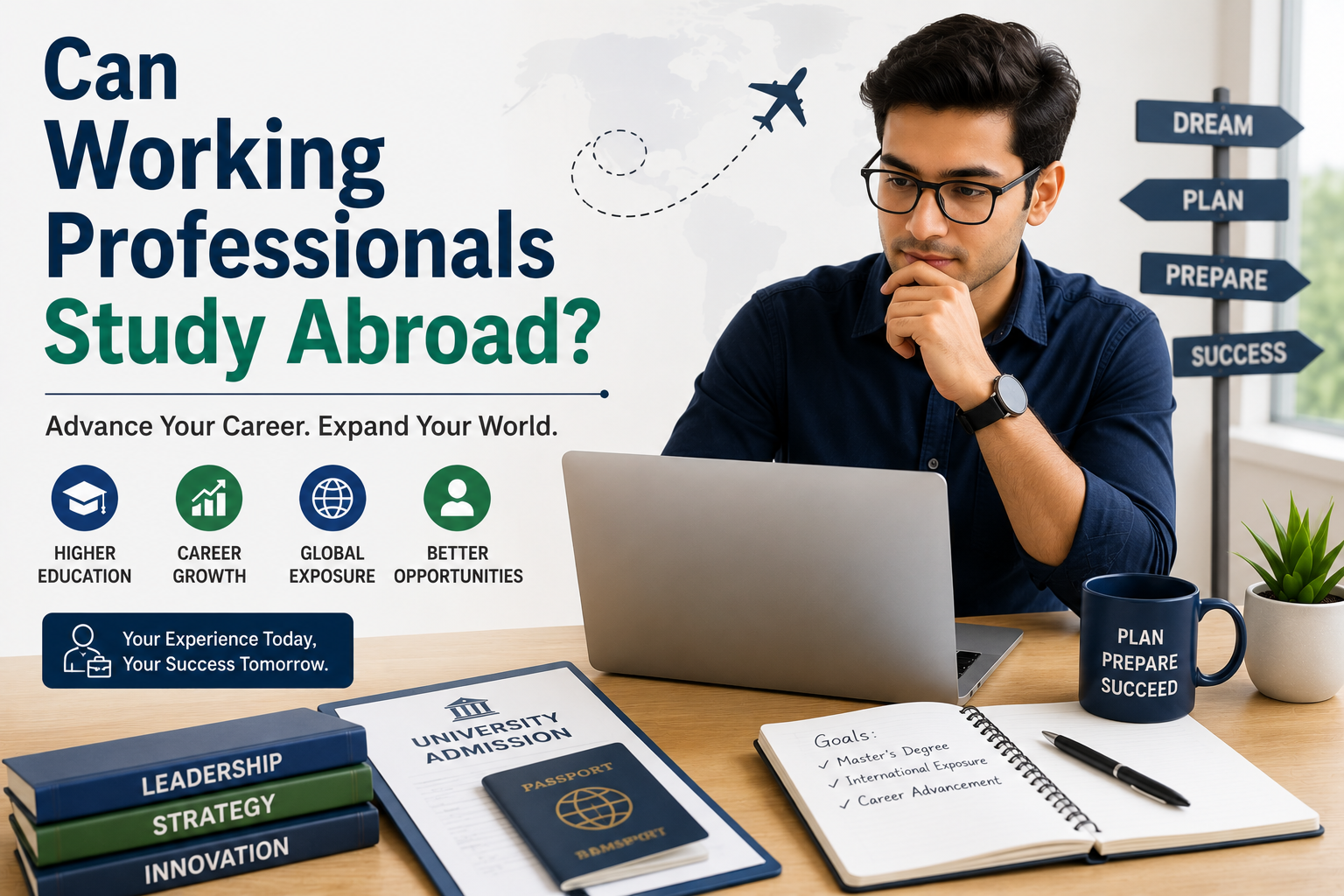
Can Working Professionals Study Abroad? – A Complete Guide
Many professionals believe that studying abroad is only for students who apply immediately after graduation.
The reality is very different.
Every year, thousands of working professionals leave their jobs temporarily—or choose flexible study options—to earn internationally recognized degrees that help them grow personally and professionally.
Whether you have one year or ten years of work experience, studying abroad can still be an excellent investment in your future.
Let's explore how working professionals can successfully pursue higher education abroad.
Can You Study Abroad After Working?
Absolutely.
Most universities around the world welcome applications from working professionals.
In fact, some master's programs actually prefer applicants with professional experience, especially in fields where practical knowledge is valuable.
Your work experience can strengthen your application by demonstrating maturity, industry exposure, and clear career goals.
Why Do Professionals Choose to Study Abroad?
Professionals decide to study abroad for many reasons, including:
- Career advancement
- Higher salary opportunities
- Career transition into a new industry
- International work exposure
- Specialization in a specific field
- Leadership and management skills
- Better job opportunities globally
For many, an international degree becomes a stepping stone to long-term career growth.
Which Courses Are Popular Among Working Professionals?
Some of the most common choices include:
Business and Management
- MBA
- International Business
- Finance
- Marketing
- Human Resource Management
Computer Science and IT
- Data Science
- Artificial Intelligence
- Cybersecurity
- Cloud Computing
- Software Engineering
Engineering
- Mechanical Engineering
- Civil Engineering
- Electrical Engineering
- Chemical Engineering
- Industrial Engineering
Healthcare
- Public Health
- Healthcare Management
- Nursing
- Biomedical Sciences
Other Popular Fields
- Supply Chain Management
- Project Management
- Business Analytics
- Environmental Management
- Renewable Energy
Choose a course that aligns with your experience and future career goals.
Do Universities Prefer Work Experience?
It depends on the program.
MBA Programs
Many MBA programs prefer candidates with professional experience because classroom discussions often involve real-world business situations.
Technical Master's Programs
For programs such as Computer Science or Engineering, work experience is usually helpful but not always mandatory.
Research-Based Programs
Admissions committees generally focus more on academics, research, and technical skills than industry experience.
Always review the specific admission requirements for your chosen program.
Benefits of Applying as a Working Professional
Work experience can strengthen your profile in several ways.
Stronger Statement of Purpose
You can clearly explain:
- Why you want to study further
- What you've learned professionally
- How the degree supports your career plans
Better Classroom Contributions
Professional experience allows you to contribute practical insights during lectures and group discussions.
Improved Career Opportunities
Employers often value candidates who combine:
- Industry experience
- International education
- Global perspective
Strong Professional Network
Studying abroad helps you connect with:
- Professors
- Industry experts
- Alumni
- Classmates from different countries
These connections can be valuable throughout your career.
Can You Study While Continuing Your Job?
Yes, depending on the university and program.
Some options include:
- Part-time master's programs
- Online master's programs
- Executive education programs
- Weekend classes
- Hybrid learning
These formats are designed for professionals who wish to continue working while studying.
What Documents Will You Need?
Most universities require:
- Academic transcripts
- Degree certificate
- Passport
- Resume (CV)
- Statement of Purpose
- Letters of Recommendation
- English language test scores (if required)
Some universities may also request employment verification or experience letters.
How Important Is Work Experience?
Work experience can strengthen applications by demonstrating:
- Professional maturity
- Leadership
- Teamwork
- Problem-solving
- Industry knowledge
However, it is only one part of your application.
Universities also consider:
- Academic performance
- SOP
- LORs
- English proficiency
- Relevant skills
Can You Change Your Career Through a Master's Degree?
Yes.
Many professionals use higher education to transition into new industries.
Examples include:
- Mechanical Engineer → Data Analyst
- Civil Engineer → Project Manager
- Accountant → Business Analyst
- Software Developer → AI Engineer
- Nurse → Healthcare Manager
A carefully chosen master's program can help support a career shift, although success also depends on your skills, experience, and the job market.
Financial Planning for Professionals
Before applying, consider:
- Tuition fees
- Living expenses
- Health insurance
- Visa costs
- Emergency savings
Also explore:
- Scholarships
- Employer sponsorship
- Education loans
- Assistantships (where available)
Planning your finances early reduces stress later.
Common Challenges
Working professionals may face:
Leaving a Stable Job
Resigning from a secure position can feel risky.
Evaluate your long-term goals before making a decision.
Returning to Student Life
After several years of work, adjusting to assignments and exams may take time.
Managing Finances
International education is a major investment.
Create a realistic budget before applying.
Choosing the Right Course
Select a program that genuinely supports your career objectives rather than following trends.
Tips for Working Professionals
✔ Define clear career goals before choosing a program.
✔ Highlight your professional achievements in your SOP.
✔ Update your resume with measurable accomplishments.
✔ Obtain strong recommendation letters from supervisors or managers.
✔ Research universities that value professional experience.
✔ Apply early to maximize scholarship opportunities.
Is It Ever Too Late to Study Abroad?
No.
Universities admit students from diverse age groups and professional backgrounds every year.
What matters most is:
- Academic eligibility
- Motivation
- Career goals
- Program fit
There is no "perfect age" to pursue higher education.
Final Conclusion
Working professionals can absolutely study abroad and often bring valuable experience to the classroom.
Whether your goal is career advancement, specialization, international exposure, or a career change, an overseas degree can provide new opportunities when combined with careful planning and realistic expectations.
The key is choosing the right program, preparing a strong application, and ensuring that your education aligns with your long-term professional goals.
Remember:
Your career doesn't have to pause your education. In many cases, your work experience can become one of your greatest strengths when applying to study abroad.
Verified by Edulx Germany Specialists
Have questions about your profile or APS verification? Book a free 1-on-1 session with our Pune counsellors.