Certifications That Strengthen Study Abroad Applications
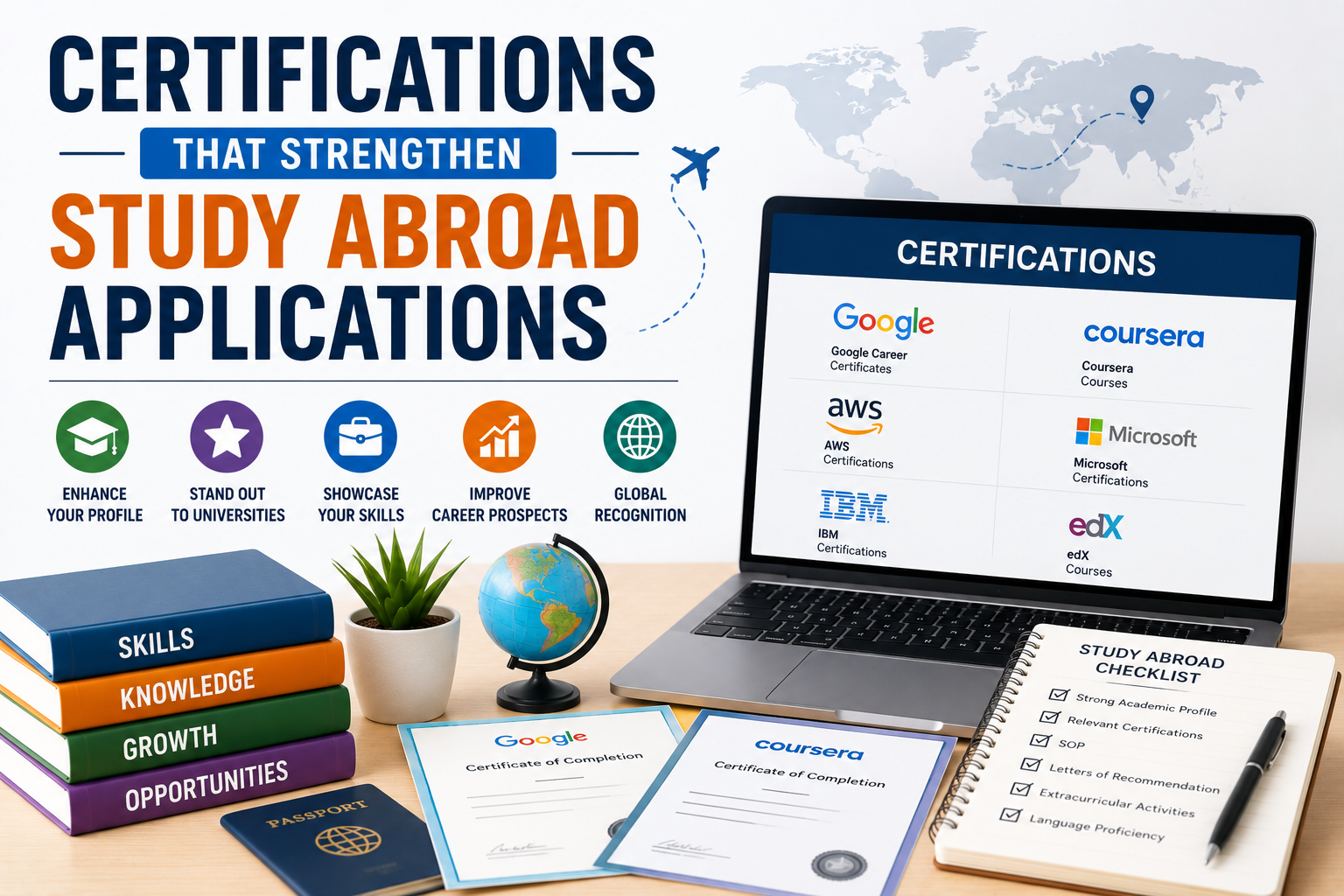
Certifications That Strengthen Study Abroad Applications – A Complete Guide
When applying to universities abroad, students often focus only on:
- CGPA
- IELTS or TOEFL scores
- Statement of Purpose (SOP)
- Letters of Recommendation (LORs)
While these are essential, there's another way to strengthen your application:
Professional certifications.
Certifications show universities that you are willing to learn beyond your classroom, develop practical skills, and invest in your future.
Although certifications usually don't replace academic requirements, they can help make your profile stand out—especially when applying to competitive programs.
Let's explore how certifications can strengthen your study abroad application and which ones are worth considering.
Why Do Certifications Matter?
Universities appreciate students who demonstrate curiosity and a commitment to continuous learning.
A relevant certification can show that you have:
- Practical knowledge
- Industry awareness
- Technical skills
- Self-learning ability
- Motivation to grow
These qualities can strengthen your overall profile and support your application.
Do Universities Require Certifications?
In most cases, no.
Most universities do not make certifications mandatory for admission.
However, having relevant certifications can provide an advantage, especially if:
- Your CGPA is average.
- You have limited work experience.
- You are applying for competitive programs.
- You want to showcase technical or professional skills.
Think of certifications as a valuable addition—not a replacement—for your academic qualifications.
Benefits of Professional Certifications
Completing certifications can help you:
Demonstrate Practical Skills
Certifications often include real-world assignments and projects that complement your academic learning.
Strengthen Your Student Profile
Universities look at your overall profile, and certifications reflect initiative and dedication.
Prepare for Your Master's Program
Many certifications introduce concepts you'll encounter during your degree, helping you build a strong foundation.
Improve Employability
The skills gained through certifications can also be useful when applying for internships or jobs after graduation.
Best Certifications for Computer Science Students
If you're planning to study:
- Computer Science
- Artificial Intelligence
- Data Science
- Software Engineering
consider certifications in:
- Python Programming
- SQL and Databases
- Machine Learning
- Cloud Computing
- Cybersecurity
- Data Analytics
These certifications help demonstrate technical proficiency and industry readiness.
Best Certifications for Engineering Students
Engineering students can benefit from certifications related to:
- AutoCAD
- SolidWorks
- MATLAB
- PLC Programming
- Lean Manufacturing
- Six Sigma
- Project Management
Choose certifications relevant to your intended specialization.
Best Certifications for Business Students
Students applying for business-related programs may consider certifications in:
- Digital Marketing
- Business Analytics
- Financial Analysis
- Excel for Business
- Project Management
- Customer Relationship Management (CRM)
These certifications can strengthen business school applications.
Best Certifications for Healthcare Students
Healthcare applicants can explore certifications in:
- Medical Terminology
- Healthcare Management
- Public Health
- First Aid
- Health Informatics
Always ensure the certification aligns with your academic goals.
Best Certifications for Arts and Design Students
Creative students can build their portfolios with certifications in:
- Graphic Design
- UI/UX Design
- Adobe Photoshop
- Adobe Illustrator
- Video Editing
- Digital Content Creation
A strong portfolio combined with certifications can make applications more competitive.
Where Can You Earn Quality Certifications?
Many trusted learning platforms offer recognized online courses.
Popular options include:
- Google Career Certificates
- Microsoft Learn
- AWS Skill Builder
- Coursera
- edX
- LinkedIn Learning
- Cisco Networking Academy
- IBM SkillsBuild
When selecting a course, prioritize quality and relevance over the number of certificates you collect.
How Many Certifications Should You Have?
There is no ideal number.
Instead of completing dozens of unrelated courses, focus on:
- Two or three high-quality certifications that match your field.
- Practical projects that demonstrate your learning.
- Skills that support your career goals.
A few meaningful certifications are more valuable than a long list of unrelated ones.
Should You Mention Certifications in Your SOP?
Yes—if they are relevant.
You can briefly explain:
- What you learned.
- Why you chose the certification.
- How it prepared you for your master's program.
- How it supports your career goals.
Avoid listing certifications without connecting them to your academic journey.
Can Certifications Compensate for a Low CGPA?
Certifications cannot replace academic performance, but they can strengthen an application.
For students with average grades, certifications may demonstrate:
- Initiative
- Skill development
- Technical competence
- Commitment to learning
Combined with a strong SOP, internships, and projects, certifications can contribute to a more competitive profile.
Common Mistakes Students Make
Collecting Random Certifications
Only choose certifications that relate to your intended course or career path.
Prioritizing Quantity Over Quality
Ten unrelated certificates are less valuable than two well-chosen, relevant ones.
Ignoring Practical Skills
Employers and universities often value projects and hands-on experience alongside certifications.
Forgetting to Update Their Resume
After earning a certification, remember to include it in your:
- Resume
- LinkedIn profile
- Portfolio (if applicable)
Tips for Choosing the Right Certification
Before enrolling, ask yourself:
✅ Is this certification relevant to my future course?
✅ Will it help me develop useful skills?
✅ Is it offered by a trusted organization?
✅ Can I apply what I learn in projects?
✅ Will it strengthen my study abroad profile?
If the answer is "yes," it is likely a worthwhile choice.
Build a Strong Profile Beyond Certifications
While certifications are valuable, universities also look at your complete application.
A strong profile includes:
- Good academic performance
- Relevant internships
- Practical projects
- Well-written SOP
- Strong LORs
- English language proficiency
- Clear career goals
Certifications work best when they complement these other elements.
Final Conclusion
Professional certifications are an excellent way to strengthen your study abroad application.
They demonstrate that you are proactive, committed to learning, and prepared to develop skills beyond your university curriculum.
Choose certifications that align with your academic interests and career ambitions rather than following trends.
Remember:
A relevant certification won't guarantee admission—but it can help you stand out as a motivated and well-prepared applicant.
Verified by Edulx Germany Specialists
Have questions about your profile or APS verification? Book a free 1-on-1 session with our Pune counsellors.