Common Reasons Why Students Fail Abroad (And How to Avoid Them)
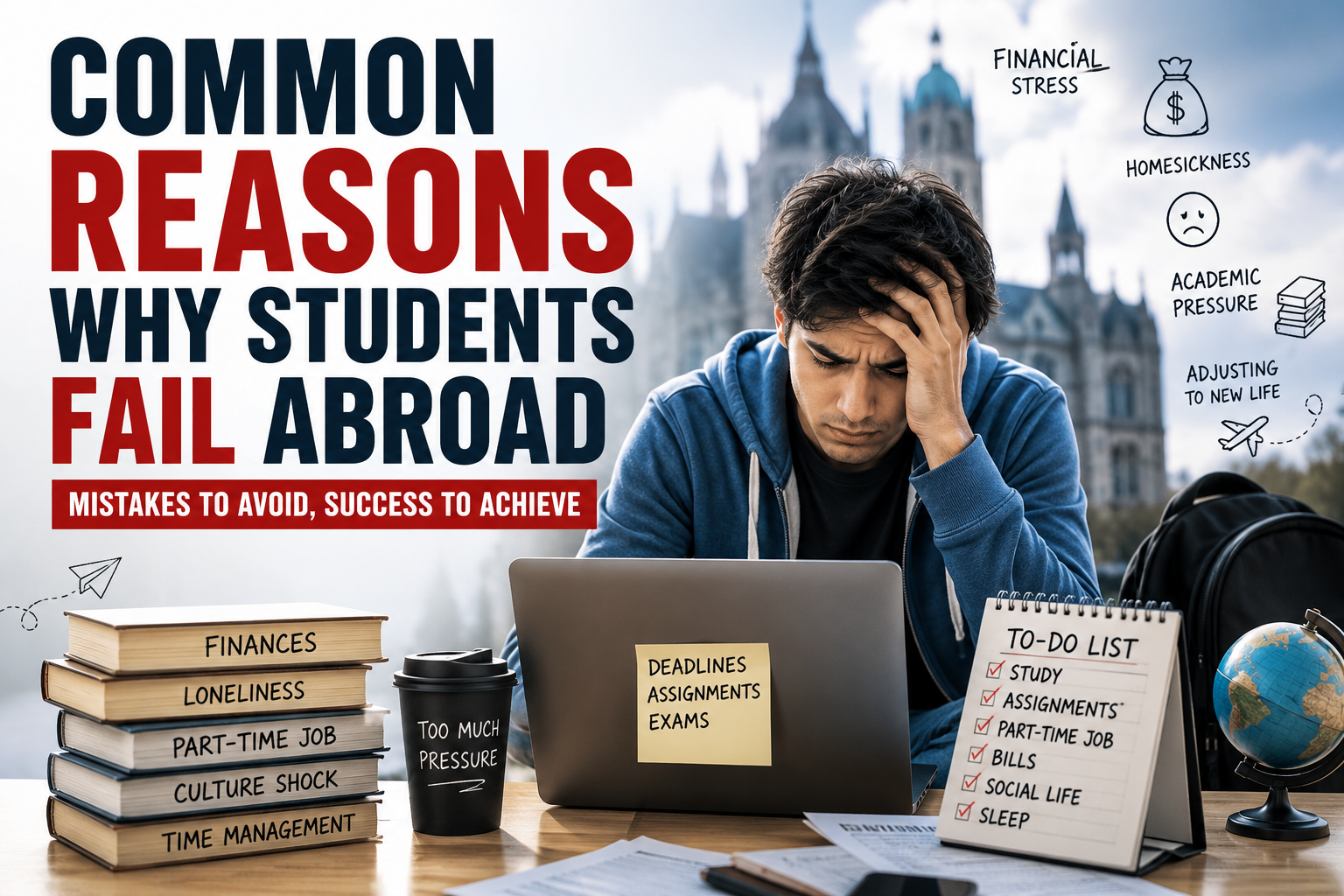
Common Reasons Why Students Fail Abroad (And How to Avoid Them)
Studying abroad is a dream for thousands of students every year. The opportunity to study in countries like Canada, Germany, Australia, or United Kingdom brings exciting possibilities, better career opportunities, and global exposure.
However, many students underestimate the challenges of international education. Some struggle academically, some face financial problems, while others deal with loneliness, stress, or poor decision-making.
Success abroad is not only about getting a visa or university admission. It also depends on discipline, planning, mindset, adaptability, and responsibility.
In this guide, we will explore the most common reasons why students fail abroad and how you can avoid these mistakes while building a successful international career.
1. Poor Financial Planning
One of the biggest reasons students struggle abroad is poor financial management.
Many students assume that part-time jobs will easily cover all their expenses. In reality, living costs in countries like Canada, Australia, and the UK can be very high.
Students often fail because they:
- Spend too much on lifestyle
- Do not track monthly expenses
- Depend completely on part-time jobs
- Ignore emergency savings
- Use credit irresponsibly
Financial pressure eventually affects mental health, academics, and overall performance.
How to Avoid It
- Create a realistic monthly budget
- Keep emergency funds ready
- Avoid unnecessary luxury spending
- Understand actual living costs before moving abroad
- Focus on studies first, not only part-time income
2. Lack of Time Management
Studying abroad requires balancing multiple responsibilities:
- Classes
- Assignments
- Exams
- Part-time jobs
- Cooking
- Cleaning
- Social life
Many students fail because they cannot manage time properly.
Some students spend excessive hours working part-time and neglect academics. Others procrastinate until deadlines become overwhelming.
Poor time management often leads to:
- Low grades
- Missed assignments
- Stress and burnout
- Attendance issues
How to Avoid It
- Use a weekly schedule
- Prioritize important tasks
- Avoid excessive working hours
- Complete assignments early
- Maintain a healthy routine
3. Focusing More on Part-Time Jobs Than Studies
Many international students become too focused on earning money.
While part-time work is important for managing expenses, your main goal abroad should still be education and career growth.
Students sometimes:
- Skip lectures
- Ignore projects
- Work late-night shifts daily
- Become physically exhausted
- Lose academic focus
This eventually impacts grades, internships, and future job opportunities.
How to Avoid It
- Treat part-time work as secondary
- Choose flexible work schedules
- Maintain balance between work and academics
- Focus on long-term career goals instead of short-term earnings
4. Poor Mental Health and Loneliness
Living away from family in a completely different country can feel emotionally overwhelming.
Many students experience:
- Homesickness
- Anxiety
- Isolation
- Depression
- Stress from academic pressure
Cultural differences and loneliness can affect confidence and motivation.
Unfortunately, many students avoid discussing mental health issues until the situation becomes serious.
How to Avoid It
- Stay connected with family and friends
- Build a social circle abroad
- Participate in university activities
- Seek counseling support if needed
- Maintain physical health and sleep routines
5. Weak Communication Skills
Communication skills play a major role in student success abroad.
Students with poor communication often struggle with:
- Classroom participation
- Presentations
- Interviews
- Networking
- Team projects
- Job applications
Even technically skilled students can miss opportunities because of weak communication abilities.
How to Improve
- Practice English daily
- Improve speaking confidence
- Join student communities
- Attend workshops and seminars
- Practice interviews and presentations
6. Unrealistic Expectations
Some students imagine that life abroad will be easy and glamorous.
Social media often creates unrealistic expectations about:
- Student lifestyle
- Income
- Jobs
- PR opportunities
- Career success
In reality, studying abroad requires hard work, discipline, patience, and sacrifice.
Students who are mentally unprepared often struggle to adapt.
How to Avoid It
- Research properly before moving abroad
- Understand real challenges
- Prepare mentally for difficulties
- Focus on long-term growth instead of instant success
7. Choosing the Wrong Course or Country
Many students select courses based only on trends, friends, or immigration possibilities.
This leads to:
- Lack of interest in studies
- Poor academic performance
- Career confusion
- Difficulty finding jobs
Choosing the wrong country can also create problems if the lifestyle, climate, or job market does not match your goals.
How to Avoid It
- Choose courses based on interests and career goals
- Research industry demand carefully
- Understand the country’s job market
- Seek professional guidance before applying
8. Not Adapting to New Culture
Cultural adaptation is an important part of studying abroad.
Students sometimes struggle because they:
- Avoid interacting with locals
- Stay isolated within small communities
- Resist new systems and lifestyles
This limits personal growth and opportunities.
How to Avoid It
- Be open-minded
- Respect cultural differences
- Explore local traditions and events
- Improve communication with international students
9. Ignoring Academic Integrity Rules
Universities abroad take plagiarism and academic misconduct very seriously.
Many students unknowingly make mistakes like:
- Copying assignments
- Using AI improperly
- Sharing exam answers
- Submitting plagiarized work
This can result in:
- Failed subjects
- Suspensions
- Visa complications
How to Avoid It
- Understand university academic policies
- Use proper citations
- Write original assignments
- Ask professors for clarification when needed
10. Lack of Career Planning
Some students focus only on completing their degree without planning their future career.
They ignore:
- Networking
- Internships
- Skill development
- Resume building
- Industry certifications
As a result, they struggle during job searches after graduation.
How to Avoid It
- Start career planning early
- Build LinkedIn and resume profiles
- Attend career fairs
- Apply for internships
- Develop industry-relevant skills
Important Reality About Studying Abroad
Studying abroad is not a shortcut to success.
Success depends on:
- Discipline
- Consistency
- Adaptability
- Smart decision-making
- Hard work
Students who stay focused, financially responsible, mentally strong, and career-oriented usually succeed internationally.
Final Conclusion
Studying abroad can completely transform your future if approached with the right mindset.
Most students do not fail because they are unintelligent. They fail because of:
- Poor planning
- Financial mistakes
- Lack of discipline
- Weak mental health support
- Unrealistic expectations
Whether you plan to study in Canada, Germany, Australia, or the United Kingdom, understanding these challenges early can help you avoid costly mistakes.
Prepare properly, stay focused on your goals, and treat your international education journey as a long-term investment in your future.
Verified by Edulx Germany Specialists
Have questions about your profile or APS verification? Book a free 1-on-1 session with our Pune counsellors.