Common Reasons Why Study Abroad Applications Get Rejected
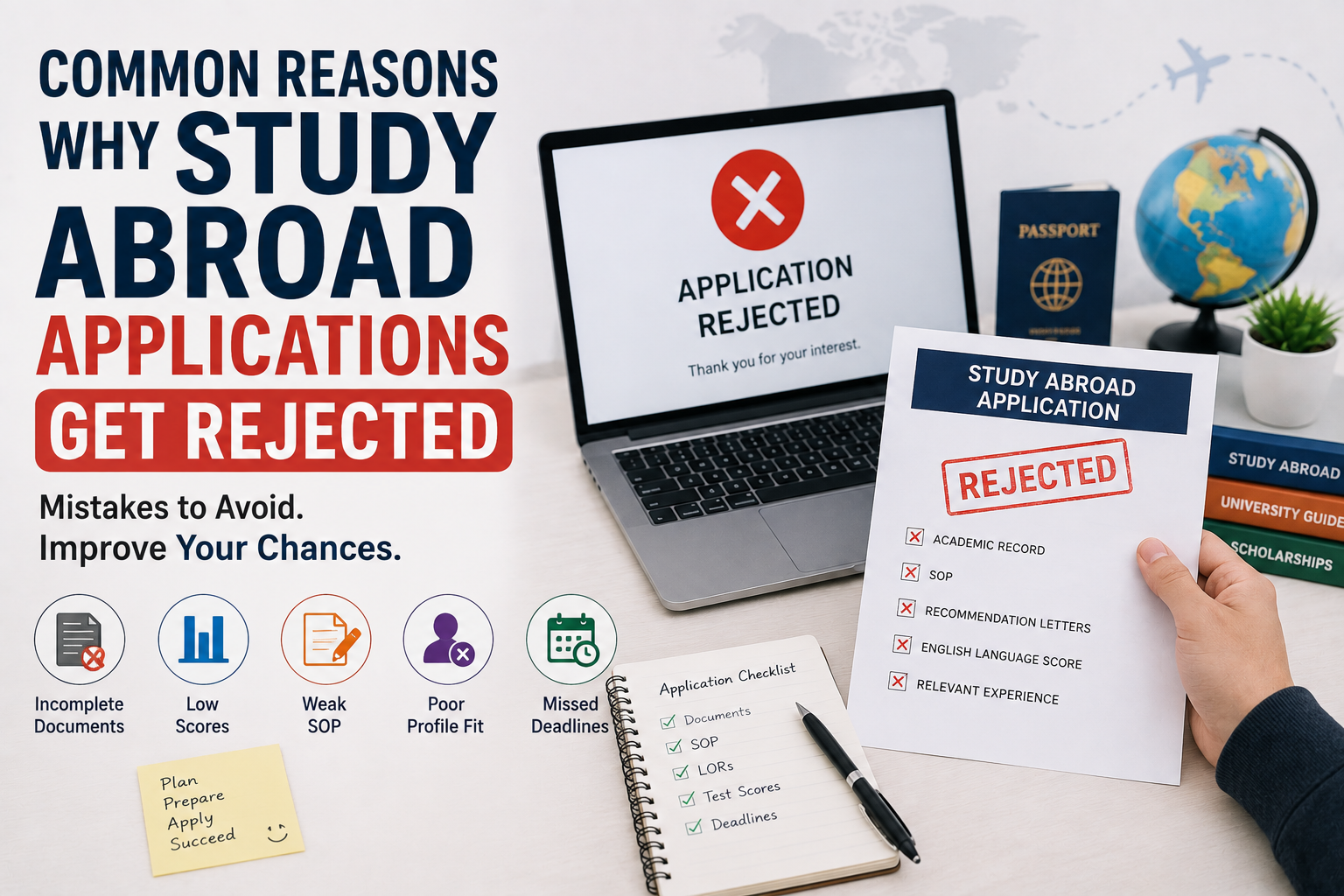
Common Reasons Why Study Abroad Applications Get Rejected – And How to Avoid Them
Applying to universities abroad is an exciting step, but not every application results in an admission offer.
Many students receive rejection letters each year—not necessarily because they lack potential, but because of avoidable mistakes or strong competition.
The good news is that understanding the common reasons for rejection can help you prepare a stronger application.
Let's look at the factors that may affect admission decisions and how you can improve your chances.
1. Not Meeting Academic Requirements
One of the most common reasons for rejection is failing to meet the university's minimum academic requirements.
Universities may consider:
- Previous academic performance
- Required prerequisite subjects
- Degree classification or equivalent
- Course-specific eligibility
Before applying, carefully review the official admission criteria to ensure you meet the basic requirements.
2. Applying to the Wrong Course
Some students choose a program that does not match their academic background.
For example:
- Applying for a highly technical master's program without the required prerequisite subjects.
- Choosing a course unrelated to previous studies without explaining the transition.
Admissions committees often look for evidence that your academic background aligns with the chosen program.
3. Weak Statement of Purpose (SOP)
A poorly written SOP can significantly reduce your application's impact.
Common mistakes include:
- Generic content
- Copying templates
- Lack of career goals
- Grammar mistakes
- Not explaining why you chose the university
A strong SOP should clearly describe:
- Your academic journey
- Motivation
- Career plans
- Why the program is the right fit
4. Incomplete Application
Missing documents are another common reason for delays or rejection.
Universities may require:
- Academic transcripts
- Degree certificate
- SOP
- LORs
- Resume
- English language test scores
- Portfolio (where applicable)
Always use a checklist before submitting your application.
5. Missing Application Deadlines
Submitting an application after the deadline may result in it not being considered.
Remember to track:
- Application deadlines
- Scholarship deadlines
- Document submission dates
- English test score deadlines
Applying early also gives you more time to resolve unexpected issues.
6. Poor English Language Scores
Many universities require proof of English proficiency.
If your test score does not meet the minimum requirement, your application may not move forward.
Prepare well for exams such as:
- IELTS
- TOEFL
- PTE Academic
- Duolingo English Test (where accepted)
Always verify the accepted tests and required scores for your chosen university.
7. Weak Letters of Recommendation
Recommendation letters should provide meaningful insights into your academic or professional abilities.
Weak LORs often:
- Are too short
- Lack specific examples
- Appear generic
- Do not relate to your chosen program
Choose recommenders who know your work well and can write detailed, personalised letters.
8. Ignoring Course-Specific Requirements
Some programs require additional materials such as:
- Portfolios
- Research proposals
- Writing samples
- Entrance exams
- Interviews
Failing to submit these requirements can affect your application.
Always read the program guidelines carefully.
9. Applying Only to Highly Competitive Universities
Many students apply exclusively to top-ranked universities.
While aiming high is great, it is also important to create a balanced university list.
Include:
- Dream universities
- Target universities
- Safe universities
This increases your chances of receiving admission offers.
10. Poorly Prepared Resume
Your resume should clearly present:
- Education
- Projects
- Internships
- Research
- Technical skills
- Certifications
- Leadership experience
A cluttered or outdated resume may not effectively showcase your strengths.
11. Lack of Relevant Experience
For some programs, practical experience can strengthen your application.
Examples include:
- Internships
- Research projects
- Work experience
- Volunteer activities
- Technical certifications
Relevant experience demonstrates your commitment to the field.
12. Providing Incorrect or Inconsistent Information
Inconsistent details across your application can create confusion.
Examples include:
- Different spellings of your name
- Incorrect academic information
- Mismatched dates
- Missing employment details
Review your application carefully before submission.
13. Strong Competition
Sometimes, even strong applicants may not receive an offer.
Highly competitive programs often receive far more qualified applications than available seats.
A rejection does not necessarily mean your profile is weak—it may simply reflect the competitive nature of the admissions process.
How to Strengthen Your Application
You can improve your chances by:
- Researching universities thoroughly
- Applying early
- Writing a personalised SOP
- Preparing strong recommendation letters
- Building practical experience through internships and projects
- Earning relevant certifications
- Tailoring your application to each university
A well-planned application is often more competitive than one submitted at the last minute.
Common Myths About Rejections
"Low Grades Mean Automatic Rejection"
Not always.
Many universities evaluate applications holistically and consider factors beyond academic performance.
"One Rejection Means I Can't Study Abroad"
Many students receive one or more rejections before securing admission elsewhere.
Continue improving your profile and applying strategically.
"Higher Rankings Guarantee Better Chances"
Top-ranked universities are usually more competitive.
Choose universities based on program quality, career goals, and profile compatibility—not rankings alone.
Application Checklist Before Submission
Before clicking "Submit," make sure you have:
✅ Verified the eligibility requirements.
✅ Uploaded all required documents.
✅ Written a personalised SOP.
✅ Included strong recommendation letters.
✅ Updated your resume.
✅ Checked application deadlines.
✅ Reviewed all information for accuracy.
Taking a few extra minutes to review your application can help prevent avoidable mistakes.
Final Conclusion
A study abroad application can be rejected for many reasons, including missing documents, weak application materials, unmet eligibility requirements, or intense competition.
The good news is that many of these issues can be avoided with careful planning, thorough research, and attention to detail.
Every application is an opportunity to present your academic achievements, skills, and future goals. By preparing thoughtfully and applying strategically, you can significantly improve your chances of receiving an admission offer.
Remember:
A rejection is not the end of your study abroad journey—it is an opportunity to learn, strengthen your profile, and apply more effectively in the future.
Verified by Edulx Germany Specialists
Have questions about your profile or APS verification? Book a free 1-on-1 session with our Pune counsellors.