Complete Study Abroad Checklist for Indian Students (2027 Guide)
Introduction
Planning to study abroad involves much more than getting admission to a university.
From selecting the right course and preparing documents to applying for a visa and booking your flight, every step requires careful planning.
Missing even one important task can delay your application or create unnecessary stress.
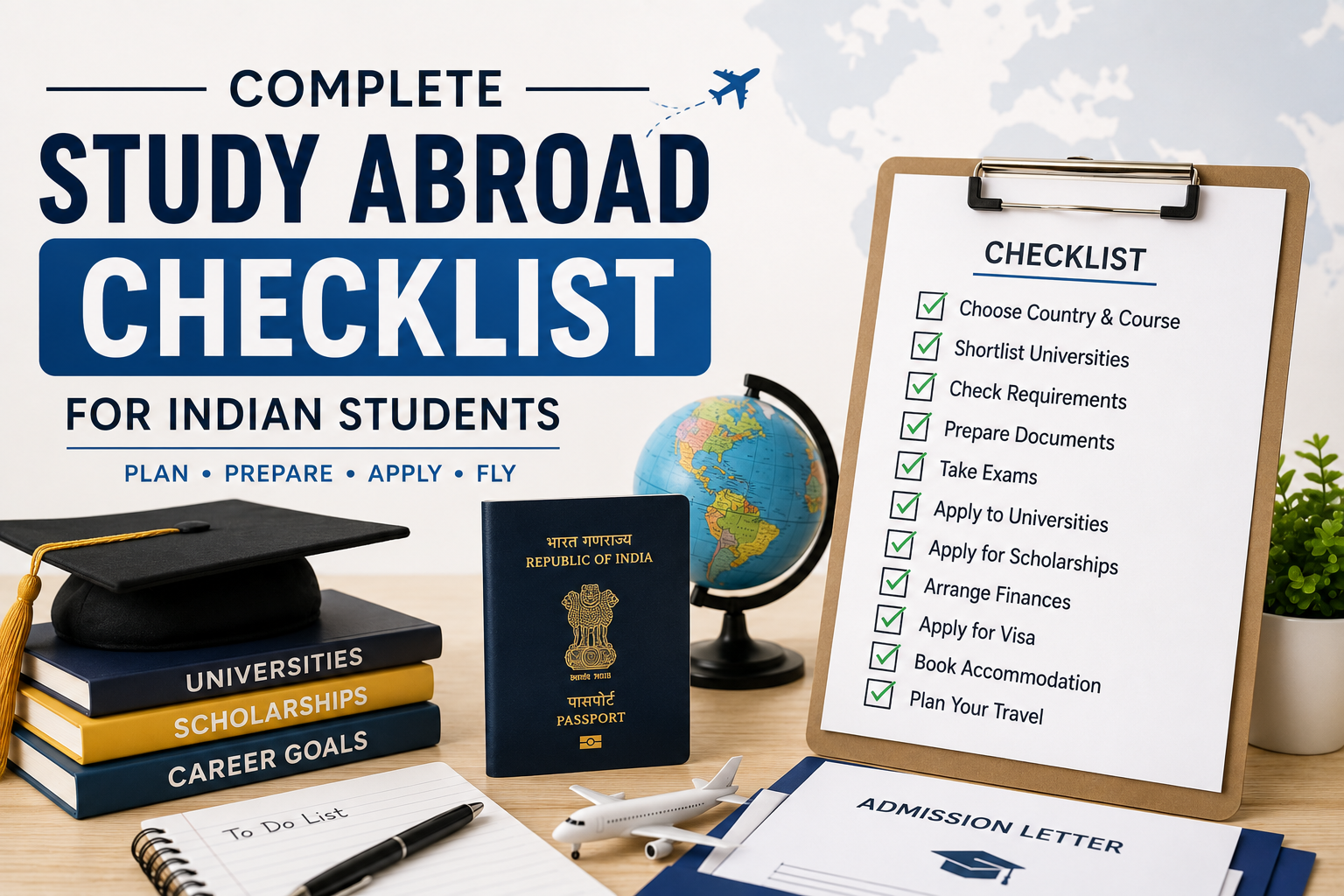
This complete study abroad checklist will help Indian students stay organized throughout the entire process.
Step 1: Define Your Career Goal
Before choosing a country or university, ask yourself:
- What do I want to study?
- Which career do I want to pursue?
- Which countries are best for my field?
- What is my budget?
Having clear goals makes university selection much easier.
Step 2: Research Countries
Compare different destinations based on:
- Education quality
- Tuition fees
- Living expenses
- Scholarships
- Post-study work opportunities
- Career prospects
- Language requirements
Choose a country that matches your academic goals and financial plan.
Step 3: Shortlist Universities
Create a balanced university list by including:
- Dream universities
- Target universities
- Safe universities
While shortlisting, compare:
- Course curriculum
- Entry requirements
- Tuition fees
- Rankings
- Internship opportunities
- Graduate outcomes
Step 4: Check Eligibility Requirements
Review the admission criteria carefully.
Common requirements include:
- Academic transcripts
- Minimum CGPA or percentage
- English language proficiency
- Entrance tests (if applicable)
- Statement of Purpose (SOP)
- Letters of Recommendation (LOR)
Always verify the latest requirements on the university's official website.
Step 5: Prepare for Language Tests
Depending on your chosen destination or university, you may need to take an English language proficiency test.
Start preparing early and schedule your exam well before university deadlines.
Step 6: Collect Academic Documents
Prepare digital and physical copies of important documents.
These typically include:
- Passport
- Academic transcripts
- Degree certificate or provisional certificate
- Mark sheets
- Resume/CV
- SOP
- LORs
- English language test results
- Internship certificates
- Project certificates
Keep multiple scanned copies in cloud storage for easy access.
Step 7: Apply to Universities
Complete each application carefully.
Before submitting:
- Double-check personal information
- Upload all required documents
- Review your SOP and resume
- Pay the application fee if required
Track every application using a spreadsheet.
Step 8: Apply for Scholarships
Search for:
- University scholarships
- Government scholarships
- Merit-based scholarships
- Need-based scholarships
- Private funding opportunities
Apply as early as possible because scholarship deadlines may differ from admission deadlines.
Step 9: Arrange Your Finances
Estimate your total budget, including:
- Tuition fees
- Living expenses
- Health insurance
- Visa fees
- Flight tickets
- Accommodation
- Daily expenses
If required, research education loan options and prepare financial documents.
Step 10: Accept Your Admission Offer
After receiving admission offers:
- Compare universities
- Review tuition fees
- Check scholarship details
- Understand payment deadlines
- Accept the best offer
Read all university instructions carefully before confirming your seat.
Step 11: Apply for Your Student Visa
Prepare all visa-related documents.
These may include:
- Passport
- Admission letter
- Financial proof
- Visa application form
- Passport-sized photographs
- Health insurance
- Academic documents
Visa requirements vary by country, so always follow official government guidelines.
Step 12: Arrange Accommodation
Research accommodation options such as:
- University residence halls
- Shared apartments
- Private student housing
- Homestays
Book accommodation early to secure better availability and pricing.
Step 13: Purchase Health Insurance
Many countries require international students to have valid health insurance.
Check whether:
- Insurance is mandatory
- The university provides a recommended plan
- Private insurance is accepted
Step 14: Book Your Flight
Once your visa is approved:
- Compare flight prices
- Book early for better fares
- Check baggage allowances
- Confirm arrival dates with your university
Step 15: Prepare for Departure
Before leaving India:
- Pack important documents
- Carry prescribed medicines (if required)
- Exchange some local currency
- Inform your bank about international travel
- Save emergency contacts
- Download useful travel and navigation apps
Keep original documents in your cabin baggage.
Essential Checklist
Before departure, ensure you have:
- Passport
- Student visa
- Admission letter
- Tuition fee receipt
- Accommodation confirmation
- Flight ticket
- Health insurance
- Academic documents
- Passport photographs
- Emergency contact details
- Debit/Credit card
- Local currency
Common Mistakes Students Make
Applying Too Late
Starting early provides more university and scholarship options.
Ignoring Deadlines
Missing deadlines can delay your admission or visa process.
Not Organizing Documents
Keep all important files properly labeled and backed up.
Underestimating Expenses
Prepare a realistic budget before leaving for your destination.
The Real Truth
Studying abroad is a step-by-step process, not a single event.
Students who plan early, stay organized, and complete every requirement on time usually experience a much smoother admission and visa journey.
Using a checklist helps reduce stress, avoid missed deadlines, and improve your overall study abroad experience.
Frequently Asked Questions (FAQs)
1. When should I start preparing to study abroad?
It is recommended to begin planning 8–12 months before your intended intake.
2. What documents are required to study abroad?
Requirements vary by university and country but commonly include a passport, academic transcripts, SOP, LORs, resume, and proof of English proficiency.
3. When should I apply for scholarships?
Apply as early as possible, as scholarship deadlines may be earlier than university application deadlines.
4. Is health insurance mandatory?
Many countries require international students to have valid health insurance. Check your destination country's regulations.
5. How much money should I budget?
Your budget depends on the country, university, tuition fees, accommodation, and living expenses.
6. What is the most important tip for studying abroad?
Start early, stay organized, research carefully, and keep track of every deadline and document.
Verified by Edulx Germany Specialists
Have questions about your profile or APS verification? Book a free 1-on-1 session with our Pune counsellors.