How Early Should You Start Planning to Study Abroad?
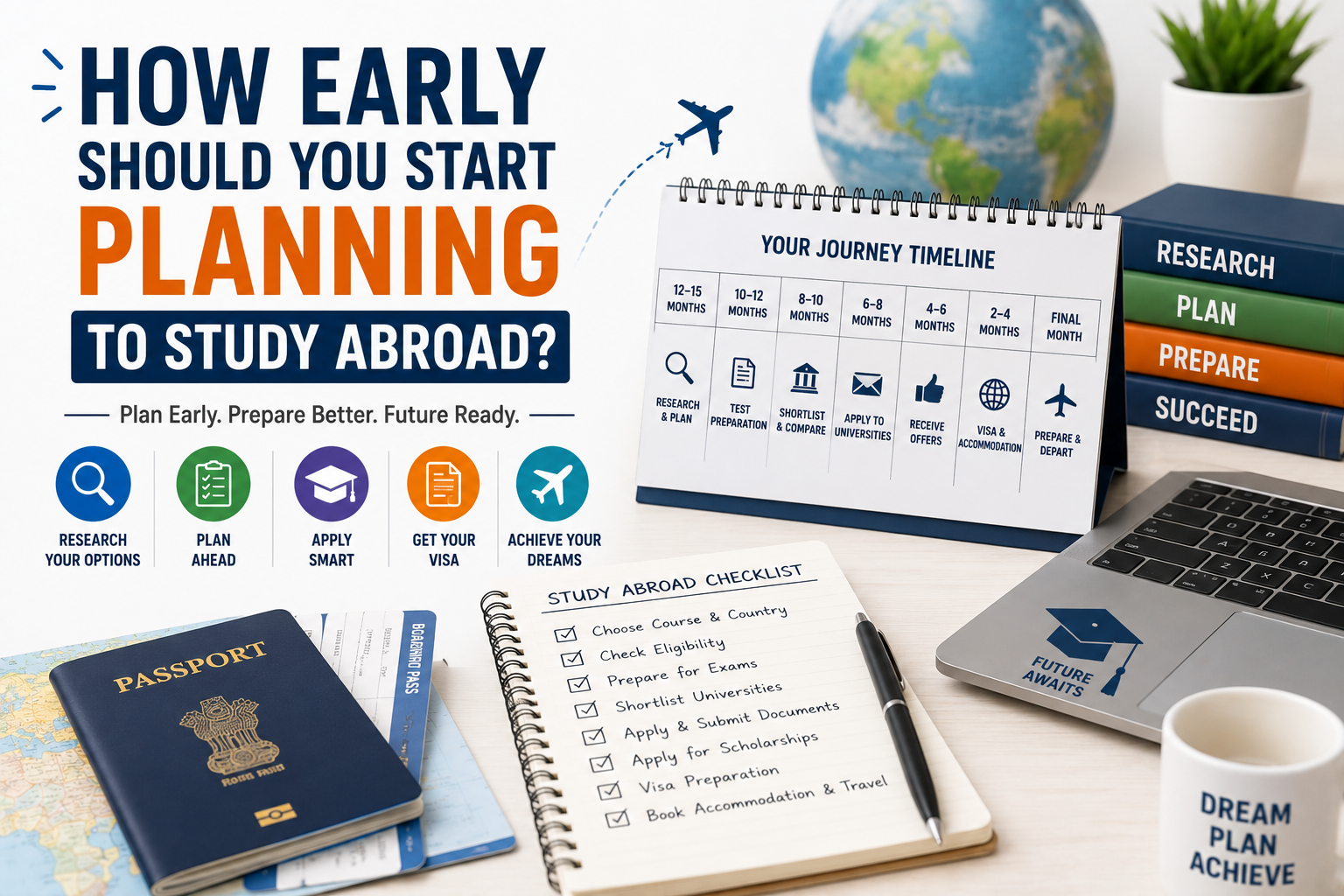
How Early Should You Start Planning to Study Abroad? – The Complete Timeline Guide
One of the most common questions students ask is:
"When should I start planning to study abroad?"
Some students begin preparing more than a year in advance, while others start only a few weeks before application deadlines.
Although it is possible to secure admission with limited preparation time, starting early gives you a significant advantage.
Planning ahead allows you to:
- Explore more universities
- Prepare stronger applications
- Apply for scholarships
- Meet admission deadlines comfortably
- Complete visa formalities without unnecessary stress
If you're serious about studying abroad, understanding the ideal timeline can make the entire process smoother.
Why Early Planning Matters
Studying abroad involves much more than submitting an application.
Students often need to prepare:
- University shortlist
- English language test scores
- Academic documents
- Statement of Purpose (SOP)
- Letters of Recommendation (LORs)
- Financial documents
- Student visa application
Trying to complete everything at the last minute can lead to mistakes and missed opportunities.
Early planning helps you stay organized and confident throughout the process.
The Ideal Timeline
For most international students, beginning 10 to 15 months before your intended intake is a practical approach.
This gives enough time to research universities, prepare documents, improve your profile, and complete admission and visa processes.
Let's look at a recommended timeline.
12–15 Months Before Your Intake
This is the research and planning stage.
During this period, you should:
- Decide which country suits your goals.
- Explore different master's or bachelor's programs.
- Understand admission requirements.
- Estimate tuition fees and living expenses.
- Research scholarship opportunities.
This is also a good time to identify any weaknesses in your profile that you can improve before applying.
10–12 Months Before Your Intake
Now it's time to prepare your application profile.
Focus on:
- Preparing for English proficiency tests such as IELTS, TOEFL, PTE, or Duolingo.
- Completing internships or projects.
- Earning relevant certifications.
- Updating your resume.
Improving your profile at this stage can increase your admission chances.
8–10 Months Before Your Intake
Begin shortlisting universities.
Choose a balanced mix of:
- Dream universities
- Target universities
- Safe universities
While shortlisting, compare:
- Admission requirements
- Course curriculum
- Tuition fees
- Scholarship opportunities
- Career outcomes
Avoid selecting universities based only on rankings.
6–8 Months Before Your Intake
This is the application stage.
Prepare and submit:
- SOP
- LORs
- Academic transcripts
- Passport copy
- English language test scores
- Resume
Double-check every document before submission.
Submitting early can be especially beneficial for universities with rolling admissions.
4–6 Months Before Your Intake
Universities begin releasing admission decisions.
Once you receive an offer:
- Accept your preferred university.
- Pay any required deposit.
- Prepare financial documents.
- Begin student visa preparation.
If accommodation applications are open, apply early to secure better options.
2–4 Months Before Your Intake
Focus on travel preparation.
Complete:
- Student visa application
- Health insurance
- Flight bookings
- Accommodation confirmation
- Currency exchange planning
Also attend any university orientation sessions if available.
Final Month Before Departure
As your departure date approaches:
- Organize important documents.
- Pack essential items.
- Arrange airport transportation.
- Learn about your destination city.
- Connect with other international students if possible.
Being well prepared helps reduce first-day anxiety.
Can You Start Later?
Yes.
Many students successfully apply with less preparation time.
However, starting late may reduce:
- University choices
- Scholarship opportunities
- Preparation time
- Flexibility
Late applications can also create pressure during visa processing.
Whenever possible, begin planning early.
What Should You Do First?
If you're just beginning your study abroad journey, start with these steps:
Choose Your Career Goal
Think about where you want your education to lead.
Select the Right Course
Research programs that align with your interests and future plans.
Research Countries
Compare:
- Education systems
- Tuition fees
- Living costs
- Job opportunities
- Post-study work options
Check Eligibility
Review university admission requirements before building your shortlist.
Common Mistakes Students Make
Waiting for Final-Year Results
Many universities accept applications before final results are released.
Waiting unnecessarily may delay your plans.
Ignoring Scholarship Deadlines
Scholarship applications often close earlier than admission deadlines.
Starting English Test Preparation Too Late
Language tests may require multiple attempts.
Beginning early provides flexibility.
Rushing the SOP
A well-written SOP takes time.
Avoid writing it at the last minute.
Applying Without Research
Submitting applications without understanding course requirements can result in unnecessary rejections.
Benefits of Starting Early
Students who plan ahead often enjoy:
- More university options
- Better scholarships
- Stronger applications
- Reduced stress
- Smoother visa processing
- Better accommodation choices
Early planning also allows time to improve any weak areas in your profile.
A Simple Planning Checklist
Before applying abroad, ensure you have:
✅ Chosen your preferred course
✅ Researched suitable countries
✅ Shortlisted universities
✅ Prepared for English language tests
✅ Collected academic documents
✅ Written your SOP
✅ Requested LORs
✅ Planned your finances
✅ Checked scholarship opportunities
✅ Reviewed application deadlines
Completing this checklist early can make your application journey much easier.
Final Conclusion
The best time to start planning to study abroad is 10 to 15 months before your intended intake.
Early preparation gives you more choices, more time to build a strong profile, and a greater chance of securing admission and scholarships.
While last-minute applications can still succeed, planning ahead reduces stress and allows you to make informed decisions.
Remember:
The earlier you start, the more opportunities you'll create for yourself.
A well-planned study abroad journey begins long before you submit your first application.
Verified by Edulx Germany Specialists
Have questions about your profile or APS verification? Book a free 1-on-1 session with our Pune counsellors.