How to Build a Global Career After Graduation
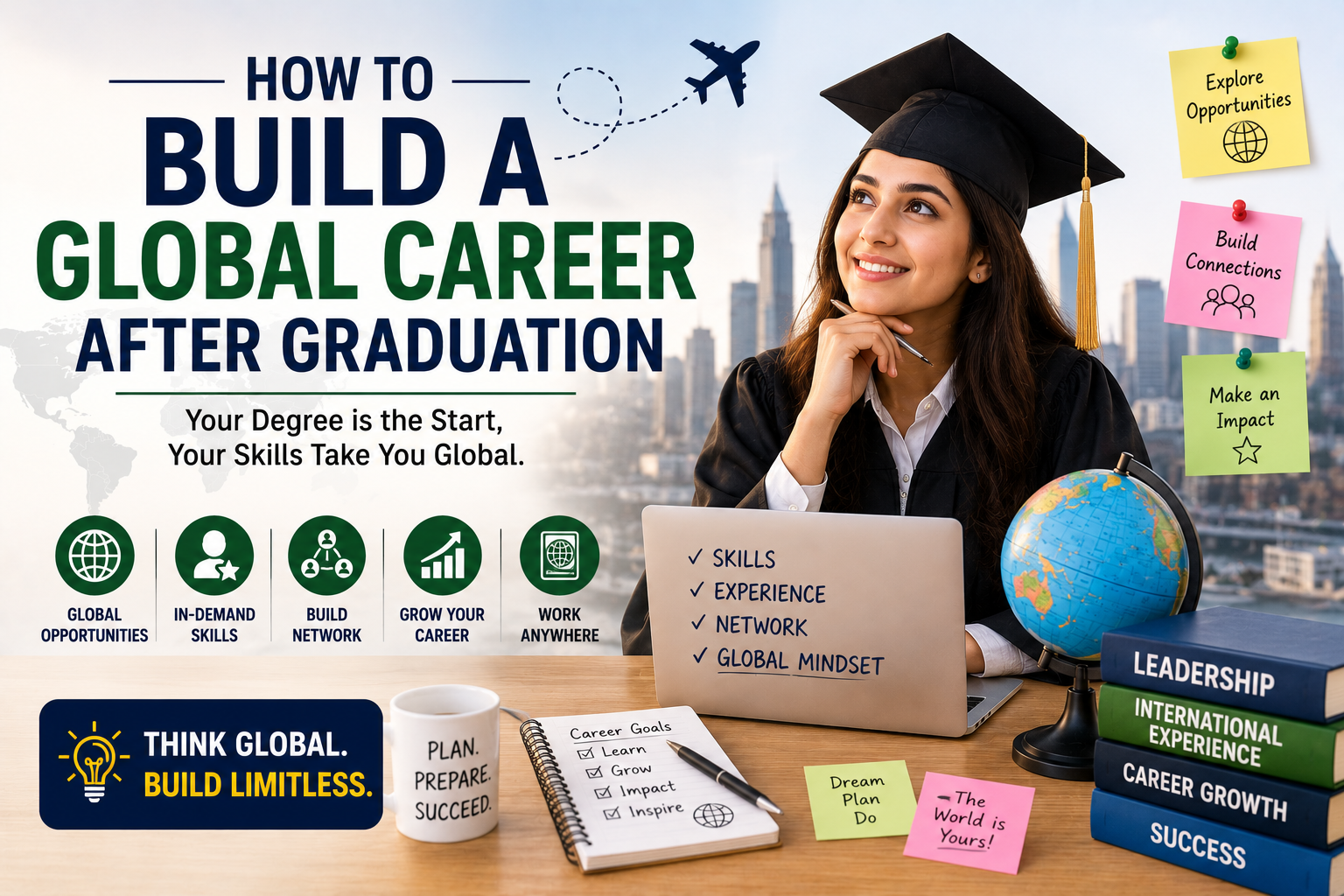
Introduction
For many students, graduation feels like the finish line.
In reality, it is just the beginning of a much bigger journey.
Today's job market is more global than ever. Companies hire talent from different countries, remote work opportunities are increasing, and international experience is highly valued.
The question is no longer just "How do I get a job?"
The real question is:
"How do I build a global career?"
What Is a Global Career?
A global career means building professional opportunities that are not limited to one country.
It may involve:
- Working for multinational companies
- Working abroad
- Managing international projects
- Remote global employment
- International business roles
A global career offers exposure to different cultures, industries, and markets.
Focus on Skills, Not Just Degrees
A degree helps open doors.
Skills help you grow.
Employers increasingly look for:
- Problem-solving ability
- Communication skills
- Leadership
- Digital skills
- Adaptability
- Teamwork
Students who continuously upgrade their skills often stay competitive in the global job market.
Gain Practical Experience Early
Experience matters.
Students should actively seek:
- Internships
- Research projects
- Part-time jobs
- Industry projects
- Volunteer opportunities
Practical experience demonstrates that you can apply knowledge in real-world situations.
Build a Professional Network
Networking plays a major role in career growth.
Useful networking opportunities include:
- University alumni groups
- Industry events
- Career fairs
- Professional associations
- LinkedIn networking
Many job opportunities come through professional connections rather than online applications alone.
Develop Strong Communication Skills
Global companies value employees who can communicate effectively.
Important areas include:
- Professional writing
- Presentations
- Team collaboration
- Cross-cultural communication
Strong communication skills often help candidates stand out.
Learn International Workplace Culture
Different countries have different workplace expectations.
Understanding:
- Professional etiquette
- Team dynamics
- Business communication
- Workplace ethics
can help students adapt more quickly to international environments.
Build Your Online Presence
Recruiters frequently review online profiles.
Students should maintain:
- Professional LinkedIn profile
- Updated resume
- Portfolio (if applicable)
- Professional achievements
A strong online presence increases visibility.
Consider Certifications
Industry certifications can strengthen your profile.
Popular areas include:
- Data Analytics
- Cloud Computing
- Artificial Intelligence
- Project Management
- Cybersecurity
- Digital Marketing
Certifications demonstrate commitment to learning and professional development.
Gain International Exposure
International exposure can come from:
- Exchange programs
- Internships
- Research collaborations
- International conferences
- Global competitions
These experiences help develop a broader perspective.
Stay Updated With Industry Trends
Industries evolve rapidly.
Students should regularly follow:
- Industry news
- Market trends
- Emerging technologies
- Professional publications
Continuous learning is essential for long-term success.
Develop a Long-Term Career Plan
Instead of focusing only on the first job, think about:
- Where you want to be in 5 years
- Skills you need to develop
- Industries you want to enter
- Countries you want to work in
Strategic planning helps create a clearer career path.
Common Mistakes Graduates Make
Focusing Only on Grades
Academic performance matters, but employers also value practical skills and experience.
Ignoring Networking
Building relationships is often as important as submitting applications.
Stopping Learning After Graduation
The most successful professionals continue learning throughout their careers.
Applying Randomly
Targeted applications are generally more effective than mass applications.
Underestimating Soft Skills
Communication, teamwork, and adaptability are critical in global workplaces.
The Real Truth
Building a global career does not happen overnight.
It requires:
- Continuous learning
- Skill development
- Professional networking
- Practical experience
- Long-term planning
Students who invest in themselves consistently often create opportunities that extend far beyond one country or one job.
Your degree may start your journey, but your skills, experience, and mindset determine how far your career can go.
Frequently Asked Questions (FAQs)
1. What is a global career?
A career that involves international opportunities, multinational companies, or global professional exposure.
2. Is studying abroad enough to build a global career?
No. Students also need skills, experience, networking, and continuous learning.
3. How important is networking?
Networking is extremely valuable and can lead to internships, mentorships, and job opportunities.
4. Which skills are most important for global careers?
Communication, adaptability, leadership, problem-solving, and digital skills.
5. Can fresh graduates get international jobs?
Yes, especially if they have relevant skills, internships, and a strong professional profile.
6. What is the biggest mistake graduates make?
Assuming that a degree alone guarantees career success.
Verified by Edulx Germany Specialists
Have questions about your profile or APS verification? Book a free 1-on-1 session with our Pune counsellors.