How to Build a Monthly Student Budget
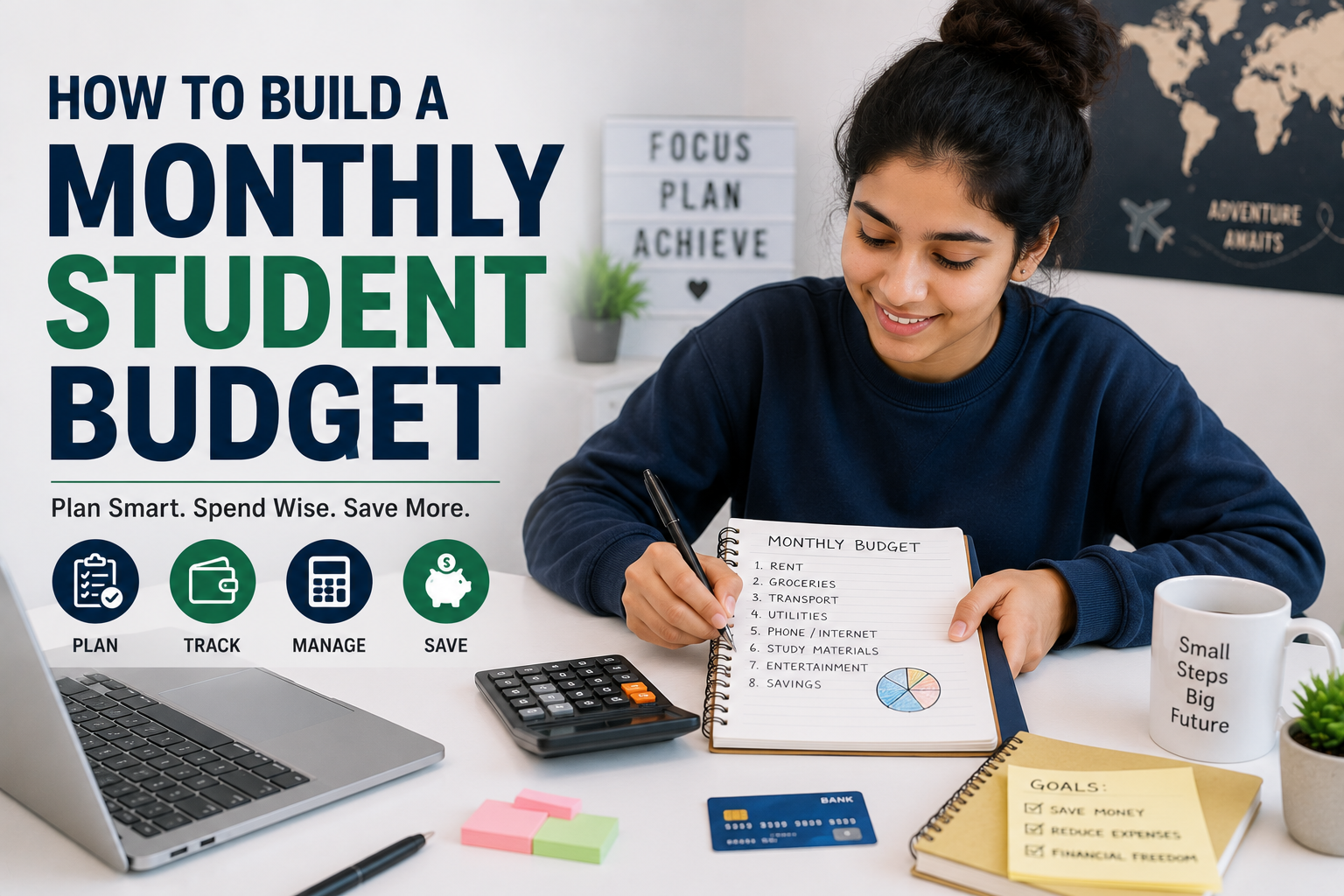
How to Build a Monthly Student Budget – A Complete Guide
Studying abroad is an exciting journey, but it also comes with financial responsibilities.
From rent and groceries to transportation and entertainment, expenses can quickly add up if you don't have a plan.
A monthly budget helps you stay in control of your money, reduce financial stress, and focus on your studies.
Whether you're studying in Germany, Canada, the UK, Australia, the USA, or another country, learning to manage your finances is an essential life skill.
Why Is a Monthly Budget Important?
A budget allows you to:
- Track your income and expenses
- Avoid overspending
- Save for emergencies
- Plan for future expenses
- Reduce financial stress
- Build healthy money habits
Budgeting doesn't mean you can't enjoy student life—it simply helps you spend wisely.
Step 1: Calculate Your Monthly Income
Start by listing all the money you expect to receive each month.
Possible sources include:
- Family support
- Scholarships
- Education loans
- Savings
- Part-time job income (where permitted)
- Research or teaching assistantships
Use only reliable income sources when planning your budget.
Step 2: List Your Fixed Expenses
Fixed expenses usually stay the same every month.
Examples include:
- Rent
- Tuition instalments (if paid monthly)
- Health insurance
- Mobile phone plan
- Internet
- Public transport pass
- Utility bills (if not included in rent)
These expenses should be your first priority.
Step 3: Estimate Your Variable Expenses
Variable expenses can change from month to month.
These may include:
- Groceries
- Dining out
- Coffee
- Entertainment
- Shopping
- Personal care
- Study materials
- Weekend trips
Tracking these expenses helps you identify areas where you can save money.
Step 4: Include an Emergency Fund
Unexpected expenses can happen at any time.
Examples include:
- Medical costs
- Laptop repairs
- Travel emergencies
- Unexpected course materials
Setting aside a small amount each month for emergencies can prevent financial difficulties later.
Step 5: Track Every Expense
For one month, record everything you spend.
This includes even small purchases such as:
- Coffee
- Snacks
- Bus tickets
- Online subscriptions
Many students are surprised to see how quickly small expenses add up.
Tracking helps you understand your spending habits.
Step 6: Separate Needs from Wants
Ask yourself before making a purchase:
Is this something I need or something I simply want?
Needs
- Rent
- Food
- Transportation
- Study materials
- Insurance
Wants
- Dining out frequently
- Luxury shopping
- Expensive gadgets
- Entertainment subscriptions you rarely use
Prioritizing needs helps you stay within your budget.
Step 7: Set Spending Limits
Create realistic monthly limits for each category.
For example:
- Accommodation
- Food
- Transport
- Entertainment
- Shopping
- Savings
Adjust your spending if you notice you're exceeding your planned budget.
Step 8: Use Budgeting Apps
Budgeting apps make financial management easier.
They can help you:
- Track expenses
- Set savings goals
- Categorize spending
- Monitor monthly trends
- Receive spending alerts
Choose an app that suits your preferences and supports your local banking system if possible.
Ways to Save Money as a Student
Small savings can make a big difference over time.
Consider these ideas:
Cook at Home
Preparing your own meals is often much more affordable than eating out regularly.
Use Student Discounts
Many businesses offer discounts on:
- Public transportation
- Museums
- Software
- Restaurants
- Entertainment
- Clothing
Always carry your student ID.
Buy Used Textbooks
Second-hand books can significantly reduce study costs.
You can also check your university library before purchasing new books.
Share Accommodation
Living with roommates often reduces:
- Rent
- Utility bills
- Internet costs
Plan Your Shopping
Avoid impulse purchases by creating a shopping list before visiting stores.
Common Budgeting Mistakes
Not Tracking Expenses
Without tracking, it's difficult to know where your money is going.
Ignoring Small Purchases
Small daily expenses may seem insignificant but can become a large monthly cost.
Forgetting Annual or One-Time Expenses
Include costs such as:
- Visa renewals
- Travel
- University activities
- Winter clothing
- Exam fees
Planning ahead helps avoid surprises.
Depending Entirely on Part-Time Income
Part-time opportunities may vary depending on your location, schedule, and visa conditions.
Your budget should remain realistic even if your working hours change.
Not Saving for Emergencies
Unexpected expenses are part of student life.
Building an emergency fund provides financial security.
Tips for Managing Money Abroad
✔ Pay bills on time.
✔ Avoid unnecessary debt.
✔ Compare prices before buying.
✔ Monitor your bank balance regularly.
✔ Review your budget every month.
✔ Increase savings whenever possible.
Good financial habits developed during university often benefit you throughout your career.
Sample Budget Categories
Your monthly budget might include:
- Accommodation
- Groceries
- Transportation
- Utilities
- Mobile & Internet
- Health Insurance
- Study Materials
- Entertainment
- Personal Expenses
- Emergency Savings
The exact amounts will depend on your destination country, city, and lifestyle.
Budget Review Checklist
At the end of every month, ask yourself:
✅ Did I stay within my planned budget?
✅ Which category exceeded expectations?
✅ Where did I save money?
✅ Did I add to my emergency fund?
✅ Can I improve next month's budget?
Regular reviews help you build stronger financial habits.
Final Conclusion
Creating a monthly student budget is one of the smartest habits you can develop while studying abroad.
A simple budget helps you understand your finances, avoid unnecessary stress, and make informed spending decisions.
Remember that budgeting is not about limiting your experiences—it's about making your money work effectively so you can enjoy your study abroad journey with greater confidence.
Financial discipline today can create greater opportunities tomorrow. A well-managed budget allows you to focus on learning, exploring, and making the most of your international education experience.
Verified by Edulx Germany Specialists
Have questions about your profile or APS verification? Book a free 1-on-1 session with our Pune counsellors.