How to Build a Strong Portfolio for Admissions (2026 Guide)
Introduction
Many students focus only on grades, test scores, and SOPs when applying abroad.
However, for many programs, a strong portfolio can become a major advantage.
A portfolio allows universities to see your skills, achievements, projects, and practical experience beyond academic marks.
Whether you are applying for design, engineering, business, computer science, architecture, media, or creative programs, a well-organized portfolio can strengthen your application.
What Is an Admissions Portfolio?
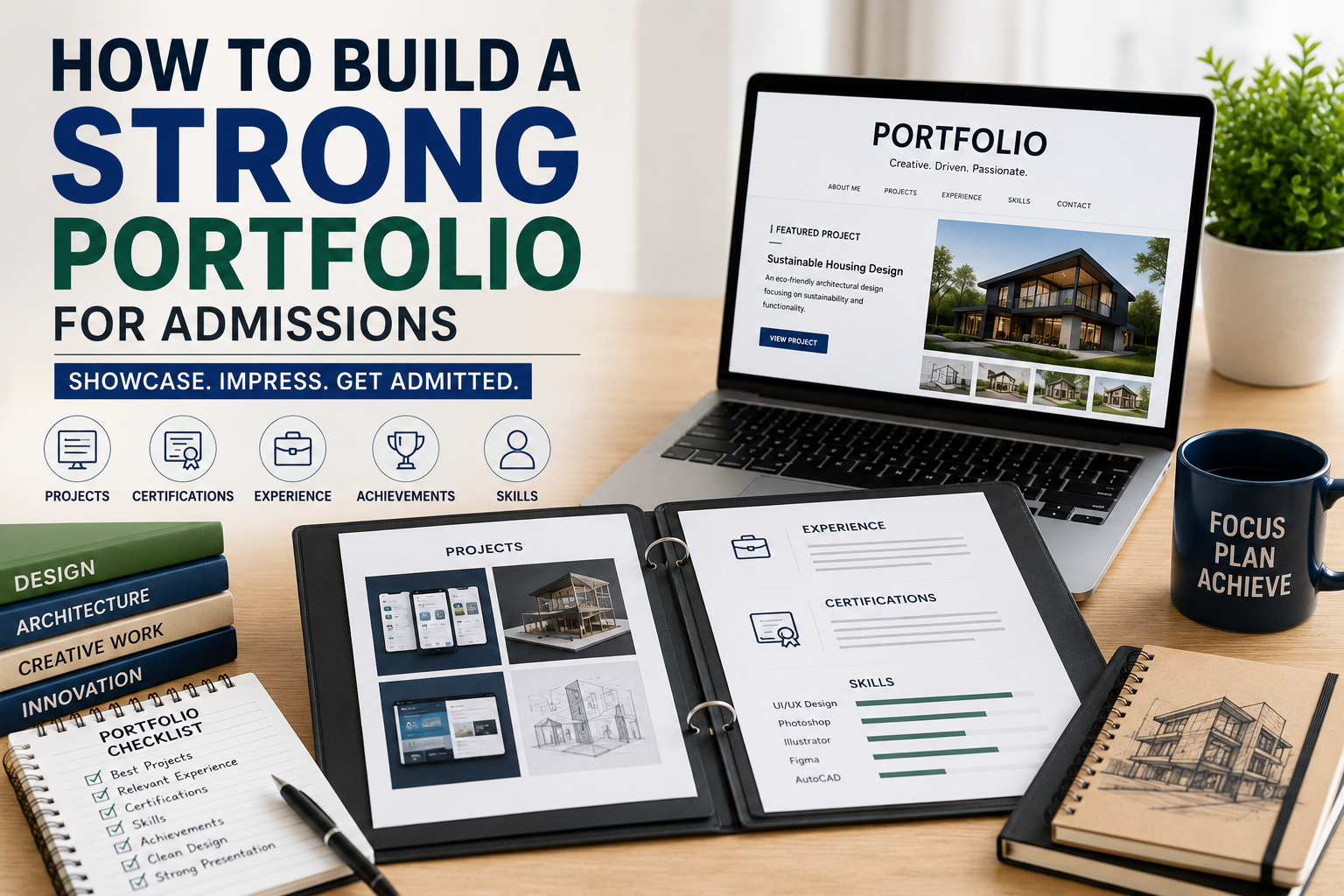
A portfolio is a collection of work that demonstrates your abilities, achievements, and potential.
It provides evidence of:
- Technical skills
- Academic projects
- Research work
- Creative work
- Professional experience
- Leadership activities
The goal is to showcase your capabilities in a structured and professional manner.
Why Do Universities Value Portfolios?
Universities want to understand more than just grades.
A portfolio helps them evaluate:
- Practical skills
- Problem-solving abilities
- Creativity
- Commitment to learning
- Real-world experience
It often provides a clearer picture of your potential than transcripts alone.
What Should You Include in Your Portfolio?
Academic Projects
Projects are one of the strongest portfolio components.
Include:
- Project title
- Objective
- Methodology
- Results
- Skills used
Focus on projects relevant to the program you are applying for.
Internships
Internships demonstrate practical exposure.
Mention:
- Organization name
- Duration
- Responsibilities
- Key learnings
Relevant internships can significantly strengthen your profile.
Certifications
Professional certifications show initiative and continuous learning.
Examples include:
- Google Certifications
- AWS Certifications
- Microsoft Certifications
- Coursera Certificates
- Industry-specific programs
Only include certifications relevant to your field.
Research Work
If you have participated in research activities, include:
- Research papers
- Conference presentations
- Publications
- Research projects
Research experience is especially valuable for master's and research-focused programs.
Technical Skills
Create a section highlighting your technical expertise.
Examples:
- Programming languages
- Data analysis tools
- Laboratory techniques
- Software applications
- Design tools
Be honest about your skill level.
Extracurricular Activities
Universities appreciate well-rounded applicants.
Include:
- Leadership positions
- Student organizations
- Volunteer work
- Sports achievements
- Community initiatives
These experiences demonstrate personal growth and teamwork.
Awards and Achievements
Highlight notable accomplishments such as:
- Academic awards
- Competitions
- Scholarships
- Recognition programs
Achievements provide additional credibility.
How to Organize Your Portfolio
A professional portfolio should be:
- Easy to read
- Well-structured
- Visually clean
- Logically organized
A common structure is:
- Introduction
- Education
- Projects
- Internships
- Skills
- Certifications
- Achievements
- Contact Information
Consistency is important.
Digital Portfolio vs PDF Portfolio
Many students choose:
PDF Portfolio
Advantages:
- Easy to share
- Professional appearance
- Suitable for most university applications
Digital Portfolio
Examples:
- Personal website
- GitHub profile
- Behance profile
- LinkedIn portfolio
These platforms allow universities to explore your work in greater detail.
Common Portfolio Mistakes
Including Too Much Information
Quality is more important than quantity.
Only include work that adds value.
Poor Organization
A cluttered portfolio can make strong work difficult to find.
Using Generic Descriptions
Explain your role and contributions clearly.
Including Unrelated Content
Focus on work relevant to the course and career path.
Not Updating the Portfolio
Keep projects, achievements, and certifications current.
Tips for Building a Strong Portfolio
- Start early
- Focus on quality projects
- Document achievements regularly
- Use professional formatting
- Highlight measurable outcomes
- Keep content relevant to the chosen program
A portfolio should tell a clear story about your academic and professional development.
Who Needs a Portfolio Most?
Portfolios are especially important for students applying to:
- Architecture
- Design
- Animation
- Media
- Fine Arts
- Computer Science
- Engineering
- Research-based programs
Even when not mandatory, a portfolio can strengthen an application.
The Real Truth
A strong portfolio is not about having hundreds of certificates.
It is about presenting meaningful experiences, projects, and achievements in a clear and professional way.
Universities want evidence of your potential.
A well-prepared portfolio helps demonstrate that potential effectively.
Frequently Asked Questions (FAQs)
1. Is a portfolio required for all study abroad applications?
No. Requirements vary depending on the university and course.
2. What should students include in a portfolio?
Projects, internships, certifications, skills, achievements, and relevant experiences.
3. Can engineering students create portfolios?
Yes. Engineering portfolios can include projects, internships, technical skills, and research work.
4. Is a digital portfolio better than a PDF portfolio?
Both have advantages. Many students use both formats.
5. How long should a portfolio be?
There is no fixed length, but it should remain concise and relevant.
6. What is the biggest portfolio mistake?
Including irrelevant content that does not support the application.
Verified by Edulx Germany Specialists
Have questions about your profile or APS verification? Book a free 1-on-1 session with our Pune counsellors.