How to Create a Winning Academic Portfolio
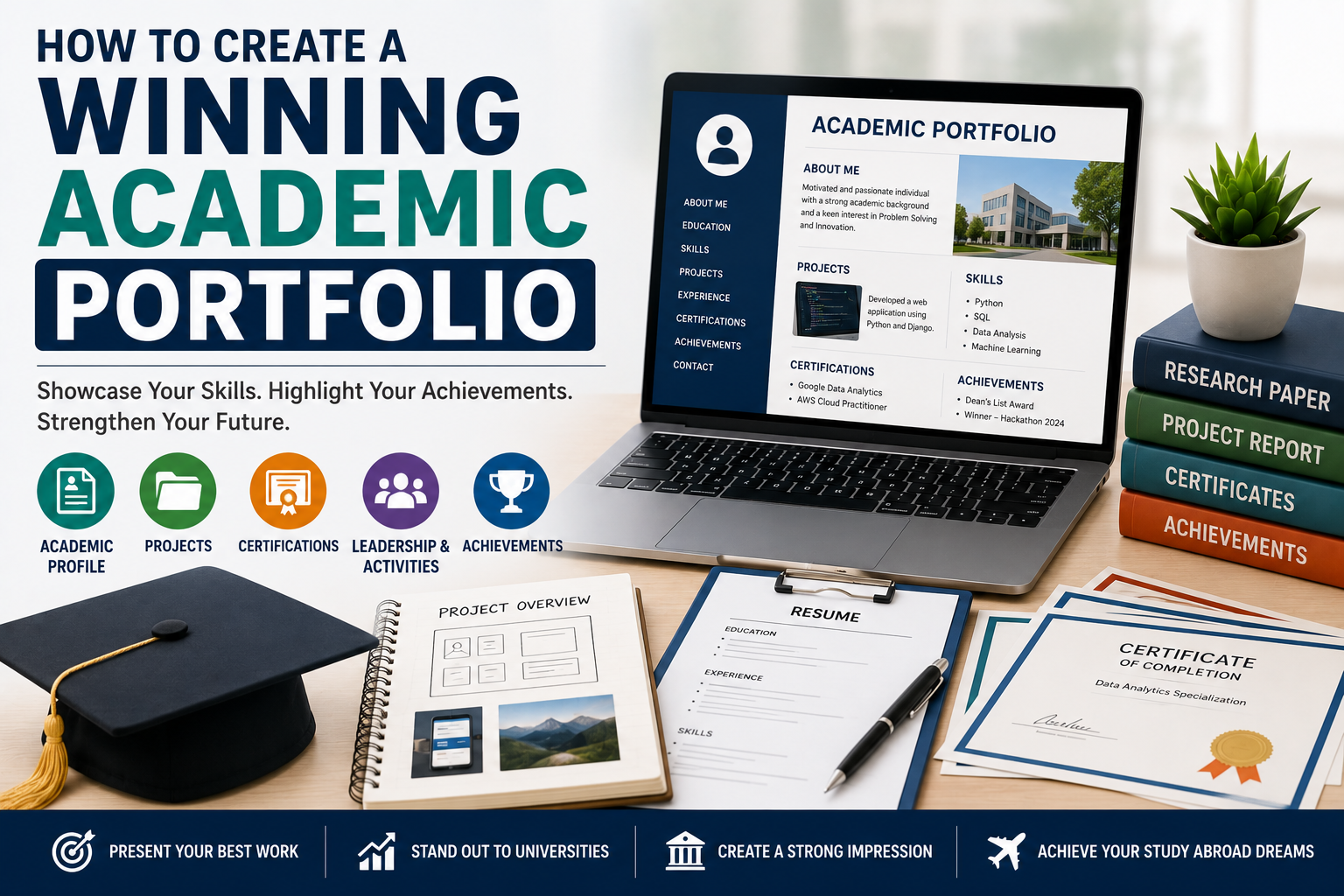
How to Create a Winning Academic Portfolio – A Complete Guide
When students prepare to study abroad, they often focus on:
- CGPA
- IELTS or TOEFL scores
- Statement of Purpose (SOP)
- Letters of Recommendation (LORs)
While these are essential, many students overlook another powerful tool:
An academic portfolio.
A well-organized academic portfolio highlights your achievements, projects, certifications, and skills in one place. It provides universities with a broader picture of who you are and what you can contribute.
Let's explore how to build an academic portfolio that stands out.
What Is an Academic Portfolio?
An academic portfolio is a collection of documents and evidence that showcases your academic journey, skills, and accomplishments.
It goes beyond your transcript by demonstrating:
- Technical skills
- Research experience
- Projects
- Certifications
- Leadership
- Extracurricular activities
- Career goals
Think of it as your personal academic showcase.
Do Universities Require an Academic Portfolio?
Not always.
For many master's programs, an academic portfolio is optional.
However, it is commonly required or highly beneficial for programs in:
- Architecture
- Design
- Fine Arts
- Media
- Animation
- Computer Science (project-based programs)
- Engineering (for research-focused applications)
Even when not required, having a portfolio can strengthen your profile.
Why Is an Academic Portfolio Important?
A portfolio helps admissions committees see your abilities beyond grades.
It demonstrates:
- Practical knowledge
- Creativity
- Consistency
- Problem-solving skills
- Professional growth
- Commitment to your field
It can also help during scholarship and internship applications.
What Should an Academic Portfolio Include?
A strong portfolio should be clear, organized, and relevant.
1. Professional Cover Page
Include:
- Full Name
- Degree
- University/College
- Contact Information
- LinkedIn Profile (optional)
- Portfolio Date
Keep the design simple and professional.
2. Career Objective
Write a short introduction about:
- Your academic interests
- Career aspirations
- Why you want to study abroad
Keep it concise—around one paragraph.
3. Academic Qualifications
Include:
- Degree name
- College/University
- Graduation year
- CGPA or Percentage
- Key academic achievements
Present information in a clean table or timeline.
4. Technical Skills
Mention skills relevant to your field.
Examples:
Computer Science
- Python
- Java
- SQL
- Machine Learning
- Data Analysis
Engineering
- AutoCAD
- MATLAB
- SolidWorks
- PLC Programming
Business
- Excel
- Power BI
- Financial Analysis
- Digital Marketing
Focus on skills you can confidently demonstrate.
5. Academic Projects
This is one of the most important sections.
For each project include:
- Project title
- Objective
- Technologies used
- Your role
- Key outcomes
- Skills gained
If possible, add screenshots or links to GitHub or your portfolio website.
6. Internships and Work Experience
Mention:
- Organization name
- Duration
- Role
- Responsibilities
- Major achievements
Highlight experiences relevant to your chosen master's program.
7. Certifications
Include relevant certifications such as:
- Google Career Certificates
- Microsoft Learn
- AWS
- Coursera
- edX
- Cisco
- IBM SkillsBuild
Mention the issuing organization and completion date.
8. Research Experience
If applicable, include:
- Research papers
- Final-year thesis
- Conference presentations
- Research internships
Briefly describe your contribution and outcomes.
9. Extracurricular Activities
Showcase meaningful involvement in:
- Student clubs
- Leadership roles
- Volunteering
- Sports
- Hackathons
- Competitions
Explain your role and achievements rather than simply listing activities.
10. Awards and Achievements
Include:
- Academic awards
- Scholarships
- Competition wins
- Merit certificates
- Recognition from organizations
Only include achievements that add value to your application.
11. Languages
Mention languages you can communicate in.
Example:
- English
- Hindi
- Marathi
If applicable, include language proficiency test scores.
12. Resume or CV
Attach your latest professional resume at the end of the portfolio.
Ensure it matches the information provided throughout the portfolio.
How Should You Design Your Portfolio?
Keep the design:
- Clean
- Professional
- Easy to read
- Consistent
Use:
- Clear headings
- Simple fonts
- Plenty of white space
- High-quality visuals (only where relevant)
Avoid excessive colors, animations, or decorative elements.
Digital Portfolio vs PDF Portfolio
PDF Portfolio
Ideal for:
- University applications
- Scholarship applications
- Email submissions
Easy to download and share.
Online Portfolio
Useful for:
- LinkedIn
- Personal websites
- Recruiters
- Internship applications
You can include project links, videos, and interactive content.
Many students choose to have both.
Common Mistakes Students Make
Including Everything
Only include achievements relevant to your academic and career goals.
Poor Organization
Admissions officers should be able to navigate your portfolio easily.
Using Low-Quality Images
If you include visuals, ensure they are clear and professional.
Ignoring Grammar and Formatting
Proofread carefully before sharing your portfolio.
Not Updating the Portfolio
Regularly add:
- New certifications
- Projects
- Internships
- Awards
A current portfolio reflects continuous growth.
Tips to Make Your Portfolio Stand Out
✔ Tailor it for your chosen course.
✔ Highlight measurable achievements.
✔ Focus on quality over quantity.
✔ Include real project outcomes.
✔ Keep the file size manageable.
✔ Use consistent formatting throughout.
Does an Academic Portfolio Guarantee Admission?
No.
Universities evaluate your complete application, including:
- Academic performance
- SOP
- LORs
- English proficiency
- Relevant experience
A strong portfolio supports these components but does not replace them.
Quick Portfolio Checklist
Before submitting your application, ensure your portfolio includes:
✅ Cover Page
✅ Career Objective
✅ Academic Qualifications
✅ Technical Skills
✅ Projects
✅ Internships
✅ Certifications
✅ Research (if applicable)
✅ Extracurricular Activities
✅ Awards
✅ Resume
A complete and organized portfolio leaves a positive impression.
Final Conclusion
An academic portfolio is one of the best ways to showcase your journey beyond grades.
It tells your story through your projects, skills, experiences, and achievements, helping universities understand your potential as a future student.
Remember:
A winning academic portfolio isn't about having the most achievements—it's about presenting your best work in a clear, organized, and professional way.
Verified by Edulx Germany Specialists
Have questions about your profile or APS verification? Book a free 1-on-1 session with our Pune counsellors.