How to Get a Graduate Job After Completing Your Degree
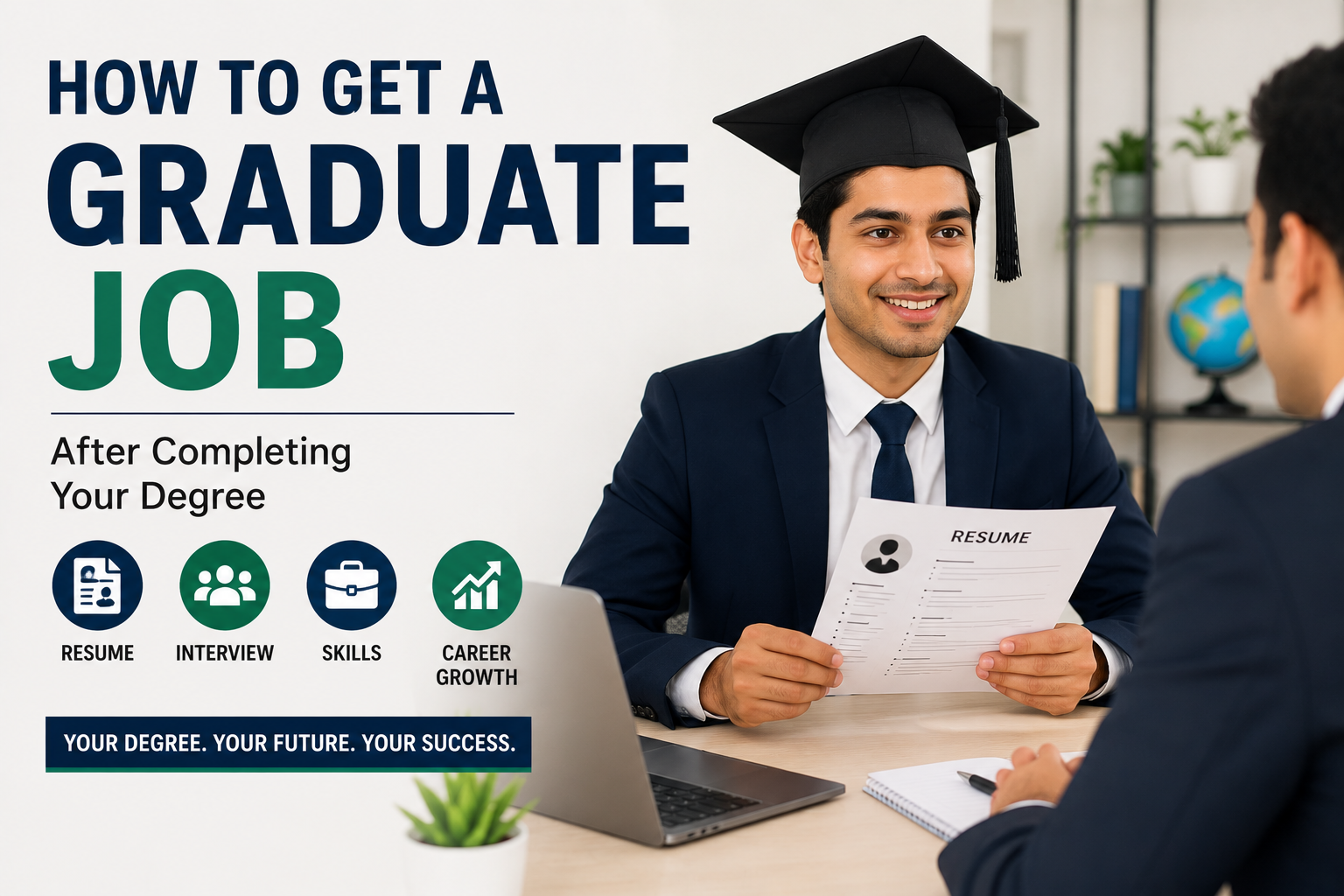
How to Get a Graduate Job After Completing Your Degree – A Complete Guide
Graduating from an international university is an exciting milestone.
However, earning your degree is only the beginning.
For many international students, the next goal is securing a graduate job that helps launch a successful global career.
The good news is that thousands of international graduates find employment every year.
The key is preparing early and understanding what employers are looking for.
This guide explains practical steps that can improve your chances of finding a graduate job after completing your degree abroad.
What Is a Graduate Job?
A graduate job is an entry-level professional position designed for students who have recently completed their degree.
These roles allow graduates to:
- Apply academic knowledge
- Gain professional experience
- Develop technical and workplace skills
- Begin long-term career growth
Many companies also offer structured graduate programs with training and mentorship.
Start Preparing Before Graduation
One of the biggest mistakes students make is waiting until graduation to begin their job search.
Instead, start preparing during your studies by:
- Building your resume
- Completing internships
- Networking with professionals
- Improving technical skills
- Participating in career events
Early preparation gives you a significant advantage.
Build a Strong Resume
Your resume should clearly highlight:
- Education
- Projects
- Internships
- Technical skills
- Certifications
- Leadership experience
- Volunteer work
Keep it concise, professional, and tailored to each job application.
Avoid sending the same resume to every employer.
Gain Internship Experience
Internships are one of the best ways to improve employability.
They help you:
- Gain practical experience
- Understand workplace expectations
- Build professional connections
- Develop confidence
Many employers prefer graduates who have completed relevant internships.
Develop In-Demand Skills
Employers value both technical and soft skills.
Technical Skills
Examples include:
- Programming
- Data Analysis
- CAD Software
- Cloud Computing
- Financial Modeling
- Digital Marketing
Choose skills relevant to your field.
Soft Skills
Equally important are:
- Communication
- Teamwork
- Leadership
- Problem-solving
- Adaptability
- Time management
These skills are essential in almost every profession.
Create a Professional LinkedIn Profile
LinkedIn has become an important platform for graduate recruitment.
Your profile should include:
- Professional photo
- Clear headline
- Education
- Skills
- Projects
- Certifications
- Internship experience
Connect with:
- Alumni
- Professors
- Recruiters
- Industry professionals
A well-maintained LinkedIn profile can increase your visibility to employers.
Attend Career Fairs
Universities frequently organize:
- Career fairs
- Employer networking events
- Recruitment drives
- Industry seminars
These events provide opportunities to:
- Meet recruiters
- Learn about job openings
- Practice networking
- Submit resumes directly
Prepare questions and carry updated copies of your resume.
Use Your University's Career Services
Many universities offer career support, including:
- Resume reviews
- Mock interviews
- Career counseling
- Job portals
- Employer networking sessions
Take advantage of these services throughout your studies.
Network Effectively
Networking can help you discover opportunities that may not be publicly advertised.
Build relationships with:
- Professors
- Alumni
- Classmates
- Internship supervisors
- Industry mentors
Professional networking should focus on learning and building genuine connections rather than simply asking for jobs.
Prepare for Interviews
Employers assess more than technical knowledge.
Practice answering questions about:
- Your projects
- Internship experiences
- Career goals
- Problem-solving abilities
- Teamwork examples
Research the company before every interview.
Confidence comes from preparation.
Tailor Every Job Application
Avoid sending identical applications everywhere.
Customize your:
- Resume
- Cover letter
- Skills section
Highlight experiences that directly match the job description.
Employers appreciate candidates who demonstrate genuine interest in their organization.
Continue Learning
Graduation doesn't mean learning stops.
Continue improving through:
- Professional certifications
- Online courses
- Industry workshops
- Technical projects
Continuous learning helps you remain competitive in a changing job market.
Understand Post-Study Work Opportunities
Many countries offer post-study work options that allow eligible international graduates to gain professional experience after completing their degree.
The eligibility criteria, duration, and application process vary by country.
Always check the latest immigration and visa information through official government sources before making career plans.
Common Challenges International Graduates Face
Some graduates may experience:
Limited Professional Experience
Focus on internships, projects, and volunteering to build practical experience.
Competition
Graduate recruitment can be highly competitive.
Apply consistently and continuously improve your profile.
Interview Anxiety
Practice mock interviews with friends, mentors, or career advisors.
Preparation builds confidence.
Rejections
Job searching often takes time.
Treat every interview as a learning opportunity and continue refining your applications.
Mistakes to Avoid
Waiting Until Graduation
Start preparing months before completing your degree.
Applying Without Research
Understand the company's values, products, and job requirements.
Ignoring Networking
Professional relationships often lead to valuable career opportunities.
Using a Generic Resume
Tailor every application to the specific role.
Neglecting Soft Skills
Technical knowledge alone is rarely enough.
Strong communication and teamwork skills are equally important.
Graduate Job Success Checklist
Before applying for jobs, ask yourself:
✅ Is my resume updated?
✅ Have I completed relevant internships or projects?
✅ Is my LinkedIn profile complete?
✅ Have I practiced interview questions?
✅ Am I applying for roles that match my skills?
✅ Am I continuing to learn and improve?
If the answer is yes, you're well prepared to begin your graduate job search.
Final Conclusion
Finding your first graduate job after studying abroad requires planning, persistence, and continuous improvement.
A strong combination of academic performance, internships, technical skills, networking, and interview preparation can significantly improve your chances of success.
Remember that career growth rarely happens overnight.
Stay proactive, keep learning, and treat every application as an opportunity to move closer to your goals.
Your degree opens the door—but your skills, preparation, and determination will help you build a successful international career.
Verified by Edulx Germany Specialists
Have questions about your profile or APS verification? Book a free 1-on-1 session with our Pune counsellors.