How to Open a Bank Account Abroad
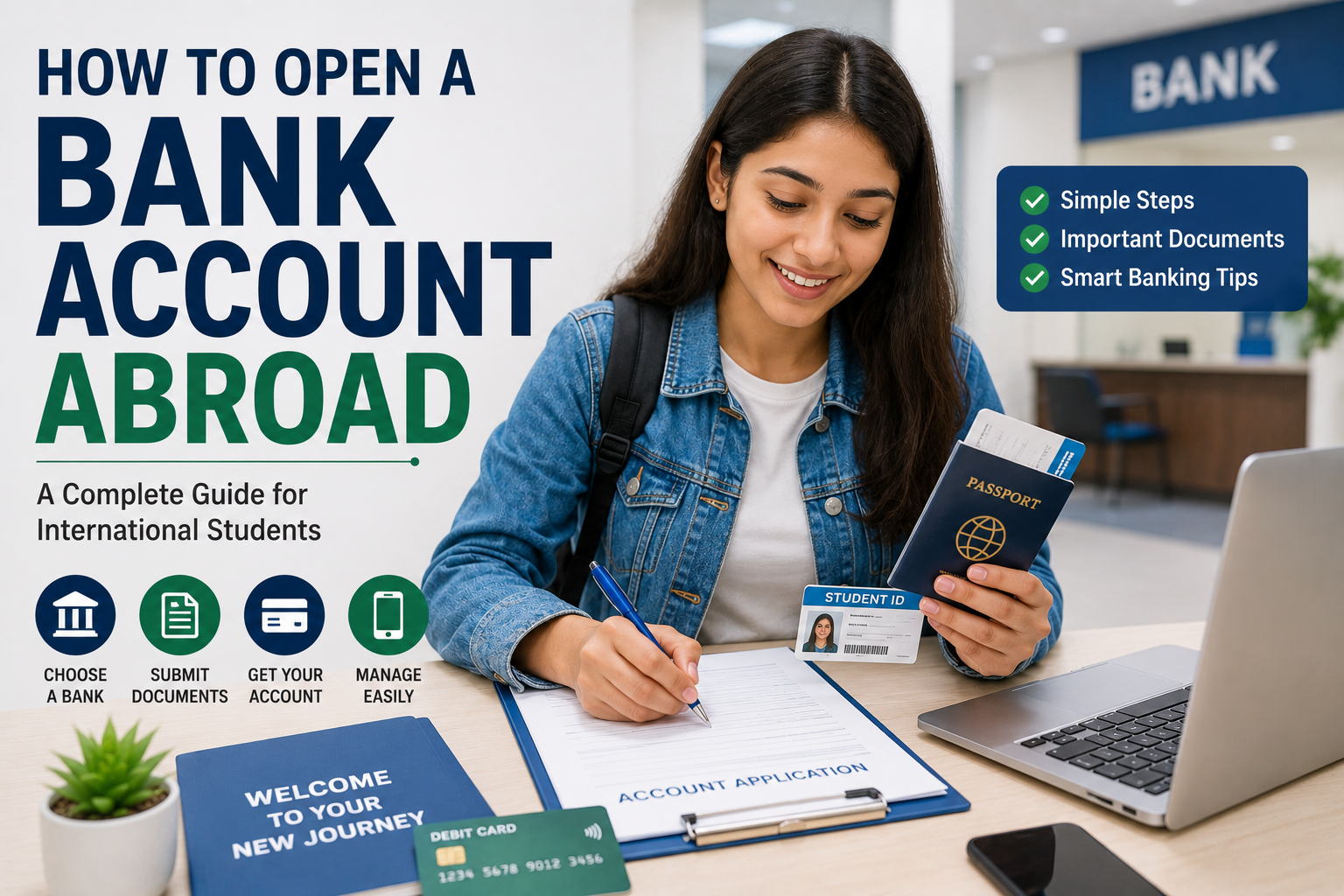
How to Open a Bank Account Abroad – A Complete Guide
Moving abroad for higher education involves much more than attending classes.
One of the first practical tasks you'll need to complete after arriving is opening a local bank account.
A local bank account makes it easier to:
- Receive money from home
- Pay rent
- Shop online
- Receive salary from part-time jobs (where permitted)
- Manage everyday expenses
The process is usually straightforward, but the required documents and procedures can vary by country and bank.
This guide explains everything international students should know before opening a bank account abroad.
Why Do International Students Need a Bank Account?
While you may initially use an international debit or credit card, a local bank account offers several advantages.
It allows you to:
- Avoid high international transaction fees.
- Receive local payments easily.
- Pay bills online.
- Set up automatic payments.
- Access mobile banking services.
- Build a financial history in your new country.
Many universities also recommend opening a local account soon after arrival.
When Should You Open a Bank Account?
Ideally, you should open your account within the first few weeks after reaching your destination.
Many students complete this process after:
- Moving into accommodation
- Completing university enrollment
- Receiving their student ID
- Registering their local address (where required)
Opening your account early helps you settle into daily life more smoothly.
Documents You May Need
The exact requirements vary depending on the country and bank.
Commonly requested documents include:
- Valid passport
- Student visa or residence permit (if applicable)
- University admission or enrollment letter
- Student ID card (if issued)
- Proof of local address
- Passport-sized photographs (occasionally)
- Tax identification number (where applicable)
Some banks may ask for additional documents depending on local regulations.
Always check the bank's official requirements before visiting a branch.
Choosing the Right Bank
Not all banks offer the same services.
Before opening an account, compare:
- Monthly account fees
- Minimum balance requirements
- ATM availability
- Mobile banking features
- International money transfer options
- Debit card charges
- Customer support
- Student banking benefits
Many banks offer special student accounts with reduced fees and additional benefits.
Types of Bank Accounts
Most international students open a current account (also called a checking account in some countries).
These accounts are suitable for:
- Daily spending
- Debit card transactions
- Salary deposits
- Online payments
- Utility bill payments
Some students may also choose to open a savings account depending on their financial needs.
How to Open a Bank Account
The process generally involves these steps:
Step 1: Choose a Bank
Research banks near your university or accommodation.
Compare student banking options before making a decision.
Step 2: Gather Your Documents
Prepare all required documents before your appointment or online application.
Missing documents may delay the process.
Step 3: Submit Your Application
Depending on the bank, you may:
- Visit a branch
- Apply online
- Book an appointment
Complete the application carefully and provide accurate information.
Step 4: Identity Verification
Banks usually verify your identity using your passport and other supporting documents.
Some countries may also require address verification.
Step 5: Receive Your Account Details
Once approved, you'll receive:
- Account number
- Debit card
- Online banking access
- Mobile banking setup instructions
Some banks issue debit cards immediately, while others send them by post.
Can You Open a Bank Account Before Arriving?
In some countries and with some banks, international students may begin the application process before travelling.
However, many banks still require identity verification or document checks after arrival.
Availability varies, so always confirm the process directly with your chosen bank.
Mobile Banking
Most banks now offer mobile apps that allow you to:
- Check your balance
- Transfer money
- Pay bills
- Freeze or unfreeze your debit card
- Receive transaction notifications
- Manage savings
Installing the official banking app makes everyday banking much easier.
International Money Transfers
Many students receive financial support from family members.
Before choosing a bank, check:
- International transfer fees
- Exchange rates
- Transfer speed
- Supported payment methods
Understanding these costs can help you manage your finances more efficiently.
Managing Your Money Abroad
Good financial habits are essential.
Consider:
- Creating a monthly budget
- Tracking your expenses
- Avoiding unnecessary debt
- Saving for emergencies
- Paying bills on time
Responsible financial management reduces stress throughout your studies.
Safety Tips
Protect your banking information by:
- Never sharing your PIN.
- Using strong online banking passwords.
- Enabling two-factor authentication where available.
- Monitoring your account regularly.
- Reporting lost or stolen cards immediately.
Banks provide additional security guidance when you open your account.
Common Mistakes Students Make
Opening the First Account Without Comparing Options
Take time to compare student accounts offered by different banks.
Ignoring Account Fees
Some accounts charge monthly maintenance or transaction fees.
Read the terms carefully.
Forgetting to Update Your Address
If you move accommodation, inform your bank promptly.
Sharing Banking Information
Never share passwords, PINs, or one-time verification codes with anyone.
Missing Required Documents
Carry original documents when visiting a branch.
Frequently Asked Questions
Can international students open a bank account?
Yes. Most countries allow eligible international students to open local bank accounts after meeting the required documentation and identity verification requirements.
Is a student bank account free?
Many banks offer student-friendly accounts with reduced or no monthly fees, but features and eligibility vary.
How long does it take?
Depending on the bank and country, account approval may take anywhere from the same day to several working days.
Can I receive my part-time salary in this account?
In many countries, yes—provided you are legally permitted to work under your visa conditions and your employer supports direct bank transfers.
Quick Bank Account Checklist
Before visiting the bank, make sure you have:
✅ Passport
✅ Student Visa or Residence Permit (if applicable)
✅ University Admission or Enrollment Letter
✅ Proof of Address
✅ Student ID (if available)
✅ Local Phone Number (if required)
✅ Required Supporting Documents
Having everything ready can make the account opening process faster.
Final Conclusion
Opening a local bank account is an important step toward becoming financially independent while studying abroad.
It simplifies everyday expenses, helps you receive payments, and provides secure access to your money throughout your stay.
Since banking rules and documentation requirements vary by country and institution, always refer to the official information provided by your chosen bank before applying.
A local bank account isn't just a convenience—it's an essential part of managing student life confidently and responsibly abroad.
Verified by Edulx Germany Specialists
Have questions about your profile or APS verification? Book a free 1-on-1 session with our Pune counsellors.