How to Save Money on Student Accommodation
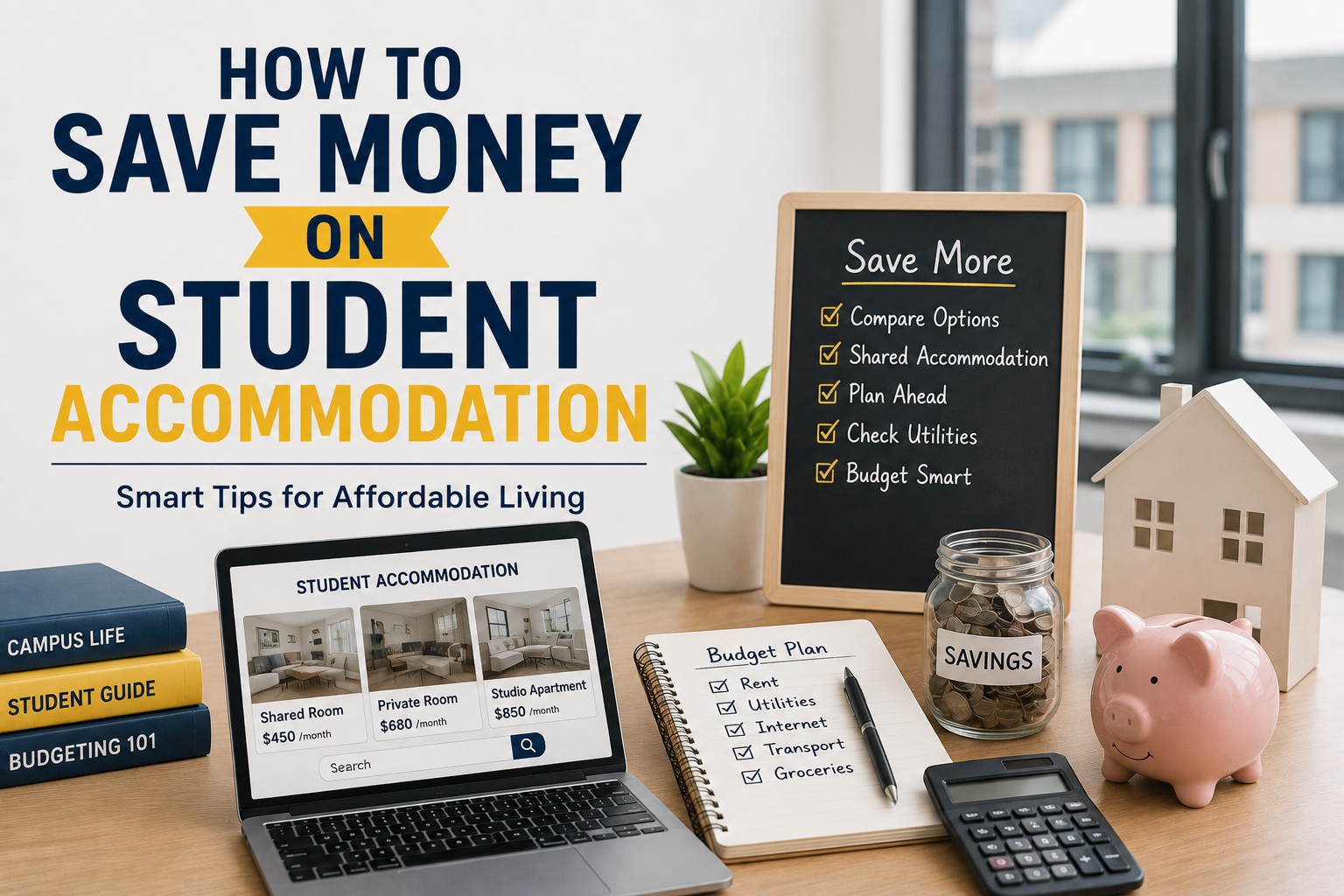
How to Save Money on Student Accommodation – A Complete Guide
When planning to study abroad, students usually focus on tuition fees and forget about one of the biggest ongoing expenses: accommodation.
Rent can take up a significant portion of your monthly budget, especially if you're studying in a major European, UK, Australian, Canadian, or US city.
The good news is that you don't always need to choose the most expensive accommodation option.
With proper research and planning, you can find a comfortable place to live while keeping your monthly expenses under control.
Why Is Student Accommodation So Expensive?
Accommodation costs depend on several factors, including:
- Country and city
- Distance from the university
- Type of accommodation
- Private or shared room
- Included utilities
- Location and neighbourhood
- Furnished or unfurnished property
- Length of the rental contract
Accommodation in major cities is generally more expensive than in smaller university towns.
1. Compare Different Accommodation Options
Don't choose the first property you find.
Compare options such as:
- University accommodation
- Private student residences
- Shared apartments
- Private rooms
- Homestays
- Shared houses
Look at the total monthly cost, not just the advertised rent.
A cheaper room may become expensive if electricity, heating, internet, or other charges are excluded.
2. Consider Shared Accommodation
Sharing accommodation with other students can significantly reduce your monthly expenses.
You may be able to share:
- Rent
- Electricity
- Heating
- Internet
- Household supplies
For students comfortable with shared living, this can be one of the most effective ways to reduce accommodation costs.
3. Look Beyond the City Centre
Living directly next to your university may be convenient, but it can also be expensive.
Consider neighbourhoods slightly farther away.
A location with affordable public transportation may provide a better overall deal than an expensive apartment within walking distance.
Compare:
Rent + Transportation
instead of looking at rent alone.
4. Book Accommodation Early
Popular student accommodation can fill quickly, especially before major university intakes.
Starting your search early gives you more options and allows you to compare prices.
Last-minute accommodation searches may leave you with fewer affordable choices.
5. Check University Accommodation
Many universities provide student housing or recommend approved accommodation providers.
University accommodation may offer:
- Furnished rooms
- Shared kitchens
- Internet
- Utilities
- Laundry facilities
- Student communities
Availability and pricing vary, so compare university housing with private options.
6. Understand What Your Rent Includes
Before signing a rental agreement, check whether the rent includes:
- Electricity
- Water
- Heating
- Internet
- Maintenance
- Furniture
- Laundry facilities
For example, a room advertised at a lower monthly rent may become more expensive after adding utilities.
Always calculate the actual monthly cost.
7. Avoid Unnecessary Premium Features
Luxury student residences may offer:
- Gyms
- Private cinemas
- Gaming rooms
- Rooftop lounges
- Private study areas
- Concierge services
These facilities can be attractive, but ask yourself whether you really need them.
A simpler accommodation option may save a significant amount of money.
8. Choose a Longer Rental Period Carefully
Some landlords or accommodation providers offer different prices depending on the length of the contract.
A longer contract may sometimes reduce the average monthly cost, but don't sign a long agreement without checking the terms.
Make sure you understand:
- Contract duration
- Cancellation rules
- Deposit conditions
- Notice period
- Renewal terms
9. Share Household Expenses
If you're living with roommates, divide common expenses fairly.
You can share the cost of:
- Cleaning supplies
- Internet
- Kitchen essentials
- Household products
Creating a simple shared-expense system can prevent disagreements and unnecessary spending.
10. Consider Furnished Accommodation
Buying furniture after arriving abroad can become expensive.
If you're staying for a limited period, furnished accommodation may be more practical.
Check whether the property already includes:
- Bed
- Desk
- Chair
- Wardrobe
- Kitchen appliances
This can reduce your initial setup costs.
11. Check Student Housing Platforms Carefully
Online platforms can help you compare accommodation options, but always verify:
- Property details
- Landlord information
- Contract terms
- Reviews
- Deposit requirements
- Location
Never transfer a large amount of money simply because someone claims a property is "urgent" or "highly demanded."
12. Beware of Hidden Costs
A property may have additional charges such as:
- Security deposit
- Agency fees
- Application fees
- Cleaning fees
- Utility charges
- Maintenance fees
- Parking fees
Ask for a complete breakdown of costs before making a decision.
13. Use Public Transport Strategically
Don't automatically reject accommodation because it is farther from campus.
A room that costs less but is 20–30 minutes away by public transport may provide better value than an expensive room next to the university.
Check:
- Monthly transport passes
- Student discounts
- Travel time
- Transport availability
14. Ask Other Students for Recommendations
Current students can provide useful insights about:
- Affordable neighbourhoods
- Reliable landlords
- Student residences
- Transportation
- Hidden costs
- Areas to avoid
University student groups and alumni networks can be particularly helpful.
15. Avoid Paying for Empty Space
If you're a student living alone, you may end up paying for more space than you actually need.
A well-located room in a shared apartment can sometimes provide better value than renting an entire apartment.
Think about your actual needs rather than choosing accommodation based purely on appearance.
How to Compare Accommodation Properly
Before choosing a property, calculate:
Total Monthly Cost = Rent + Utilities + Internet + Transportation + Other Mandatory Charges
This gives you a more realistic picture of what you'll actually spend.
A property with slightly higher rent may still be cheaper overall if it includes utilities and has good public transport connections.
Questions to Ask Before Signing a Rental Agreement
Before committing, ask:
- What is the total monthly cost?
- Which utilities are included?
- How much is the security deposit?
- Is the deposit refundable?
- Is there an agency fee?
- What is the contract duration?
- What is the notice period?
- Is the room furnished?
- Are there additional maintenance charges?
- What happens if I need to leave early?
Getting clear answers can help you avoid unexpected expenses.
Common Accommodation Mistakes
Choosing Only Based on Rent
A low rent doesn't always mean low overall costs.
Booking Without Verification
Always verify the accommodation and rental agreement.
Ignoring the Commute
Cheap accommodation far away may become expensive because of transportation costs.
Not Reading the Contract
Understand all terms before signing.
Paying Unverified Deposits
Be cautious about accommodation scams and verify the landlord or provider before making payments.
Simple Ways to Reduce Your Accommodation Budget
✔ Choose shared accommodation.
✔ Consider areas outside the city centre.
✔ Compare university and private housing.
✔ Start your search early.
✔ Check what's included in the rent.
✔ Use student transport discounts.
✔ Share household expenses.
✔ Avoid unnecessary luxury facilities.
✔ Read the rental contract carefully.
✔ Compare the total cost, not just monthly rent.
Final Conclusion
Student accommodation can be one of the largest expenses during your study abroad journey, but smart planning can help you control the cost.
The cheapest accommodation isn't always the best choice. Instead, look for the best balance between rent, location, facilities, safety, transportation, and overall monthly expenses.
Start your search early, compare multiple options, understand the rental agreement, and speak to current students whenever possible.
A little research before choosing your accommodation can save you a significant amount of money throughout your studies—and help you enjoy your international student experience with less financial stress.
Verified by Edulx Germany Specialists
Have questions about your profile or APS verification? Book a free 1-on-1 session with our Pune counsellors.