How to Study Abroad on a Budget (2026 Guide)
Introduction
One of the biggest myths about studying abroad is that it is only possible for students with a very large budget.
In reality, thousands of students successfully study abroad every year by combining smart planning, scholarships, affordable universities, and proper financial management.
Studying abroad does require investment, but there are many ways to make it more affordable.
Is Studying Abroad Really Expensive?
The answer depends on:
- Country selection
- University choice
- Course type
- Lifestyle
- Accommodation expenses
Some destinations can be significantly more affordable than others.
The key is understanding the total cost before making a decision.
Choose the Right Country
Selecting the right destination is one of the most important financial decisions.
Countries often considered more affordable include:
- Germany
- Italy
- Poland
- Hungary
- Czech Republic
Many students focus only on popular destinations and overlook cost-effective alternatives.
Consider Public Universities
Public universities often have lower tuition fees compared to private institutions.
In some countries, public universities provide highly respected degrees at relatively affordable costs.
Researching public institutions can significantly reduce education expenses.
Apply for Scholarships
Scholarships can reduce tuition fees and, in some cases, living expenses.
Common scholarship sources include:
- Universities
- Governments
- International organizations
- Private foundations
Students should begin scholarship research early because deadlines are often different from admission deadlines.
Explore Education Loans Carefully
Education loans can help finance studies when personal funds are limited.
Before taking a loan:
- Compare interest rates
- Understand repayment terms
- Calculate future obligations
Loans should be considered part of a financial plan rather than the entire plan.
Choose Affordable Cities
Living costs often vary dramatically within the same country.
For example:
- Major metropolitan cities are usually more expensive.
- Smaller student cities may offer lower accommodation and daily living costs.
Researching city expenses can lead to substantial savings.
Plan Accommodation Wisely
Accommodation is often one of the largest expenses.
Students may consider:
- University dormitories
- Shared apartments
- Student residences
Early booking can help secure better options at lower costs.
Work Part-Time Responsibly
Many countries allow international students to work part-time during their studies.
Part-time work can help cover:
- Daily expenses
- Transportation
- Personal costs
However, students should not rely entirely on part-time work to fund their education.
Academic success should remain the priority.
Reduce Daily Expenses
Small savings can add up over time.
Examples include:
- Using student discounts
- Cooking at home
- Using public transportation
- Purchasing second-hand textbooks
- Taking advantage of student offers
Budget-conscious habits help manage living costs.
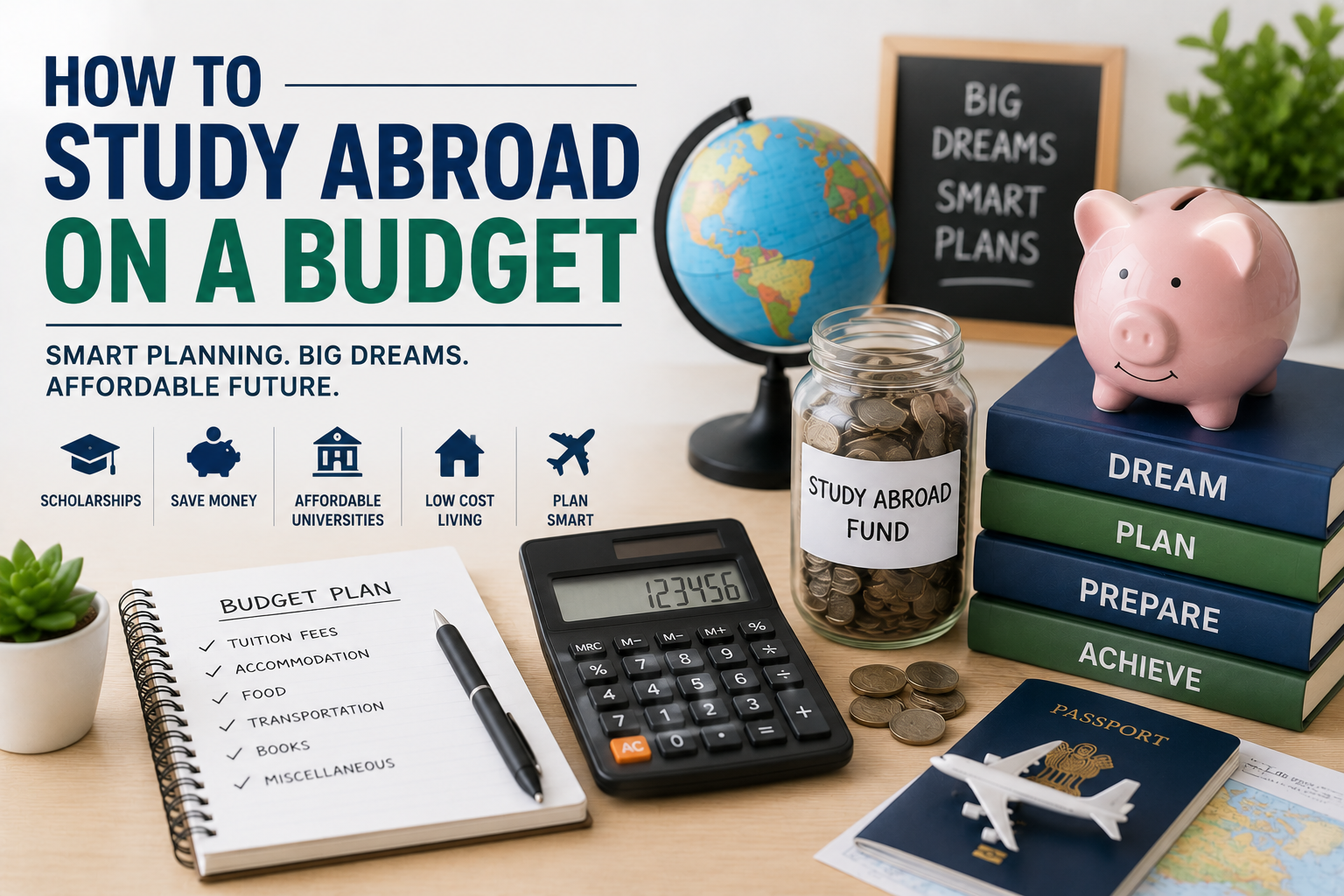
Create a Study Abroad Budget Plan
A financial plan should include:
- Tuition fees
- Accommodation
- Food
- Transportation
- Health insurance
- Visa expenses
- Emergency funds
Understanding total costs helps avoid financial surprises later.
Common Mistakes Students Make
Choosing a Country Based Only on Popularity
A popular destination is not always the best financial choice.
Ignoring Living Expenses
Students often focus only on tuition fees.
Living costs can sometimes be equally significant.
Missing Scholarship Opportunities
Many students begin searching for scholarships too late.
Depending Entirely on Part-Time Jobs
Part-time work should supplement finances, not replace financial planning.
Not Having Emergency Funds
Unexpected expenses can occur during studies abroad.
A financial buffer is important.
Smart Budget Strategies
- Start planning early
- Apply to multiple scholarship programs
- Compare countries carefully
- Research affordable cities
- Monitor expenses regularly
- Maintain emergency savings
Good planning often matters more than having a large budget.
The Real Truth
Studying abroad does not always require enormous financial resources.
Students who:
- Research carefully
- Apply for scholarships
- Select affordable destinations
- Manage expenses wisely
can often achieve their study abroad goals within a realistic budget.
Success depends more on planning than on spending.
Frequently Asked Questions (FAQs)
1. Can I study abroad with a limited budget?
Yes. Many students reduce costs through scholarships, affordable universities, and careful planning.
2. Which countries are considered affordable for international students?
Germany, Italy, Poland, Hungary, and several other European destinations are often considered budget-friendly options.
3. Are scholarships available for international students?
Yes. Many universities and organizations offer scholarships specifically for international applicants.
4. Can part-time jobs help cover expenses?
Part-time work can assist with living costs but should not be relied upon as the primary source of funding.
5. What is the biggest expense while studying abroad?
Tuition fees and accommodation are usually the largest costs.
6. What is the biggest budgeting mistake students make?
Ignoring total living expenses and focusing only on tuition fees.
Verified by Edulx Germany Specialists
Have questions about your profile or APS verification? Book a free 1-on-1 session with our Pune counsellors.