How University Rankings Really Affect Your Career (2027 Guide)
Introduction
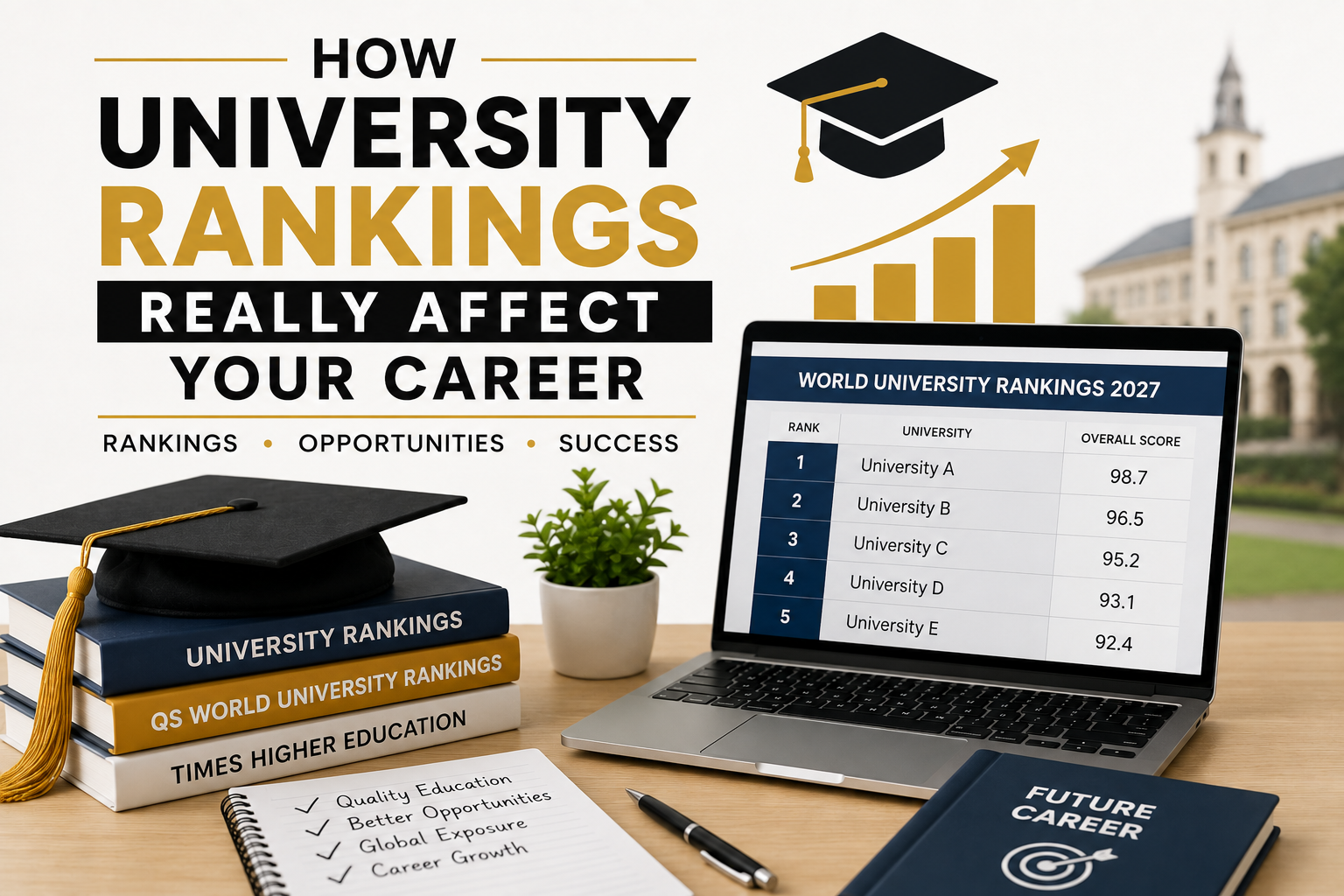
When students begin planning to study abroad, one of the first things they check is a university's ranking.
Many believe that studying at a top-ranked university automatically guarantees a high-paying job and a successful career.
While university rankings are important, they are only one part of the bigger picture.
Employers today look beyond rankings and evaluate your skills, practical experience, internships, projects, and overall profile.
This guide explains what university rankings actually mean and how much they should influence your decision.
What Are University Rankings?
University rankings are annual evaluations that compare institutions based on various academic and research indicators.
Some of the most widely recognized ranking systems include:
- QS World University Rankings
- Times Higher Education (THE)
- Academic Ranking of World Universities (ARWU)
These rankings help students compare universities across different countries.
How Are Universities Ranked?
Ranking organizations consider multiple factors, including:
- Academic reputation
- Employer reputation
- Research output
- Faculty qualifications
- International student diversity
- Student-to-faculty ratio
- Research citations
- Global collaborations
Each ranking system uses its own methodology.
Do Rankings Matter for Admission?
Rankings can influence how universities are perceived, but they do not directly determine whether you receive admission.
Admissions committees primarily evaluate:
- Academic performance
- Eligibility requirements
- SOP
- LORs
- Resume
- Projects and internships
- English language proficiency
Meeting the university's admission requirements is more important than its ranking alone.
Do Employers Care About Rankings?
In some cases, yes.
Graduating from a well-known university may help during the early stages of your career, especially with large multinational companies.
However, employers also evaluate:
- Technical skills
- Communication skills
- Practical experience
- Internship experience
- Problem-solving ability
- Teamwork
After your first few years of work experience, your professional achievements usually matter more than your university ranking.
Rankings vs Course Quality
A university may rank highly overall but may not be the best choice for your specific subject.
For example:
- One university may excel in Engineering.
- Another may be stronger in Business.
- Another may lead in Biotechnology or Medicine.
Always compare subject-specific rankings rather than relying only on overall university rankings.
Rankings and Research Opportunities
Highly ranked universities often provide:
- Advanced laboratories
- International collaborations
- Research funding
- Experienced faculty
- Better publication opportunities
Students interested in research or pursuing a PhD may benefit from these resources.
Rankings and Networking
Top universities often have:
- Large alumni networks
- Industry partnerships
- International collaborations
- Career fairs
- Global exchange programs
Networking opportunities can help students build valuable professional connections.
Rankings and Scholarships
Some prestigious universities offer competitive scholarships for outstanding international students.
However, many mid-ranked universities also provide generous scholarships based on academic merit or financial need.
Never assume that higher-ranked universities always offer better financial support.
Rankings Are Not Everything
Choosing a university only because it appears high in global rankings can be a mistake.
Other factors deserve equal attention, such as:
- Course curriculum
- Internship opportunities
- Tuition fees
- Living expenses
- Graduate employment rate
- Location
- Industry connections
- Student support services
A university that aligns with your career goals may be a better choice than a higher-ranked institution.
Common Myths About University Rankings
"Only Top 100 Universities Lead to Good Jobs"
This is false.
Graduates from many universities outside the global top 100 build successful international careers.
"Higher Ranking Means Better Teaching"
Not always.
Some universities with lower overall rankings provide excellent teaching quality and practical learning experiences.
"Employers Hire Based Only on University Name"
Most employers evaluate your complete profile, including skills, projects, internships, certifications, and work experience.
How to Choose the Right University
Before applying, compare:
- Subject ranking
- Course curriculum
- Internship opportunities
- Industry partnerships
- Research facilities
- Graduate employment outcomes
- Tuition fees
- Scholarships
- Cost of living
- Student satisfaction
Choosing the right course is often more important than choosing the highest-ranked university.
The Real Truth
University rankings are useful—but they should never be your only decision-making factor.
A highly ranked university can provide excellent academic opportunities, research facilities, and networking benefits.
However, your long-term career success depends on much more than the name of your university.
Your skills, internships, projects, communication abilities, adaptability, and professional experience will play an even greater role in shaping your future.
Choose a university that supports your career goals, learning style, and budget—not just its position in a ranking table.
Frequently Asked Questions (FAQs)
1. Do university rankings really matter?
Yes, but they are only one factor. Skills, internships, and practical experience are equally important for career success.
2. Which university ranking is the most trusted?
QS World University Rankings, Times Higher Education (THE), and ARWU are among the most recognized global ranking systems.
3. Should I choose a university only because it is highly ranked?
No. Consider course quality, internships, location, tuition fees, and career opportunities in addition to rankings.
4. Do employers care about university rankings?
Some employers consider university reputation, especially for entry-level roles, but most also value practical skills and work experience.
5. Are subject rankings more important than overall rankings?
In many cases, yes. A university may excel in a specific subject even if its overall ranking is lower.
6. Can I have a successful career from a mid-ranked university?
Absolutely. Strong academic performance, internships, networking, and practical skills often have a greater impact on long-term career success than overall university rankings.
Verified by Edulx Germany Specialists
Have questions about your profile or APS verification? Book a free 1-on-1 session with our Pune counsellors.