Research Papers: Do They Help in Master's Admissions?
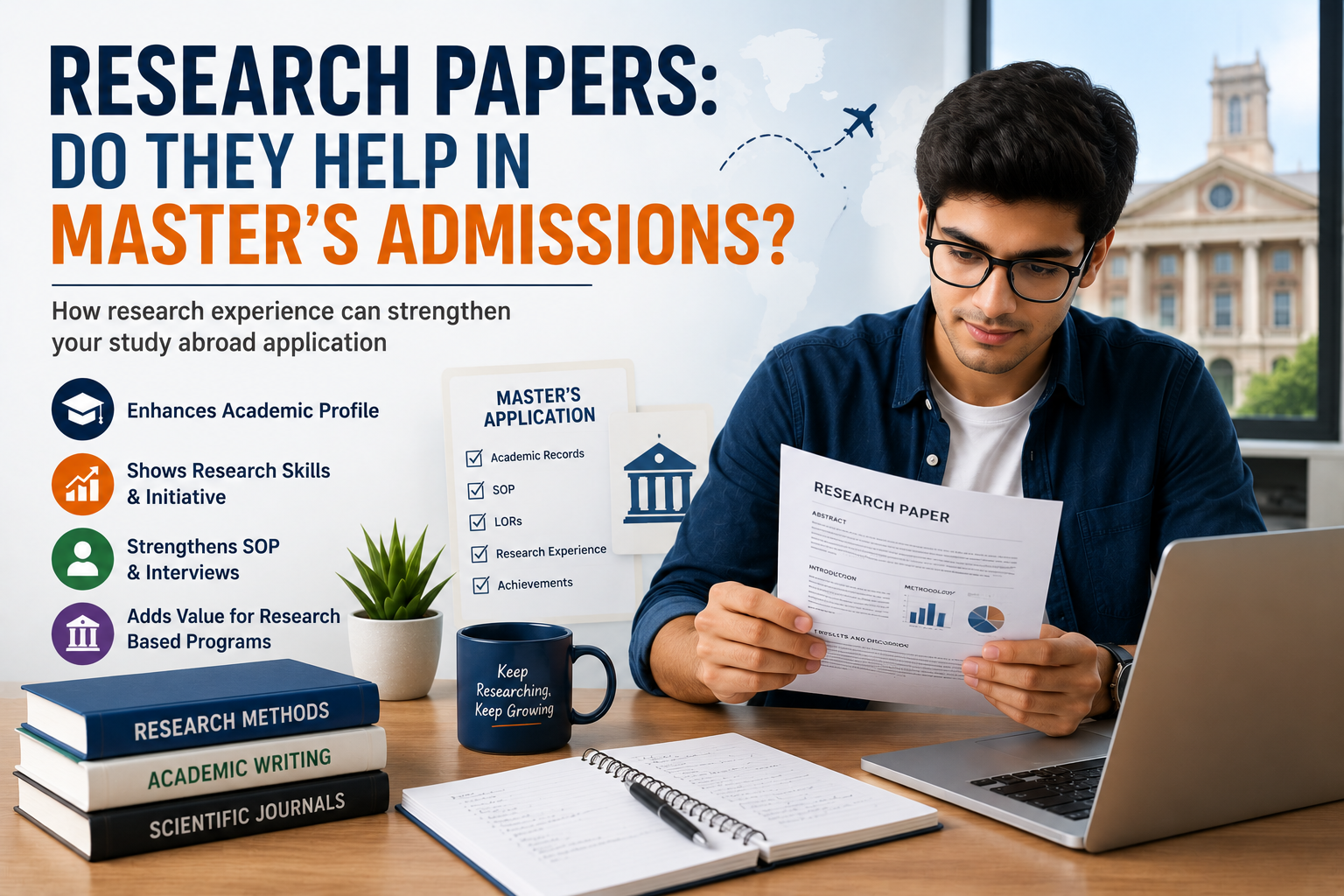
Research Papers: Do They Help in Master's Admissions? – A Complete Guide
Many students planning to study abroad ask an important question:
"Do I need research papers to get admission into a master's program?"
Some believe that without published research, getting into a good university is impossible.
Others think research papers are only important for PhD applicants.
The reality lies somewhere in between.
Research papers are not mandatory for most master's programs, but they can significantly strengthen your application in certain situations.
Let's understand when research papers matter and how they can improve your chances of admission.
What Is a Research Paper?
A research paper is a formal academic document that presents:
- Original research
- Data analysis
- Experimental findings
- Literature review
- Innovative ideas or solutions
It is usually written under the guidance of a professor or research supervisor and may be published in a journal or presented at a conference.
Are Research Papers Mandatory?
For most master's programs, no.
Universities generally evaluate applications using multiple factors such as:
- Academic performance
- Statement of Purpose (SOP)
- Letters of Recommendation (LORs)
- English language proficiency
- Projects
- Internships
- Work experience
Research papers are usually considered an additional strength rather than a compulsory requirement.
When Do Research Papers Matter the Most?
Research experience becomes especially valuable when applying for:
Research-Based Master's Programs
Programs that include a thesis or significant research component often value applicants with prior research experience.
STEM Courses
Research papers can strengthen applications for fields such as:
- Artificial Intelligence
- Data Science
- Biotechnology
- Chemical Engineering
- Mechanical Engineering
- Electrical Engineering
- Physics
- Computer Science
Highly Competitive Universities
Top universities often receive thousands of applications from academically strong students.
A quality research publication can help distinguish your profile from others.
How Do Research Papers Help?
Research experience demonstrates several valuable qualities.
Critical Thinking
Research requires students to analyze problems, evaluate evidence, and develop logical conclusions.
Problem-Solving Skills
Universities appreciate students who can investigate complex questions independently.
Technical Knowledge
Writing a research paper often involves advanced subject knowledge and practical skills.
Academic Curiosity
Research shows that you're interested in learning beyond classroom assignments.
Commitment to Your Field
Publishing research demonstrates long-term interest in your chosen specialization.
Do Published Papers Matter More?
Generally, yes.
A paper published in a recognized academic journal or conference may carry more weight than an unpublished manuscript.
However, quality matters more than quantity.
One meaningful publication is often more valuable than several low-quality papers.
What If My Paper Isn't Published?
Don't worry.
Even if your research hasn't been formally published, you can still mention:
- Final-year research projects
- Undergraduate thesis
- Conference presentations
- Research assistantships
- Independent research work
These experiences still demonstrate research skills.
Can Research Papers Compensate for a Low CGPA?
Not completely.
Academic performance remains an important admission factor.
However, research experience can strengthen your overall profile by showing:
- Subject expertise
- Initiative
- Analytical thinking
- Passion for learning
Combined with a strong SOP, internships, and recommendations, research can improve your application.
Which Students Should Consider Research?
Research experience is particularly valuable for students interested in:
- Higher education
- Innovation
- Laboratory work
- Academic careers
- PhD programs
- Research-intensive industries
If your future goals involve research, starting early can be beneficial.
How Can Students Get Research Experience?
There are several ways to begin.
Final-Year Projects
Many undergraduate programs include research-based projects.
Take these opportunities seriously.
Work with Professors
Approach faculty members whose research interests match yours.
They may involve students in ongoing research projects.
Research Internships
Universities and research organizations often offer internships focused on research and development.
Academic Conferences
Presenting your work at conferences helps develop communication and research skills.
Collaborative Research
Working with classmates or faculty members on research projects can also strengthen your profile.
Common Mistakes Students Make
Publishing Only for Admissions
Research should be driven by genuine interest, not simply to add another line to your resume.
Prioritizing Quantity Over Quality
One well-executed research paper is more valuable than several weak publications.
Ignoring Ethical Standards
Always maintain academic honesty.
Never copy, plagiarize, or purchase research papers.
Universities take academic integrity very seriously.
Neglecting Other Application Components
Research is only one part of your profile.
Universities still evaluate:
- Academics
- SOP
- LORs
- Projects
- Internships
- English proficiency
A balanced application is always stronger.
How to Mention Research in Your Application
If you've completed research, include it in:
- Resume (CV)
- Statement of Purpose
- Research Portfolio (if required)
- Interview discussions
Clearly explain:
- The research topic
- Your role
- Methods used
- Results or findings
- Skills developed
Focus on your contribution rather than simply listing the title.
Is Research Necessary for Every Student?
Not at all.
If you're applying for a professional master's program focused on industry careers, internships and practical projects may be more valuable than research publications.
The importance of research depends on:
- Your chosen course
- University expectations
- Career goals
Always review program requirements before deciding where to invest your time.
Final Conclusion
Research papers can certainly strengthen a master's application, but they are not a requirement for most programs.
For research-oriented degrees and highly competitive universities, research experience can demonstrate academic curiosity, technical expertise, and analytical thinking.
However, students without published research can still build strong applications through:
- Good academic performance
- Relevant internships
- Practical projects
- Professional certifications
- A compelling SOP
- Strong recommendation letters
Remember:
A research paper is an advantage—not a guarantee. What matters most is presenting a well-rounded profile that reflects your abilities, interests, and potential for success.
Verified by Edulx Germany Specialists
Have questions about your profile or APS verification? Book a free 1-on-1 session with our Pune counsellors.