Resume Tips for Study Abroad Applications (2026 Guide)
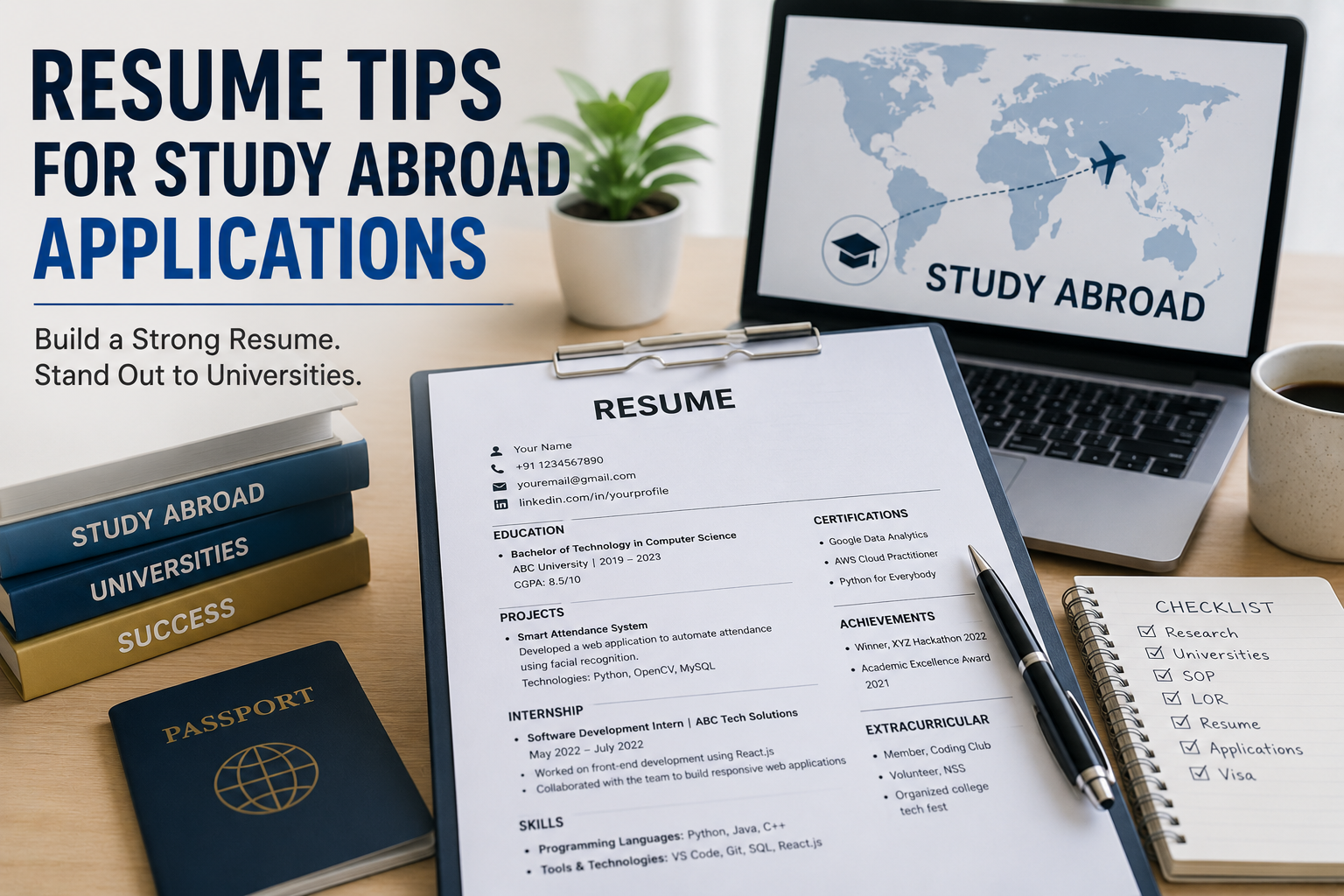
Introduction
When students prepare for studying abroad, they often focus on:
- SOP
- LORs
- IELTS or TOEFL
- Academic transcripts
But another important document is the resume or CV.
A well-structured resume helps universities quickly understand your academic background, skills, projects, internships, and achievements.
Even if you are a fresher, a professional resume can strengthen your application.
Why Is a Resume Important?
Universities receive thousands of applications every year.
A resume helps admission officers:
- Understand your profile quickly
- Review your achievements
- Evaluate your practical experience
- Assess your extracurricular involvement
A strong resume creates a positive first impression.
What Should a Study Abroad Resume Include?
Personal Information
Include:
- Full name
- Email address
- Phone number
- LinkedIn profile (if available)
Avoid unnecessary details such as:
- Religion
- Caste
- Marital status
- Passport number
Academic Background
Mention:
- Degree name
- University or college
- Graduation year
- CGPA or percentage
List information in reverse chronological order.
Projects
Projects are especially important for students applying for technical programs.
Mention:
- Project title
- Technologies used
- Objectives
- Key outcomes
Focus on projects relevant to your intended course.
Internships
Internships demonstrate practical experience.
Include:
- Company name
- Duration
- Responsibilities
- Skills gained
Even short internships can add value.
Work Experience
If you have professional experience, include:
- Job title
- Organization name
- Employment duration
- Key achievements
Focus on measurable contributions whenever possible.
Technical Skills
Examples:
- Programming languages
- Software tools
- Data analysis tools
- Laboratory techniques
Only mention skills you genuinely possess.
Certifications
Add relevant certifications such as:
- Google Certifications
- Coursera Courses
- AWS Certifications
- Microsoft Certifications
- Industry-specific programs
Prioritize certifications related to your chosen field.
Extracurricular Activities
Universities appreciate well-rounded students.
Examples:
- Student leadership roles
- Volunteering
- Sports achievements
- Event management experience
Achievements and Awards
Highlight:
- Academic awards
- Competition rankings
- Scholarships
- Research achievements
These can help differentiate your profile.
Ideal Resume Length
For most study abroad applications:
- 1 page for freshers
- 1–2 pages for experienced professionals
Avoid making your resume unnecessarily long.
Admission officers prefer concise documents.
Common Resume Mistakes
Using a Generic Resume
Different courses may require different emphasis.
Tailor your resume when necessary.
Including Irrelevant Information
Avoid adding unrelated details just to increase length.
Quality matters more than quantity.
Poor Formatting
Use:
- Consistent fonts
- Clear headings
- Proper spacing
A clean layout improves readability.
Exaggerating Skills
Universities may verify information during interviews or evaluations.
Always be honest.
Grammatical Errors
Proofread your resume carefully before submission.
Small mistakes can create a negative impression.
Resume Tips for Better Applications
- Keep the design simple and professional
- Use bullet points instead of long paragraphs
- Highlight achievements with numbers where possible
- Focus on relevance to the chosen course
- Update your resume regularly
A clear and organized resume is often more effective than a visually complicated one.
What Universities Look For
Universities generally want to see:
- Academic readiness
- Practical experience
- Leadership qualities
- Consistency in achievements
- Clear career direction
Your resume should support the story presented in your SOP.
The Real Truth
A resume alone will not guarantee admission.
However, a well-prepared resume can significantly improve how your profile is perceived.
The goal is not to impress with fancy designs.
The goal is to present your achievements, skills, and experiences in a professional and organized manner.
Frequently Asked Questions (FAQs)
1. Is a resume required for study abroad applications?
Many universities require a resume or CV as part of the application process.
2. How long should a student resume be?
Usually one page for freshers and one to two pages for experienced applicants.
3. Should I include school achievements?
Only if they are significant and relevant.
4. Can internships improve my resume?
Yes, internships demonstrate practical experience and skills.
5. Do universities prefer fancy resume designs?
No. Professional and clear formatting is usually preferred.
6. What is the biggest resume mistake?
Including irrelevant information and poor formatting.
Verified by Edulx Germany Specialists
Have questions about your profile or APS verification? Book a free 1-on-1 session with our Pune counsellors.