Study Abroad After a Gap Year: Top Countries Accepting Gaps in 2026
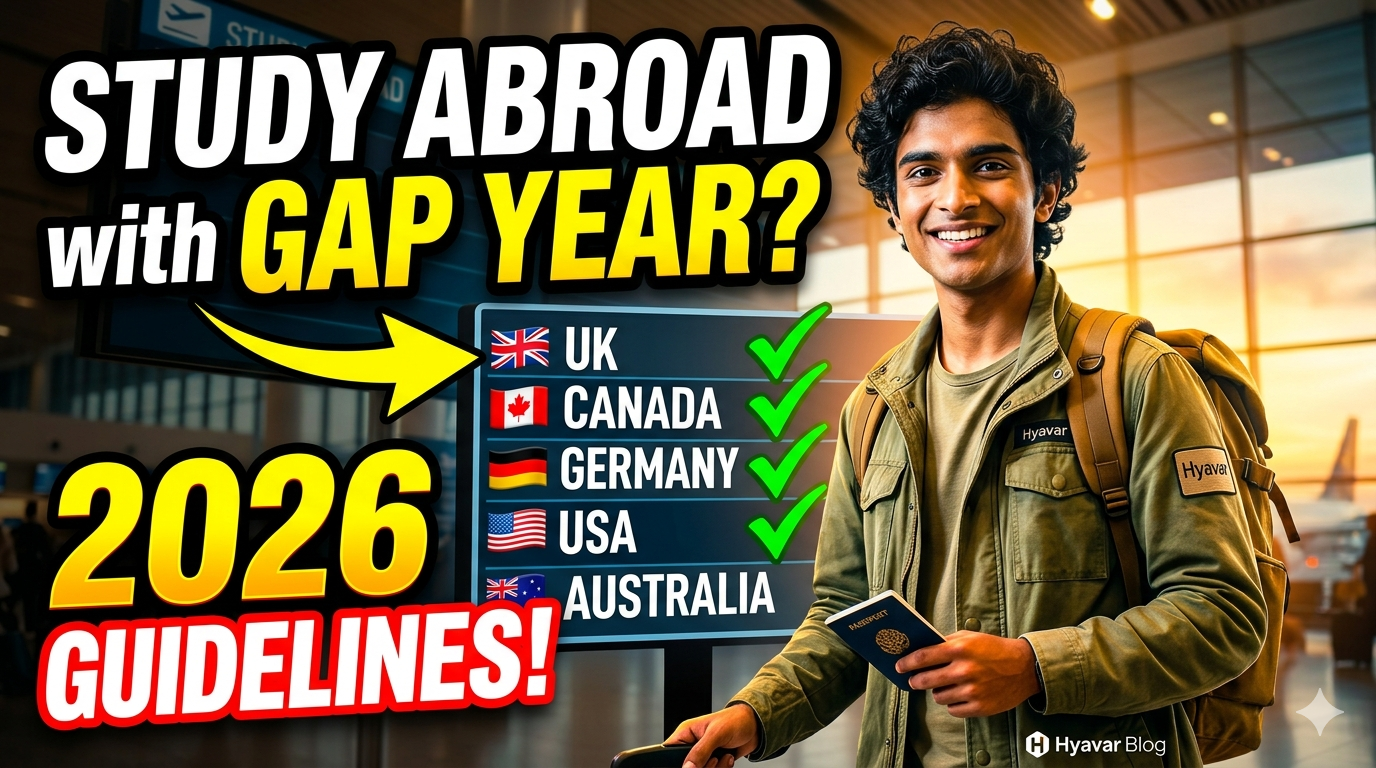
The 2026 Outlook on Academic Gaps
International universities are shifting their focus toward "Holistic Profiles." For the 2026 intake, a gap year is no longer a deal-breaker. In fact, if you used that time for work, upskilling, or personal growth, it can make your application stronger.
Country-Wise Gap Acceptance Guide
1. The United Kingdom (UK) The UK remains one of the most flexible destinations. For Undergraduate courses, a gap of 2 to 3 years is easily accepted. If you are applying for a Master's, even a 10-year gap is often overlooked if you have relevant work experience.
2. Canada Canada is popular but slightly more strict. A gap of 1 to 2 years for Undergrad and up to 5 years for Postgrad is generally accepted. However, you must provide solid proof like salary slips or experience letters to satisfy the visa officer.
3. United States (USA) US universities focus on your "Story." They accept gaps of 1 to 2 years for Bachelor's and even 8+ years for Master's programs. The key here is showing how that gap helped you grow as an individual.
4. Germany & Europe Germany is very lenient, especially for Master's students. They prioritize your previous grades over the time gap. Many European countries accept gaps of 2 to 5 years without any major hurdles, provided your Statement of Purpose (SOP) is strong.
5. Australia Australia has a "GTE" (Genuine Temporary Entrant) requirement. They accept gaps of 1 to 2 years but are very particular about "unaccounted" time. Every month of your gap must be backed by a document.
Crucial Documents to Justify Your Gap
To avoid visa rejection, ensure you have these ready for your 2026 application:
- Experience Letters: If you were working.
- Skill Certificates: If you did online courses or workshops.
- Health Reports: If the gap was due to medical reasons.
- Entrance Exam Proof: If you were preparing for IELTS, GRE, or GMAT.
2. Canada Canada is popular but slightly more strict. A gap of 1 to 2 years for Undergrad and up to 5 years for Postgrad is generally accepted. However, you must provide solid proof like salary slips or experience letters to satisfy the visa officer.
3. United States (USA) US universities focus on your "Story." They accept gaps of 1 to 2 years for Bachelor's and even 8+ years for Master's programs. The key here is showing how that gap helped you grow as an individual.
4. Germany & Europe Germany is very lenient, especially for Master's students. They prioritize your previous grades over the time gap. Many European countries accept gaps of 2 to 5 years without any major hurdles, provided your Statement of Purpose (SOP) is strong.
5. Australia Australia has a "GTE" (Genuine Temporary Entrant) requirement. They accept gaps of 1 to 2 years but are very particular about "unaccounted" time. Every month of your gap must be backed by a document.
Crucial Documents to Justify Your Gap
To avoid visa rejection, ensure you have these ready for your 2026 application:
- Experience Letters: If you were working.
- Skill Certificates: If you did online courses or workshops.
- Health Reports: If the gap was due to medical reasons.
- Entrance Exam Proof: If you were preparing for IELTS, GRE, or GMAT.
Verified by Edulx Germany Specialists
Have questions about your profile or APS verification? Book a free 1-on-1 session with our Pune counsellors.