Study Abroad After Diploma – Is It Possible
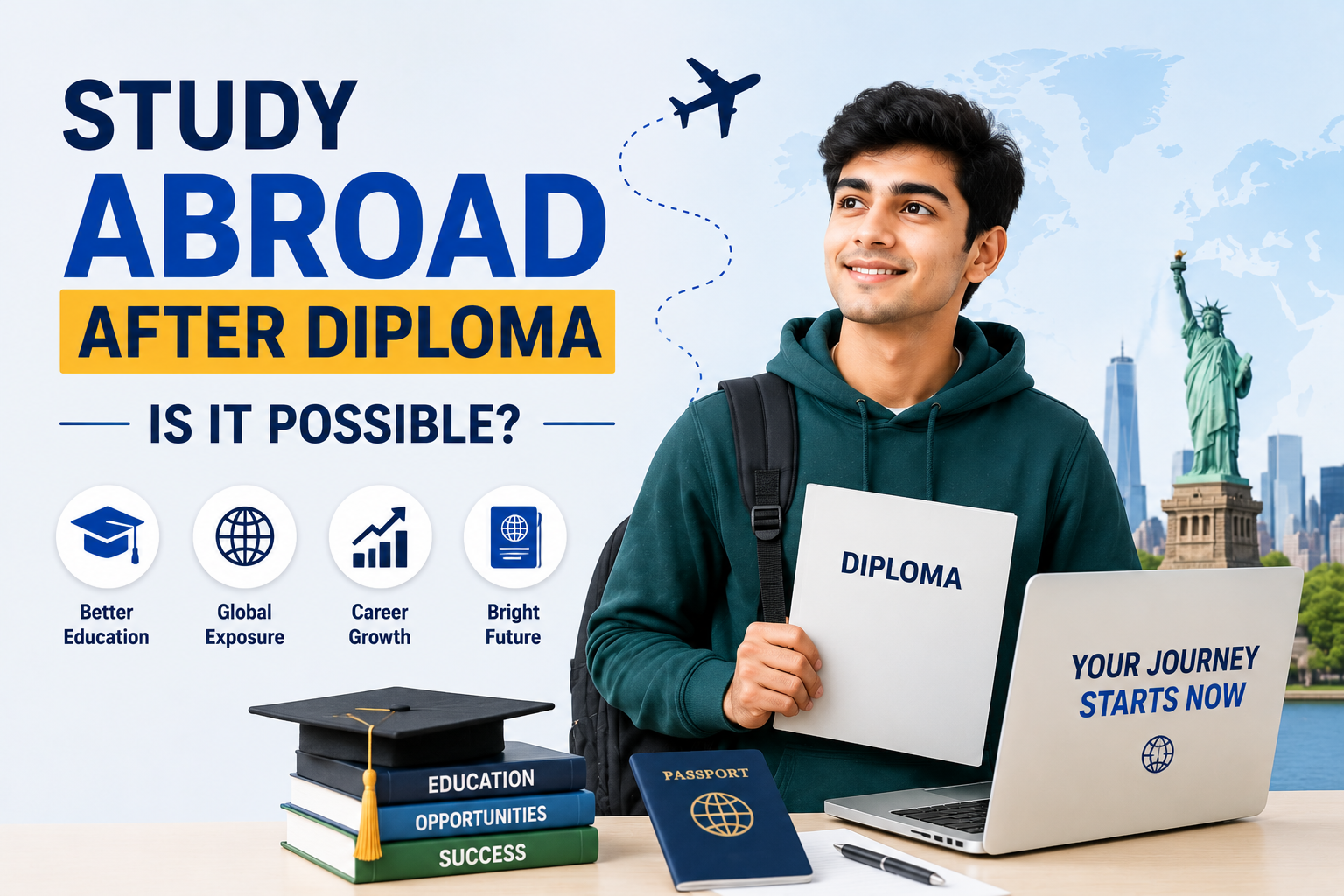
Study Abroad After Diploma – Is It Possible? Complete 2026 Guide
Many diploma students believe that studying abroad is only possible after completing a bachelor's degree.
Fortunately, that is not true.
Every year, thousands of diploma holders successfully continue their education abroad and build successful international careers.
Whether you have completed a diploma in:
- Engineering
- Computer Science
- Mechanical Engineering
- Civil Engineering
- Electrical Engineering
- Business
- Hospitality
- Design
there are multiple study abroad opportunities available.
Countries like Canada, Australia, the United Kingdom, New Zealand, and even some institutions in Germany offer pathways for diploma students.
In this guide, we'll explain everything diploma students need to know before planning higher education abroad.
Can Diploma Students Really Study Abroad?
Yes.
A diploma qualification does not prevent students from studying abroad.
The available options depend on:
- Diploma type
- Duration of diploma
- Country requirements
- University eligibility criteria
- Academic performance
Many universities and colleges abroad recognize diploma qualifications and offer admission pathways.
However, the admission route may differ from traditional bachelor's degree applicants.
What Are the Options After Diploma?
Diploma students generally have three major pathways.
1. Bachelor's Degree Abroad
This is the most common option.
Students can apply for undergraduate degree programs after completing their diploma.
Depending on the university, students may:
- Start from the first year
- Receive advanced standing
- Get transfer credits
Credit transfer policies vary by institution.
2. Diploma-to-Degree Pathways
Some universities offer special progression pathways for diploma holders.
These pathways help students:
- Continue education smoothly
- Reduce study duration
- Build on existing knowledge
Such programs are especially common in countries like Australia and Canada.
3. Advanced Diploma Programs
Students can also pursue:
- Advanced Diplomas
- Higher Diplomas
- Specialized Diplomas
These programs provide additional qualifications and may later lead to degree opportunities.
Which Countries Are Good for Diploma Students?
Canada
Canada is one of the most popular destinations for diploma students.
Advantages include:
- Flexible admission policies
- Diploma-to-degree pathways
- Practical education
- Post-study work opportunities
Many colleges and universities accept international diploma holders.
Australia
Australia offers multiple progression routes for diploma students.
Benefits include:
- Credit transfer opportunities
- Industry-focused education
- Internationally recognized qualifications
Students may receive advanced standing depending on their previous studies.
United Kingdom
The United Kingdom provides several options for diploma students through:
- Foundation pathways
- Degree entry programs
- Top-up programs
Eligibility depends on academic background and chosen course.
New Zealand
New Zealand offers practical education systems that often welcome diploma-qualified students.
Students can explore:
- Undergraduate programs
- Applied learning pathways
- Industry-oriented courses
Germany
Opportunities in Germany can be more complex because admission requirements often depend on qualification equivalency.
Students should carefully verify:
- Academic recognition
- Eligibility status
- Program-specific requirements
What Documents Are Usually Required?
Most institutions typically ask for:
- Diploma certificate
- Academic transcripts
- Passport
- Resume
- Statement of Purpose (SOP)
- English proficiency scores
- Letters of Recommendation (if required)
Additional documents may vary by university.
Is IELTS Required?
Many universities require proof of English proficiency.
Commonly accepted exams include:
- IELTS
- TOEFL
- PTE
- Duolingo English Test
Some institutions may offer alternative options or waivers depending on eligibility.
Students should always check individual university requirements.
Can Diploma Students Get Scholarships?
Yes.
Many scholarships are based on:
- Academic performance
- Leadership potential
- Community involvement
- Merit-based achievements
Diploma students are often eligible for the same scholarship opportunities available to other international applicants.
What About Student Visas?
Receiving admission is only one part of the process.
Students must also satisfy visa requirements, which may include:
- Admission letter
- Financial proof
- Passport
- English proficiency documents
- Health insurance
- Visa application forms
Requirements vary by country.
Advantages of Studying Abroad After Diploma
Students who pursue international education after diploma can benefit from:
- Global exposure
- Advanced education
- Better career opportunities
- Industry-focused learning
- International networking
- Improved communication skills
Many employers value international academic experience.
Common Mistakes Diploma Students Make
Students often face difficulties because they:
- Assume they are not eligible
- Apply without checking requirements
- Ignore credit transfer policies
- Choose programs unrelated to their background
- Miss application deadlines
Proper research can prevent these mistakes.
How to Improve Admission Chances
Diploma students can strengthen their applications by:
- Maintaining good academic scores
- Building technical skills
- Completing internships
- Earning certifications
- Writing a strong SOP
- Improving English proficiency scores
A well-prepared application can significantly improve admission opportunities.
Important Reality About Diploma Students Abroad
Many successful international students started their journey with diploma qualifications.
Universities often focus on:
- Potential
- Motivation
- Skills
- Academic readiness
Rather than simply looking at the title of a qualification.
Students should not assume that a diploma limits their opportunities.
Final Conclusion
Yes, studying abroad after a diploma is absolutely possible.
Countries like Canada, Australia, the United Kingdom, and New Zealand offer various pathways for diploma holders to continue higher education.
The key is to:
- Research carefully
- Understand eligibility requirements
- Choose suitable programs
- Prepare a strong application
With proper planning and guidance, diploma students can successfully pursue international education and build rewarding global careers.
Verified by Edulx Germany Specialists
Have questions about your profile or APS verification? Book a free 1-on-1 session with our Pune counsellors.