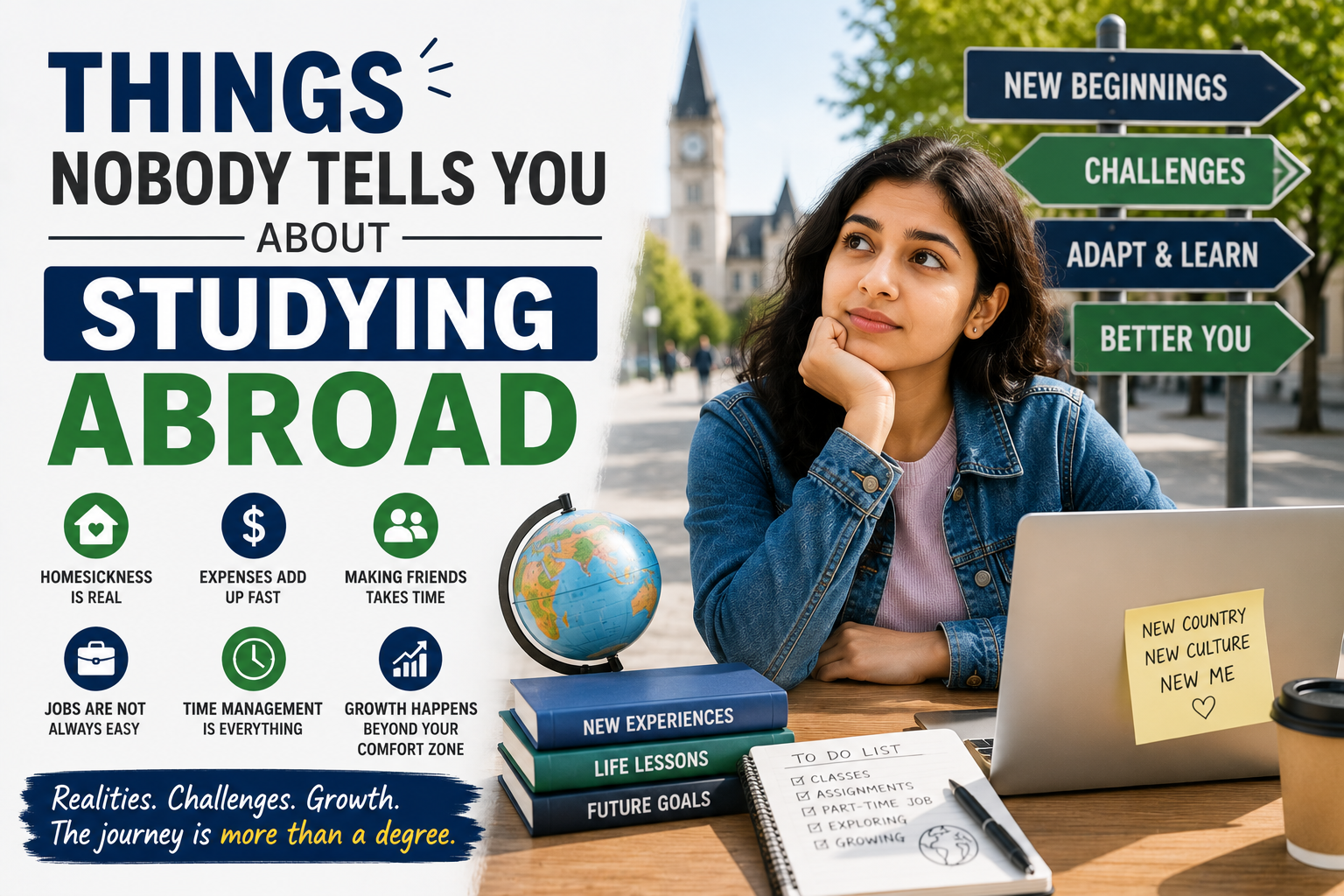
Things Nobody Tells You About Studying Abroad
Introduction
Studying abroad is often presented as a dream experience.
Social media is filled with:
- Beautiful campuses
- Travel photos
- Graduation celebrations
- Success stories
While these moments are real, they are only part of the story.
There are many realities of studying abroad that students rarely hear about before leaving home.
Understanding these realities can help you prepare better and avoid unnecessary surprises.
You Will Feel Homesick at Some Point
Even students who are excited about moving abroad often experience homesickness.
You may miss:
- Family
- Friends
- Festivals
- Home-cooked food
- Familiar surroundings
Homesickness is completely normal and affects many international students during their first few months.
Over time, most students gradually adapt to their new environment.
Everything Feels Expensive Initially
When students first arrive, expenses can seem overwhelming.
Common early costs include:
- Accommodation deposits
- Transportation passes
- Groceries
- Household items
- Mobile connections
Many students underestimate these initial settlement expenses.
Budget planning becomes very important.
Making Friends Takes Time
Many students assume they will instantly build a large social circle.
In reality, friendships often develop gradually.
Students may initially experience:
- Cultural differences
- Language barriers
- Different social habits
Joining student groups, clubs, and university events can help create connections.
Part-Time Jobs Are Not Always Easy to Find
Many students plan to support themselves through part-time work.
While jobs are available in many countries, finding one is not always immediate.
Factors affecting job opportunities include:
- Location
- Language skills
- Competition
- Previous experience
Students should avoid depending entirely on part-time income.
Classroom Culture May Be Very Different
Education systems vary across countries.
You may notice:
- More independent learning
- Group projects
- Research-focused assignments
- Frequent presentations
- Critical thinking expectations
Adjusting to a new academic environment can take time.
Time Management Becomes Essential
Studying abroad often means balancing:
- Classes
- Assignments
- Part-time work
- Daily responsibilities
- Social activities
Without good time management, students can quickly become overwhelmed.
Learning Everyday Life Skills Matters
For many students, studying abroad is their first experience living independently.
You may need to learn:
- Cooking
- Cleaning
- Budgeting
- Laundry
- Managing bills
These life skills become part of daily student life.
Travel Is Not as Frequent as Social Media Suggests
Many students imagine traveling every weekend.
In reality, travel depends on:
- Budget
- Academic workload
- Work commitments
- Personal priorities
Most students focus primarily on their studies and responsibilities.
Cultural Adjustment Is Real
Every country has different:
- Social norms
- Communication styles
- Work culture
- Academic expectations
Some differences may feel exciting, while others may require patience and adaptation.
Being open-minded helps make the transition smoother.
Your Confidence Will Grow
One of the biggest benefits of studying abroad is personal growth.
Students often develop:
- Independence
- Problem-solving skills
- Adaptability
- Communication skills
- Global perspective
The challenges you face often contribute to this growth.
Success Does Not Happen Overnight
Many students expect immediate results.
The reality is that building:
- A career
- A professional network
- Academic success
takes time and consistent effort.
Patience is important.
The Experience Is Different for Everyone
No two study abroad journeys are identical.
Some students:
- Adapt quickly
- Find jobs easily
- Build friendships rapidly
Others may take longer.
Comparing yourself to others can create unnecessary stress.
Focus on your own progress.
Common Expectations vs Reality
Expectation
Reality
Everything will be easy
Adjustment takes time
Part-time jobs are guaranteed
Finding work can take effort
Travel happens every week
Studies usually come first
Homesickness won't affect me
Most students experience it
Success comes quickly
Progress takes patience
The Real Truth
Studying abroad is not just about earning a degree.
It is also about:
- Personal growth
- Independence
- Cultural exposure
- Learning resilience
There will be exciting moments, difficult days, and valuable lessons.
The challenges often become the experiences that help students grow the most.
While nobody talks about every reality before you leave, being prepared can make the journey much smoother and more rewarding.
Frequently Asked Questions (FAQs)
1. Is homesickness common among international students?
Yes. Many students experience homesickness during their first months abroad.
2. Are part-time jobs guaranteed?
No. Job availability depends on several factors including location and competition.
3. Is studying abroad stressful?
It can be challenging at times, especially during the adjustment period.
4. What is the biggest challenge for most students?
Adjusting to a new culture, education system, and independent lifestyle.
5. Does studying abroad help personal growth?
Yes. Many students become more independent, confident, and adaptable.
6. Is studying abroad worth it?
For many students, the educational and personal development benefits make it a valuable experience.
Verified by Edulx Germany Specialists
Have questions about your profile or APS verification? Book a free 1-on-1 session with our Pune counsellors.