Top Mistakes That Lead to University Rejections (2027 Guide)
Introduction
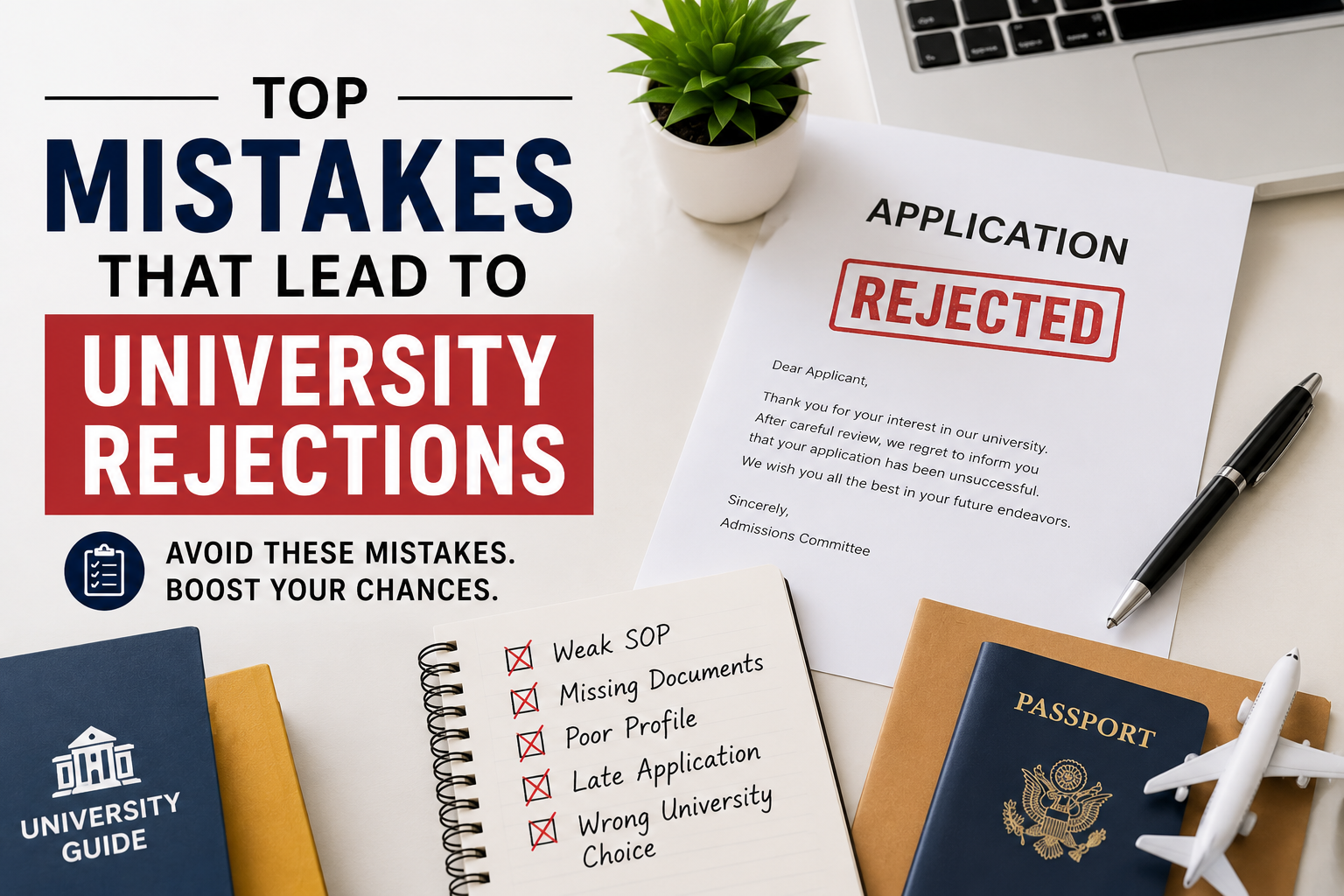
Receiving a university rejection can be frustrating, especially after spending months preparing your application.
However, many applications are rejected because of avoidable mistakes rather than a lack of ability.
Universities evaluate every part of your application—from academics and documents to your Statement of Purpose (SOP) and overall profile.
Understanding the most common reasons for rejection can help you submit a stronger application and increase your chances of receiving an admission offer.
Applying Without Checking Eligibility
One of the biggest mistakes students make is applying without carefully reading the admission requirements.
Some applicants overlook:
- Minimum academic requirements
- Required prerequisite subjects
- English language requirements
- Portfolio or project requirements
- Required entrance exams
Always compare your profile with the university's official eligibility criteria before applying.
Weak Statement of Purpose (SOP)
Your SOP tells the admissions committee why you want to study the course and why you are a suitable candidate.
Common SOP mistakes include:
- Copying content from the internet
- Writing generic statements
- Not explaining career goals
- Grammatical mistakes
- Poor structure
A personalized and well-structured SOP creates a much stronger impression.
Incomplete Application Documents
Missing documents are one of the easiest reasons for an application to be rejected.
Before submitting your application, verify that you have included:
- Academic transcripts
- Degree or provisional certificate
- Resume/CV
- Statement of Purpose
- Letters of Recommendation
- English language test results
- Passport copy
- Additional documents requested by the university
Review your application carefully before clicking the submit button.
Ignoring Application Deadlines
Many students begin preparing too late.
As a result, they may:
- Miss university deadlines
- Lose scholarship opportunities
- Submit rushed applications
- Delay visa processing
Starting your application early gives you enough time to prepare high-quality documents.
Poor Academic Performance
Grades remain an important part of the admission process.
While not every university requires perfect scores, consistently low academic performance may affect your chances.
If your grades are average, strengthen your application through:
- Relevant internships
- Academic projects
- Research work
- Professional certifications
- A strong SOP
Universities often evaluate your overall profile rather than academics alone.
Choosing the Wrong Universities
Some students apply only to highly competitive universities.
Others apply without checking whether the course matches their background.
Create a balanced shortlist that includes:
- Dream universities
- Target universities
- Safe universities
This improves your chances of receiving multiple admission offers.
Weak Letters of Recommendation
Recommendation letters should provide meaningful insight into your academic abilities and potential.
Avoid:
- Generic recommendation letters
- Letters from people who barely know you
- Poorly written recommendations
Choose professors or supervisors who can genuinely discuss your strengths and achievements.
Errors in the Resume
Your resume should highlight your academic and professional achievements clearly.
Common mistakes include:
- Spelling errors
- Poor formatting
- Irrelevant information
- Missing internships or projects
- Overly lengthy resumes
Keep your resume professional, concise, and relevant to the program.
Ignoring English Language Requirements
Many universities require proof of English language proficiency.
Some students:
- Apply without valid test scores
- Fail to meet the minimum score requirement
- Submit expired results
Always confirm the language requirements before applying.
Applying Without Researching the Course
Students sometimes choose a university based only on rankings.
Instead, review:
- Course curriculum
- Research opportunities
- Internship options
- Faculty expertise
- Graduate employment outcomes
A course that matches your interests and career goals is more valuable than a high ranking alone.
Submitting Generic Applications
Admissions committees can often identify applications that have been copied and reused.
Tailor every application by explaining:
- Why you selected that university
- Why the course interests you
- How it fits your career plans
Personalized applications demonstrate genuine interest and commitment.
Not Explaining Academic Gaps or Backlogs
If you have academic gaps or backlogs, explain them honestly when appropriate.
Focus on:
- What happened
- What you learned
- How you improved
Showing personal growth can leave a positive impression.
Common Mistakes at a Glance
- Not checking eligibility
- Weak SOP
- Missing documents
- Applying after deadlines
- Poor university selection
- Generic recommendation letters
- Weak resume
- Ignoring language requirements
- Applying without research
- Copy-paste applications
- Not explaining academic challenges
How to Increase Your Admission Chances
You can build a stronger application by:
- Researching universities carefully
- Applying early
- Writing a personalized SOP
- Preparing a professional resume
- Choosing suitable recommenders
- Completing internships and projects
- Meeting all language requirements
- Reviewing every document before submission
A well-prepared application reflects both your academic readiness and your commitment.
The Real Truth
University rejections do not always mean you are not qualified.
In many cases, applicants lose opportunities because of avoidable mistakes, incomplete applications, or poor planning.
Careful preparation, strong documentation, and thoughtful university selection can significantly improve your chances of admission.
Remember, a successful application is not just about good grades—it is about presenting your complete profile effectively.
Frequently Asked Questions (FAQs)
1. Why do universities reject applications?
Universities may reject applications due to unmet eligibility criteria, incomplete documents, weak SOPs, poor academic performance, or limited seats.
2. Can I reapply after being rejected?
Yes. Many universities allow students to apply again in a future intake after strengthening their application.
3. Does a weak SOP affect admission?
Yes. A poorly written SOP can reduce your chances, especially for competitive programs.
4. Is one backlog enough to get rejected?
Not necessarily. Many universities consider your overall academic profile rather than focusing on a single backlog.
5. How early should I apply?
Starting your application 8–12 months before your intended intake gives you enough time to prepare documents and meet deadlines.
6. What is the best way to improve my application?
Maintain good academics, complete relevant internships or projects, write a strong SOP, prepare a professional resume, and apply to universities that match your profile.
Verified by Edulx Germany Specialists
Have questions about your profile or APS verification? Book a free 1-on-1 session with our Pune counsellors.