What Documents Do You Need for Study Abroad? Complete Checklist for 2026
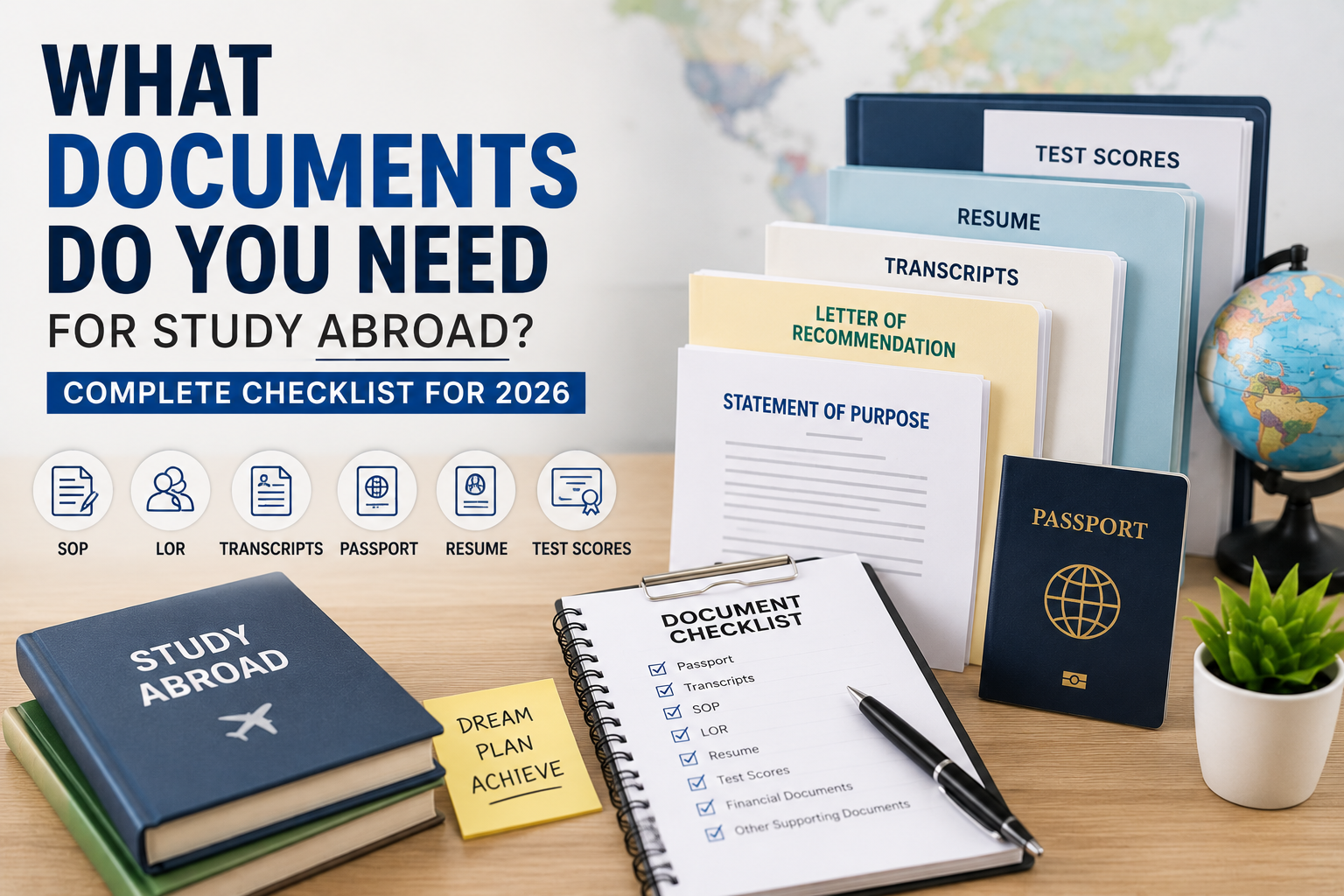
Introduction
One of the most common reasons students face delays during university applications is missing or incomplete documents.
Many students focus heavily on choosing universities and preparing for language tests but underestimate the importance of proper documentation.
Having all required documents ready before application deadlines can save time, reduce stress, and improve the overall application process.
This guide covers the most important documents required for studying abroad in 2026.
Why Documents Are Important
Universities use application documents to evaluate:
- Academic qualifications
- Language proficiency
- Career goals
- Professional experience
- Overall suitability for the program
Incomplete documentation can lead to delays, additional requests, or even rejection of an application.
Passport
A valid passport is one of the most important requirements.
Students need a passport for:
- University applications
- Visa applications
- International travel
If you do not have a passport, it should be one of the first things you arrange before starting the study abroad process.
Academic Transcripts
Academic transcripts are official records of your educational performance.
They generally include:
- Subjects studied
- Grades or marks obtained
- Credits earned
- Overall academic history
Most universities require transcripts from all previous educational institutions attended.
Degree Certificate or Provisional Certificate
Students who have completed their degree typically submit:
- Degree certificate
- Final mark sheets
Students in their final semester may be allowed to submit:
- Provisional certificate
- Bonafide certificate
- Expected graduation confirmation
Requirements vary by university.
Statement of Purpose (SOP)
The SOP explains:
- Your academic background
- Why you chose the course
- Why you selected the university
- Your career goals
A strong SOP helps universities understand your motivation and future plans.
Each SOP should be personalized and tailored to the university and program.
Letter of Recommendation (LOR)
LORs help universities understand your abilities from another person's perspective.
They are usually written by:
- Professors
- Project guides
- Employers
- Managers
Most universities request two or three recommendation letters.
Resume or CV
A resume provides a summary of your:
- Education
- Projects
- Internships
- Work experience
- Skills
- Achievements
The resume should be clear, professional, and relevant to the course you are applying for.
English Language Test Scores
Many universities require proof of English proficiency.
Commonly accepted tests include:
- IELTS
- TOEFL
- PTE
- Duolingo English Test
Score requirements vary depending on the university and program.
Work Experience Documents
For students applying to professional or management programs, universities may request:
- Experience letters
- Offer letters
- Appointment letters
- Salary slips
These documents help verify employment history.
Financial Documents
Financial documents are often required during the admission or visa process.
Examples include:
- Bank statements
- Education loan sanction letters
- Sponsorship documents
- Financial affidavits
Financial proof demonstrates the ability to fund education and living expenses.
Portfolio (If Required)
Some programs require portfolios, especially in fields such as:
- Design
- Architecture
- Fine Arts
- Animation
- Creative Media
A portfolio showcases your work and skills.
Additional Documents
Depending on the university and course, students may also need:
- Research proposals
- Motivation letters
- Internship certificates
- Professional certifications
- Published research papers
Always check program-specific requirements carefully.
Common Mistakes Students Make
Waiting Until the Last Minute
Document preparation often takes longer than expected.
Uploading Incorrect Files
Students should verify file names, formats, and document versions before submission.
Ignoring University Requirements
Different universities may ask for different documents.
Never assume requirements are identical everywhere.
Using Generic SOPs
Personalized applications are generally stronger than generic submissions.
Missing Validity Dates
Students should check:
- Passport validity
- Language test validity
- Official document requirements
Recommended Document Preparation Timeline
12 Months Before Intake
- Research universities
- Check application requirements
10 Months Before Intake
- Prepare for language tests
- Update resume
8 Months Before Intake
- Request LORs
- Draft SOP
6 Months Before Intake
- Collect transcripts
- Organize academic documents
4 Months Before Intake
- Submit applications
2 Months Before Intake
- Prepare visa documentation
Early preparation reduces mistakes and improves efficiency.
The Real Truth
A strong application is not only about grades.
Proper documentation plays a major role in the admission process.
Students who prepare their documents early often experience smoother applications, fewer delays, and less stress.
Creating a document checklist before applying can save significant time and effort.
Frequently Asked Questions (FAQs)
1. What documents are required for studying abroad?
Most students need a passport, transcripts, SOP, LORs, resume, and language test scores.
2. Is an SOP mandatory?
Many universities require an SOP as part of the admission process.
3. How many LORs are usually required?
Most universities ask for two or three recommendation letters.
4. Can I apply without a passport?
Some universities may allow initial applications, but a passport is required later for visa and travel purposes.
5. Are financial documents required?
Yes, especially during visa processing and financial verification.
6. What is the most commonly missed document?
Students often delay SOP preparation or recommendation letters.
Verified by Edulx Germany Specialists
Have questions about your profile or APS verification? Book a free 1-on-1 session with our Pune counsellors.