What Happens After Getting University Admission Letter?
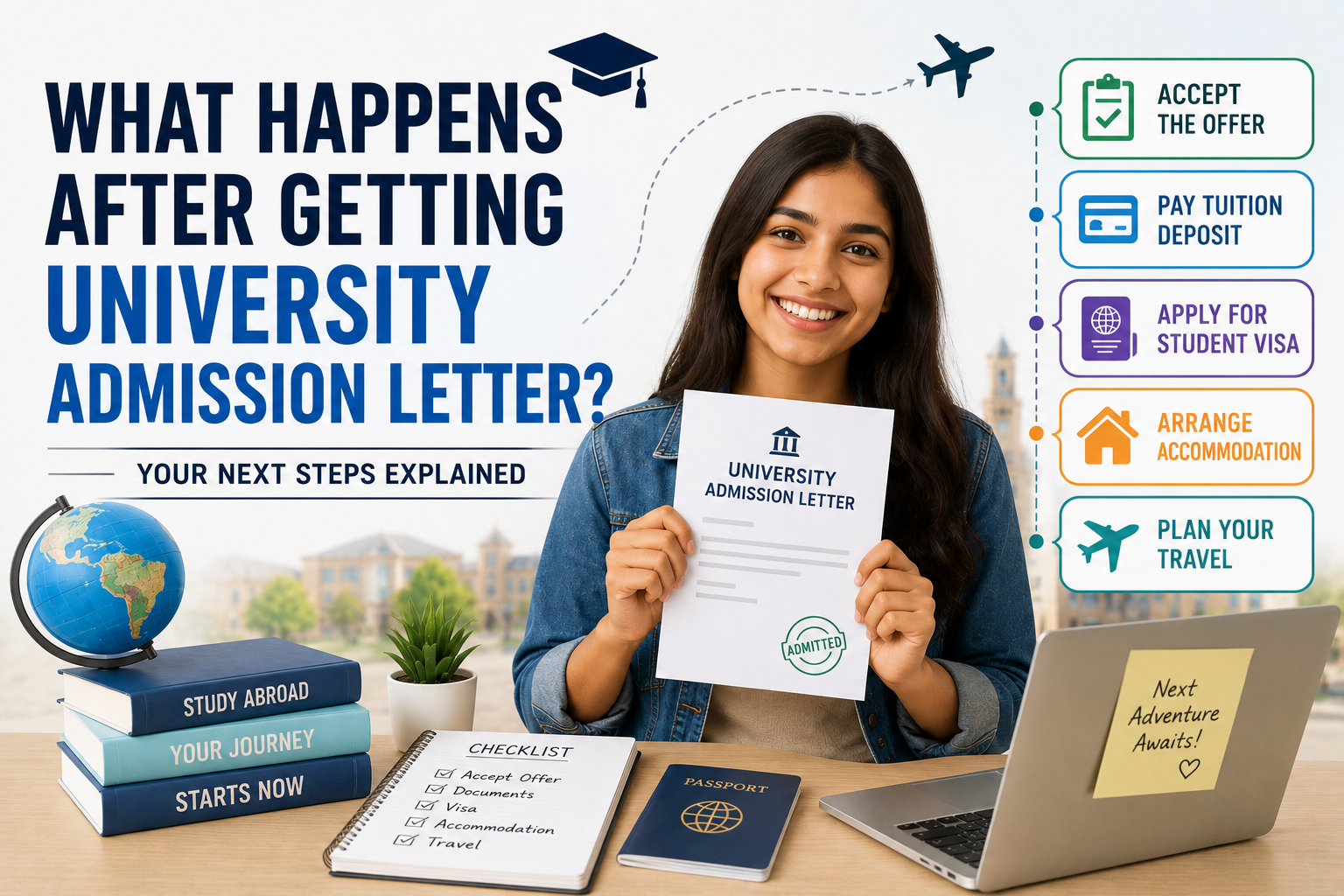
What Happens After Getting University Admission Letter? – Complete Step-by-Step Guide
Receiving a university admission letter is one of the most exciting moments in the study abroad journey.
After months of:
- Research
- Applications
- SOP writing
- Document submissions
- Waiting for decisions
you finally receive that email saying:
"Congratulations! You have been offered admission."
But many students immediately ask:
"What should I do now?"
The truth is that receiving an admission letter is only the beginning of the next phase of your study abroad journey.
In this guide, we'll explain everything that typically happens after receiving a university admission letter.
Step 1: Read the Admission Letter Carefully
Many students make the mistake of only reading the first page.
Your admission letter may contain important information about:
- Admission conditions
- Tuition fees
- Deposit requirements
- Deadlines
- Scholarship details
- Enrollment procedures
- Required documents
Read every section carefully before taking any action.
Missing a deadline can create unnecessary complications.
Step 2: Understand Whether the Offer Is Conditional or Unconditional
Universities generally issue two types of offers.
Conditional Offer
A conditional offer means you still need to meet certain requirements.
Examples:
- Submit final transcripts
- Complete your degree
- Meet English language requirements
- Provide additional documents
Your admission becomes fully confirmed only after fulfilling those conditions.
Unconditional Offer
An unconditional offer means you have already met all admission requirements.
You can usually proceed directly to the next enrollment steps.
Step 3: Accept the Admission Offer
Most universities require students to formally accept their offer.
This may involve:
- Accepting through a student portal
- Signing an acceptance form
- Confirming enrollment online
Universities often provide deadlines for offer acceptance.
Missing the deadline may result in cancellation of the admission offer.
Step 4: Pay the Required Deposit
Many universities require a tuition deposit before issuing further enrollment documents.
The deposit amount varies by institution.
The payment may help:
- Reserve your seat
- Confirm enrollment
- Initiate visa documentation
Always keep payment receipts safely.
You may need them later during visa processing.
Step 5: Receive Additional Enrollment Documents
After confirming admission, universities often issue important documents.
Depending on the country, these may include:
- Confirmation of Enrollment
- Acceptance Confirmation
- Student Registration Documents
- Visa Support Documents
These documents are usually required for the next steps.
Step 6: Start Your Student Visa Process
For most students, the visa process becomes the next major priority.
Visa requirements typically include:
- Admission letter
- Passport
- Financial proof
- Academic documents
- Visa application forms
- Health insurance
Students should begin preparing visa documents as early as possible.
Visa processing times can vary significantly.
Step 7: Arrange Financial Documents
Most countries require proof that students can support themselves financially.
This may include:
- Bank statements
- Sponsorship documents
- Education loan approvals
- Financial guarantees
Financial documentation is often one of the most important parts of the visa application process.
Step 8: Arrange Accommodation
Accommodation planning should begin early.
Common options include:
University Accommodation
Benefits include:
- Convenient location
- Student community
- Easier adjustment
However, availability may be limited.
Private Accommodation
Students may choose:
- Shared apartments
- Student residences
- Private rentals
Research carefully before making payments.
Step 9: Purchase Health Insurance
Many countries require international students to have health insurance.
Insurance may be:
- Mandatory
- University-provided
- Privately purchased
Always verify the specific requirements for your destination country.
Step 10: Book Your Flight
Once your visa is approved, travel planning can begin.
Students should:
- Compare flight prices
- Review baggage allowances
- Check arrival dates
- Confirm airport transportation
Booking early often helps reduce costs.
Step 11: Attend Pre-Departure Sessions
Many universities and education consultants conduct pre-departure briefings.
These sessions may cover:
- Student life
- Academic expectations
- Cultural adaptation
- Accommodation guidance
- Travel tips
Attending these sessions can help students prepare more confidently.
Step 12: Prepare Important Documents
Before departure, organize:
- Passport
- Visa
- Admission letter
- Academic transcripts
- Insurance documents
- Accommodation details
- Emergency contacts
Keeping both digital and physical copies is recommended.
Step 13: Understand Academic Expectations
University education abroad may differ significantly from what students are used to.
Students should familiarize themselves with:
- Course structure
- Assignment systems
- Grading methods
- Attendance requirements
Understanding expectations early can make the transition smoother.
Step 14: Prepare for Cultural Adjustment
Moving abroad involves more than academics.
Students should prepare for:
- Different cultures
- New social environments
- Independent living
- New communication styles
Being open-minded and adaptable can make the experience more rewarding.
Common Mistakes Students Make After Receiving Admission
Many students:
- Delay accepting offers
- Ignore important deadlines
- Start visa preparation too late
- Overlook accommodation planning
- Fail to organize documents properly
Careful planning helps avoid unnecessary stress.
What If You Receive Multiple Admission Offers?
This is a great position to be in.
Students should compare:
- Tuition fees
- Scholarships
- Course structure
- Career opportunities
- Location
- Post-study work options
The best university is not always the highest-ranked one.
Choose the option that aligns best with your goals and budget.
The Exciting Reality
Many students think receiving an admission letter means the hard work is over.
In reality, it marks the beginning of the next chapter.
From visas and travel planning to accommodation and enrollment, several important steps still remain.
The good news is that each completed step brings you closer to your international education journey.
Final Conclusion
Receiving a university admission letter is a major achievement and an exciting milestone.
However, students must continue preparing carefully by:
- Accepting the offer
- Completing enrollment requirements
- Applying for a visa
- Arranging accommodation
- Organizing finances
- Preparing for departure
By understanding what happens after receiving an admission letter, students can move forward confidently and begin their study abroad journey with fewer surprises and better preparation.
Verified by Edulx Germany Specialists
Have questions about your profile or APS verification? Book a free 1-on-1 session with our Pune counsellors.