What Is SOP and How to Write a Strong One? (2026 Guide for Students)
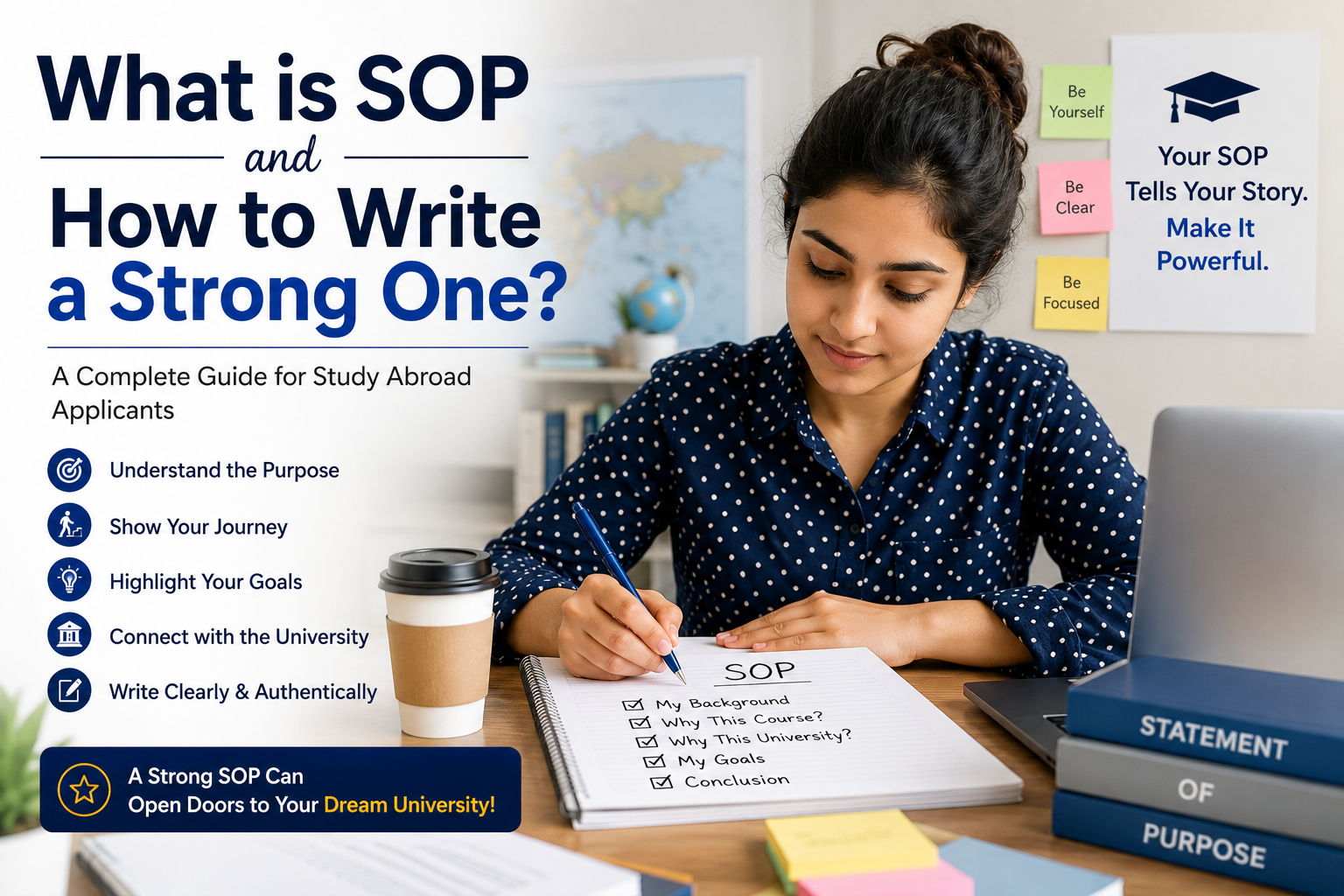
Introduction
If you are applying to universities abroad, one document you will hear about everywhere is:
👉 SOP (Statement of Purpose)
And many students immediately ask:
- What exactly is SOP?
- Why is it important?
- How do I write a strong SOP?
The truth is:
👉 A strong SOP can significantly improve your application.
Even students with average marks sometimes receive admits because of a well-written SOP.
What Is SOP?
SOP stands for:
👉 Statement of Purpose
It is a personal essay where students explain:
- Their academic background
- Career goals
- Reasons for choosing the course
- Why they selected a particular university
👉 Universities use SOP to understand the student beyond marksheets.
Why Universities Ask for SOP
Universities want to know:
- Your motivation
- Your clarity of goals
- Your communication skills
- Whether you are serious about the course
👉 SOP helps universities evaluate your personality and intentions.
Why SOP Is So Important
Many students think SOP is just a formality.
That is a huge mistake.
A weak SOP can:
- Reduce admission chances
- Make your profile look unclear
- Create a poor impression
A strong SOP can:
- Highlight your strengths
- Explain gaps or low marks properly
- Make your profile more convincing
What Should a Strong SOP Include?
A good SOP usually covers:
Academic Background
Explain:
- Your studies
- Key subjects
- Academic interests
Work Experience (If Any)
Mention:
- Internships
- Jobs
- Projects
- Technical skills
Why This Course?
Universities want to understand:
👉 Why exactly you chose this field.
Avoid generic answers.
Why This University?
Mention:
- Course structure
- Research opportunities
- Faculty
- University strengths
👉 Show genuine research.
Career Goals
Explain:
- Short-term goals
- Long-term vision
- Future career plans
Common SOP Mistakes Students Make
Copy-Pasting SOPs
Universities can easily detect copied content.
Using Overdramatic Stories
Avoid unrealistic emotional writing.
Writing Very Generic Content
Statements like:
👉 “I always dreamed of studying abroad”
appear in thousands of SOPs.
Grammar & Formatting Errors
Poor language creates a bad impression.
Making SOP Too Long
Keep it clear, focused, and professional.
What Makes an SOP Strong?
A strong SOP is:
- Honest
- Structured
- Clear
- Personalized
- Goal-oriented
👉 Authenticity matters more than “fancy English.”
Smart Tips to Write a Better SOP
- Start early
- Write multiple drafts
- Keep language simple and professional
- Focus on your story and goals
- Proofread carefully
👉 A clean and genuine SOP works best.
Can SOP Affect Visa Too?
Yes, sometimes indirectly.
A clear academic and career direction helps create a stronger overall profile for:
- University admissions
- Visa interviews
- Scholarship applications
The Real Truth
SOP is not just another document.
It is:
👉 Your personal introduction to the university.
Good marks help.
But a strong SOP can make your application much more memorable.
EEAT Perspective (Trust & Expertise)
- Experience: SOP is one of the most important documents in international admissions.
- Expertise: Universities evaluate motivation and clarity through SOPs.
- Authoritativeness: Strong SOPs improve overall application quality significantly.
- Trustworthiness: Genuine writing creates stronger credibility.
Frequently Asked Questions (FAQs)
1. What is SOP for study abroad?
SOP is a Statement of Purpose explaining your academic background and goals.
2. Is SOP mandatory for universities abroad?
Most universities require SOP during applications.
3. How long should SOP be?
Usually 1–2 pages depending on university guidelines.
4. Can I copy SOP from internet?
No, copied SOPs can create serious problems.
5. Does SOP affect admission chances?
Yes, a strong SOP can improve your application significantly.
6. What is the biggest SOP mistake?
Writing generic or copied content.
Verified by Edulx Germany Specialists
Have questions about your profile or APS verification? Book a free 1-on-1 session with our Pune counsellors.