What Universities Look for Beyond Grades
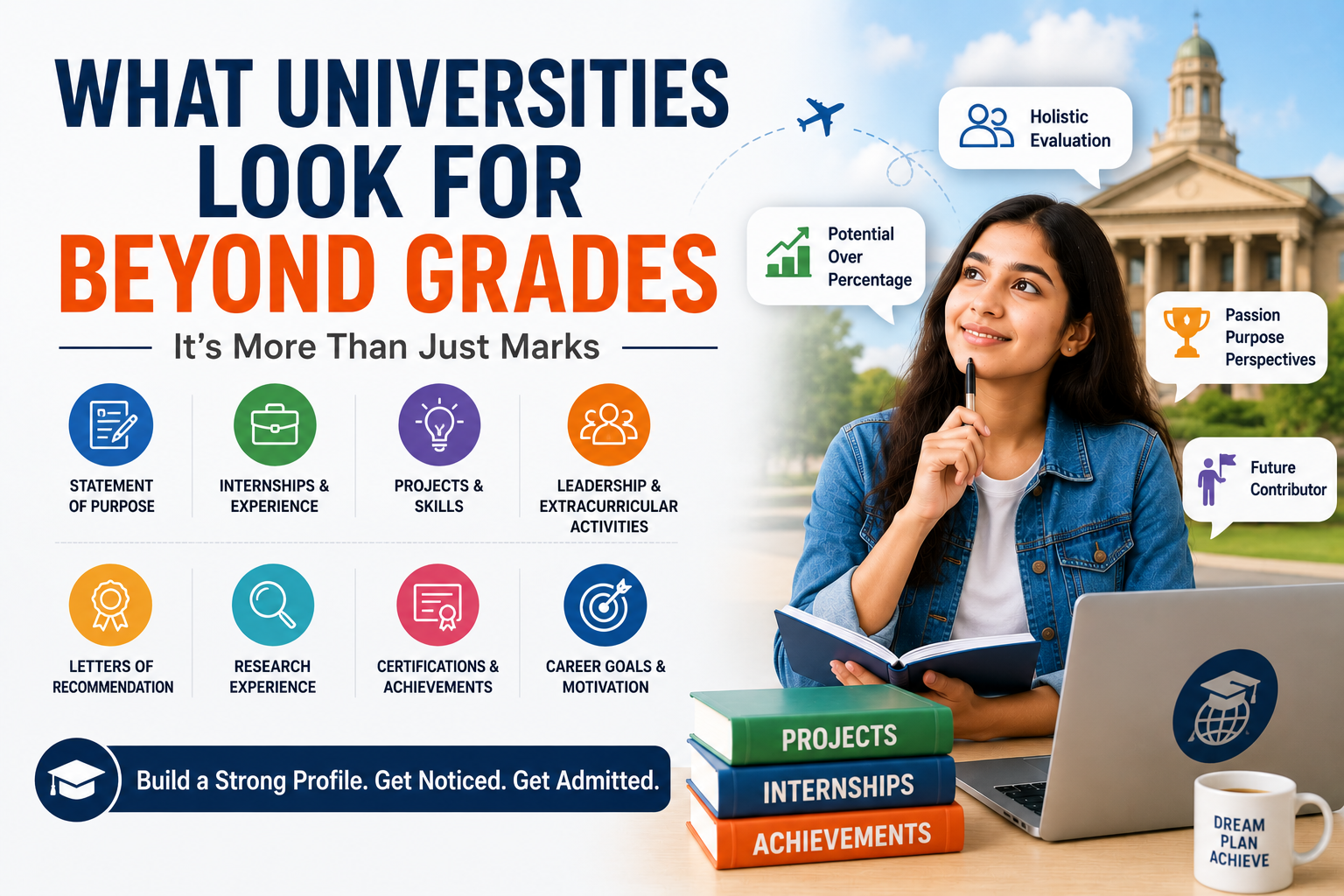
What Universities Look for Beyond Grades – What Really Matters in Admissions?
One of the biggest misconceptions among students is:
"If my grades are not perfect, I can't get admission abroad."
While academic performance plays an important role, universities rarely evaluate applicants based on grades alone.
Every year, students with average grades receive admissions from excellent universities, while some students with strong grades face rejection.
Why?
Because universities are looking for more than just numbers.
They want students who can contribute to their academic community, succeed in their programs, and build meaningful careers after graduation.
Let's explore what universities often consider beyond your academic results.
Why Grades Are Not the Whole Story
Grades provide information about your academic performance.
They help universities understand:
- Your learning ability
- Academic consistency
- Subject knowledge
However, grades cannot fully reveal:
- Leadership skills
- Creativity
- Motivation
- Problem-solving abilities
- Real-world experience
This is why admissions committees evaluate multiple aspects of an application.
1. Statement of Purpose (SOP)
For many universities, the SOP is one of the most important documents in the application.
Your SOP explains:
- Why you chose the course
- Why you selected the university
- Your academic background
- Career goals
- Motivation for studying abroad
A strong SOP helps admissions officers understand the person behind the grades.
It can often strengthen an application significantly.
2. Relevant Projects
Projects demonstrate practical knowledge and problem-solving abilities.
Universities appreciate students who apply classroom learning to real-world challenges.
Examples include:
- Engineering projects
- Software applications
- Data analysis projects
- Research projects
- Design portfolios
Projects often show initiative, technical skills, and curiosity.
3. Internships and Practical Experience
Internships help students gain industry exposure.
Even short internships can demonstrate:
- Professional experience
- Workplace understanding
- Technical skills
- Commitment to the field
For professional master's programs, internships can strengthen an application considerably.
4. Letters of Recommendation (LORs)
Universities value recommendations from people who know your academic or professional abilities.
Strong LORs can provide insight into:
- Work ethic
- Academic potential
- Leadership qualities
- Teamwork skills
Admissions committees often use recommendations to better understand an applicant's strengths.
5. Research Experience
For research-focused programs, research experience can be highly valuable.
Examples include:
- Research assistantships
- Academic publications
- Conference presentations
- Final-year research projects
Research demonstrates analytical thinking and intellectual curiosity.
6. Leadership Skills
Universities often seek students who contribute beyond the classroom.
Leadership experiences may include:
- Student organizations
- Event management
- Club leadership
- Team coordination
Leadership suggests initiative, responsibility, and communication skills.
7. Extracurricular Activities
Extracurricular involvement can strengthen a profile when presented effectively.
Activities may include:
- Sports
- Volunteering
- Competitions
- Community service
- Cultural activities
These experiences help demonstrate a well-rounded personality.
8. Career Goals and Clarity
Universities appreciate students who have clear goals.
Admissions officers often ask:
- Why this course?
- Why now?
- What are your future plans?
Applicants with well-defined objectives often create stronger impressions.
9. Technical Skills
Many master's programs evaluate practical skills alongside academics.
Examples include:
Technology Programs
- Programming
- Data Analysis
- Machine Learning
Engineering Programs
- CAD Software
- Simulation Tools
- Technical Design
Business Programs
- Analytics Tools
- Financial Modeling
- Data Visualization
Relevant skills can enhance an application significantly.
10. Certifications and Additional Learning
Certifications show initiative and a willingness to learn beyond formal education.
Popular examples include:
- Data Analytics Certifications
- Programming Courses
- Cloud Computing Certifications
- Digital Marketing Courses
- Project Management Certifications
While certifications cannot replace academic requirements, they can strengthen a profile.
11. Communication Skills
Strong communication is valuable in every field.
Universities often evaluate communication through:
- SOPs
- Interviews
- Recommendation letters
- Written application materials
Clear communication reflects professionalism and preparation.
12. Consistency and Growth
Admissions teams often look at the overall journey rather than a single semester.
They may notice:
- Academic improvement over time
- Increasing responsibilities
- Growing expertise
- Continued commitment to a field
Evidence of growth can positively influence admissions decisions.
Can Average Students Still Get Admission?
Absolutely.
Many students with average grades receive admissions because they compensate through:
- Strong SOPs
- Relevant projects
- Internships
- Certifications
- Clear career goals
Universities evaluate applicants holistically.
A lower CGPA does not automatically eliminate opportunities.
Common Mistakes Students Make
Focusing Only on Grades
Many students ignore profile-building activities until it's too late.
Writing Generic SOPs
A weak SOP can reduce the impact of an otherwise strong profile.
Ignoring Internships
Practical experience often strengthens applications significantly.
Applying Without Clear Career Goals
Universities prefer applicants who understand why they are pursuing a specific program.
Underestimating Extracurricular Activities
Meaningful involvement outside academics can add value to an application.
How to Build a Strong Profile Starting Today
If you're planning to study abroad, consider:
- Completing internships
- Working on projects
- Earning certifications
- Participating in competitions
- Developing leadership experience
- Building technical skills
- Improving communication abilities
Small improvements over time can create a strong overall profile.
The Reality of Modern Admissions
University admissions have evolved.
Today, institutions increasingly seek students who offer:
- Academic capability
- Practical experience
- Motivation
- Leadership potential
- Future career impact
Grades remain important, but they are only one piece of the puzzle.
Final Conclusion
While academic performance remains an important factor, universities often look far beyond grades when evaluating applicants.
Strong admissions profiles typically combine:
- Good academics
- Relevant projects
- Internships
- Leadership experience
- Strong SOPs
- Clear career goals
Students who focus on building a complete profile often improve their chances of admission and create stronger foundations for future success.
Remember:
Universities don't just admit grades—they admit people.
Verified by Edulx Germany Specialists
Have questions about your profile or APS verification? Book a free 1-on-1 session with our Pune counsellors.